
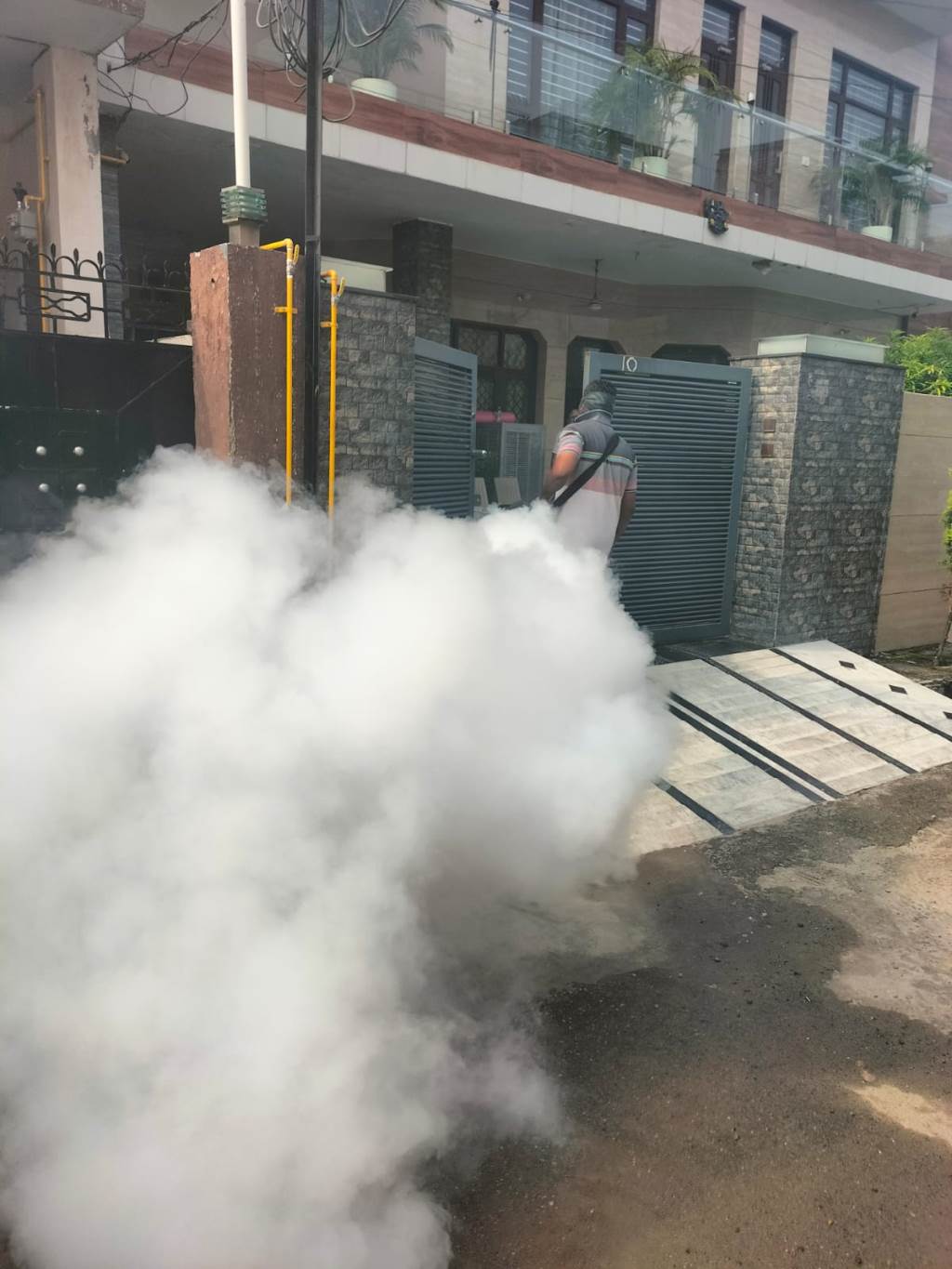
Hoshiarpur: Keeping the dengue transmission season in mind, the Punjab Department of Health and Family Welfare is conducting continuous special activities across the district to prevent dengue and other mosquito-borne diseases, under the guidance of Civil Surgeon Dr. Mandeep Kamal. As part of this initiative, Health Department teams are visiting households daily in various wards of urban Hoshiarpur to inspect for mosquito larvae, destroy them, and raise awareness about dengue prevention.
Under this campaign, teams inspected 1,755 houses in Hoshiarpur city today; larvae of the *Aedes* mosquito—which spreads dengue—were found in 83 of them. Larvicides were immediately sprayed at the affected sites to destroy the larvae. Additionally, health teams ensured the emptying of stagnant water from various household items such as containers, coolers, water tanks, flowerpots, refrigerator trays, animal water troughs, and other receptacles.
Health teams are advising residents not to allow water to stagnate in any household vessels or objects. They are instructing people to empty, thoroughly wash, clean, and dry water containers at least once a week. Residents are also being advised to keep necessary water containers covered to prevent mosquitoes from finding breeding grounds.
Nursing students are participating alongside Health Department staff in this campaign. Together, they are visiting homes to educate the public on identifying dengue mosquito breeding sites, draining stagnant water, and adopting precautions to prevent dengue.
Speaking on the occasion, District Epidemiologist Dr. Jagdeep Singh explained that the dengue mosquito primarily breeds in clean, stagnant water and bites during the day. He stated that preventing mosquito breeding is the most effective measure for dengue prevention. He urged people to observe a 'Dry Day' every week by inspecting their homes and surroundings for any areas where water might accumulate, and by keeping water containers empty, clean, and dry.
He informed that, so far, 21 cases of dengue and 2 cases of chikungunya have been reported in the district. He emphasized that instead of panicking, people need to remain cautious and should immediately contact the nearest government health facility if they experience fever or symptoms associated with dengue.
District Mass Media Officer Tarsem Lal briefed the public on dengue symptoms, noting that high fever, headache, pain behind the eyes, body and joint pain, vomiting, and skin rashes are among the primary signs. He advised seeking immediate medical attention if such symptoms appear and cautioned against taking any medication without a doctor's advice.
He urged people to protect themselves from mosquitoes by wearing full-sleeved clothing, using mosquito nets and repellents, and installing mesh screens on doors and windows. He encouraged every citizen to adopt the spirit of "Strike Against Dengue Every Friday" by inspecting their homes and surroundings for stagnant water at least once a week.
Civil Surgeon Dr. Mandeep Kamal stated that during the dengue transmission season, the Health Department is continuously conducting activities such as larva surveys, larva destruction, larvicide spraying, fogging, door-to-door awareness campaigns, and health education. He mentioned that Health Department teams are visiting the field daily to assess the situation and are taking immediate action to eliminate any identified mosquito breeding sources.
He emphasized that dengue prevention is not solely the responsibility of the Health Department; effective control can only be achieved through the active participation of the public. He appealed to the people to fully cooperate with Health Department teams conducting home surveys and to fulfill their responsibility by preventing water stagnation in and around their homes. During this period, Health Department teams distributed pamphlets on dengue prevention and conducted door-to-door outreach to raise awareness about preventing mosquito breeding.