
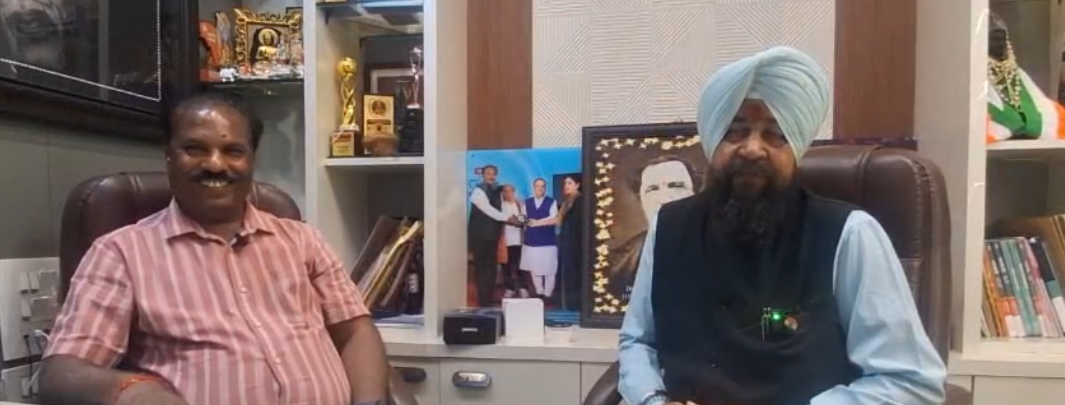
Indore/Hoshiarpur, September 30:- Cancer is among the most serious health challenges in the world today. After a cancer diagnosis, patients and their families face numerous questions related to treatment, side effects, pain, mental stress and quality of life. On this subject, Senior Correspondent Daljit Ajnoha held a special conversation with Dr. Ajay Hardia, MD of Devi Ahilya Cancer Hospital and Research Centre, Indore, discussing various important aspects related to electro homeopathy and cancer treatment.
Dr. Hardia has for a long time been advocating the advancement of electro homeopathy in the field of cancer care. According to the official website of Devi Ahilya Cancer Hospital and Research Centre, the institution works with an electro homeopathy and herbal medicine-based treatment approach.
Electro homeopathy is presented by its supporters as an alternative system of medicine. It is said to primarily involve the use of preparations derived from plants and to focus on balancing different organs of the body as well as the blood and lymphatic systems. However, it is equally important to understand the status of scientific evidence concerning electro homeopathy.
In the context of cancer, supporters of electro homeopathy claim that it may provide relief to patients from pain, swelling, weakness and certain symptoms associated with the disease, and may improve quality of life. According to Dr. Hardia, his institution is working on an alternative and holistic treatment approach for cancer patients. The hospital's website also claims that a large number of cancer patients have been treated through electro homeopathy and that many patients have received relief.
However, such institutional claims and patient experiences by themselves are not considered equivalent to high-quality scientific evidence. In the available scientific literature, there is still no conclusive evidence regarding conventional homeopathy and cancer establishing that homeopathy can cure cancer. At the same time, it is important to clarify that electro homeopathy and conventional homeopathy are different systems, and therefore findings from research on conventional homeopathy cannot be directly applied to electro homeopathy.
Treatment decisions for cancer patients should be based on the type and stage of the disease, the patient's health condition and expert medical advice. Before adopting any alternative or complementary therapy, it is essential to discuss it with an oncologist or the doctor providing treatment. Delaying or discontinuing established cancer treatment because of an unproven therapy can pose serious risks to the patient.
In this context, understanding the effectiveness of electro homeopathy and its actual role in cancer treatment requires systematic clinical trials, independent scientific research, transparent results and expert review. At the central level in India, institutions are also working on research into various systems of alternative medicine.
In this special conversation with Senior Correspondent Daljit Ajnoha, important issues including the concept of electro homeopathy, its use among cancer patients, relief from pain and other symptoms during treatment, lifestyle, diet, patients' expectations and the scientific evidence associated with this alternative system were discussed in detail.
For patients and their families dealing with a serious disease such as cancer, it is extremely important to give priority not only to hope regarding any treatment, but also to scientific evidence, expert medical advice and treatment safety. This was the key message of the special conversation.