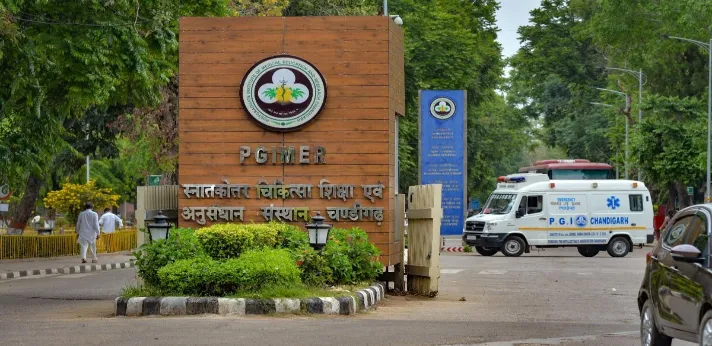

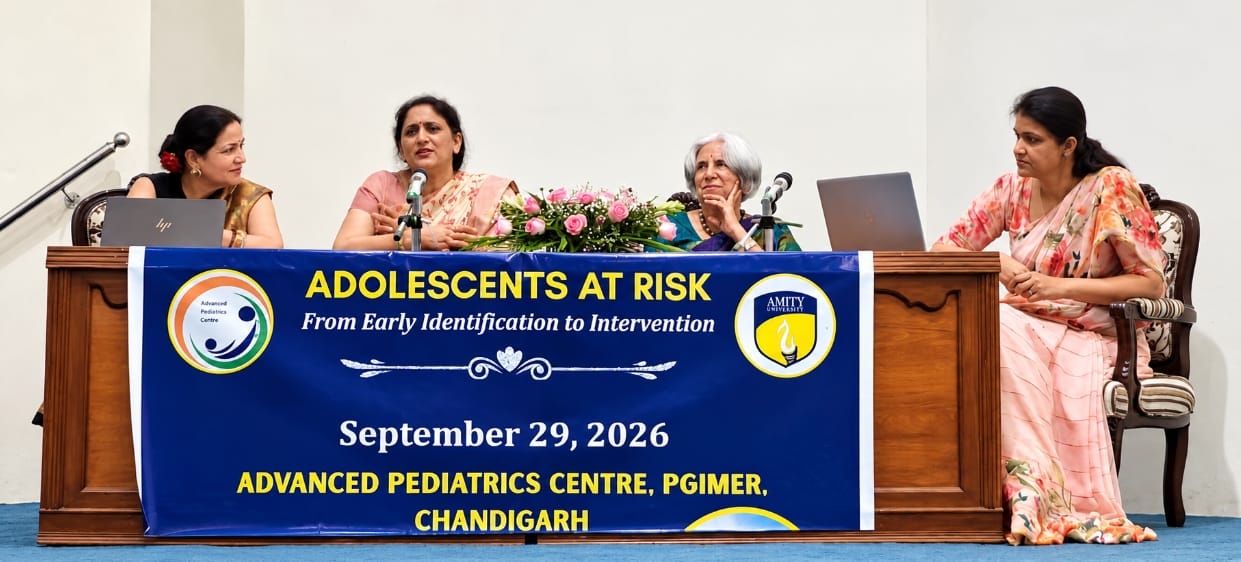
Chandigarh, September 29:- The Advanced Pediatrics Centre, PGIMER, Chandigarh, organised a one-day Continuing Medical Education (CME) programme on “Adolescents at Risk: From Early Identification to Intervention”. Around 120 teachers, counsellors, paediatricians, psychologists, mental-health professionals and students from across North India participated in the programme.
Experts from PGIMER, AIIMS Mohali, Amity University, MCM DAV College, Fortis and Plaksha University discussed key challenges affecting adolescents, including brain development, adverse childhood experiences (ACEs), relationships and rejection, social media and mental health, vaping and substance use, self-harm, psychosocial assessment and support for neurodiverse adolescents.
A key highlight was the presentation “Hidden in Plain Sight: Adverse Childhood Experiences in Adolescents” by Dr. Bhavneet Bharti, Professor and Head, Social Pediatrics, Advanced Pediatrics Centre, PGIMER. She shared preliminary observations from an ICMR-supported school-based study on ACEs. The study aims to assess the prevalence and patterns of ACEs among school-going adolescents and develop culturally appropriate, trauma-informed interventions to promote mental health, resilience and emotional well-being in schools.
Dr. Bharti explained that ACEs can include emotional, physical and sexual abuse, neglect and dysfunctional household environments, as well as broader factors such as poverty, community violence, disrupted schooling, disability and family difficulties. She emphasised that changes in behaviour, social isolation, academic difficulties and risk-taking behaviour may indicate underlying adversity requiring timely support.
She also stressed that an ACE score should not become a label for a child. Instead, identifying adversity should lead to early support, safety where necessary, and the creation of strong protective environments.
Other sessions covered relationships, rejection and resilience, self-harm, smoking, vaping and substance use. Experts also discussed adolescence as a critical period for developing healthy behaviours and preventing future health risks.
A session on social media, digital risks and mental health examined the impact of adolescents’ rapidly digitising social environment on relationships, behaviour and psychological well-being. A practical session introduced participants to comprehensive psychosocial assessment approaches for systematically identifying adolescents requiring additional support.
The CME concluded with a discussion on supporting neurodiverse adolescents in schools and colleges, with emphasis on inclusive educational environments and listening to the needs of young people.
The programme highlighted the importance of early identification, supportive adult relationships and safe educational environments in promoting adolescent resilience and well-being.