Neglecting Nature in the Race for Development

The environment is the fundamental cornerstone of human life. Air, water, soil, and forests are such integral parts of human civilization that life cannot even be imagined without them. These natural resources have been supporting human society for centuries without any conditions. Nature functions according to its own systematic process, which includes balance, patience, and the capacity for renewal.
The environment is the fundamental cornerstone of human life. Air, water, soil, and forests are such integral parts of human civilization that life cannot even be imagined without them. These natural resources have been supporting human society for centuries without any conditions. Nature functions according to its own systematic process, which includes balance, patience, and the capacity for renewal.
But when humans begin to consider themselves superior to this process and tamper with natural balance out of greed, the consequences have to be borne for a long time. Often, this damage is not visible immediately, but over time, it starts affecting every aspect of human life. Today, the environment is no longer just an ideological issue; it has become a reality tied to human existence, from which turning away is no longer possible.
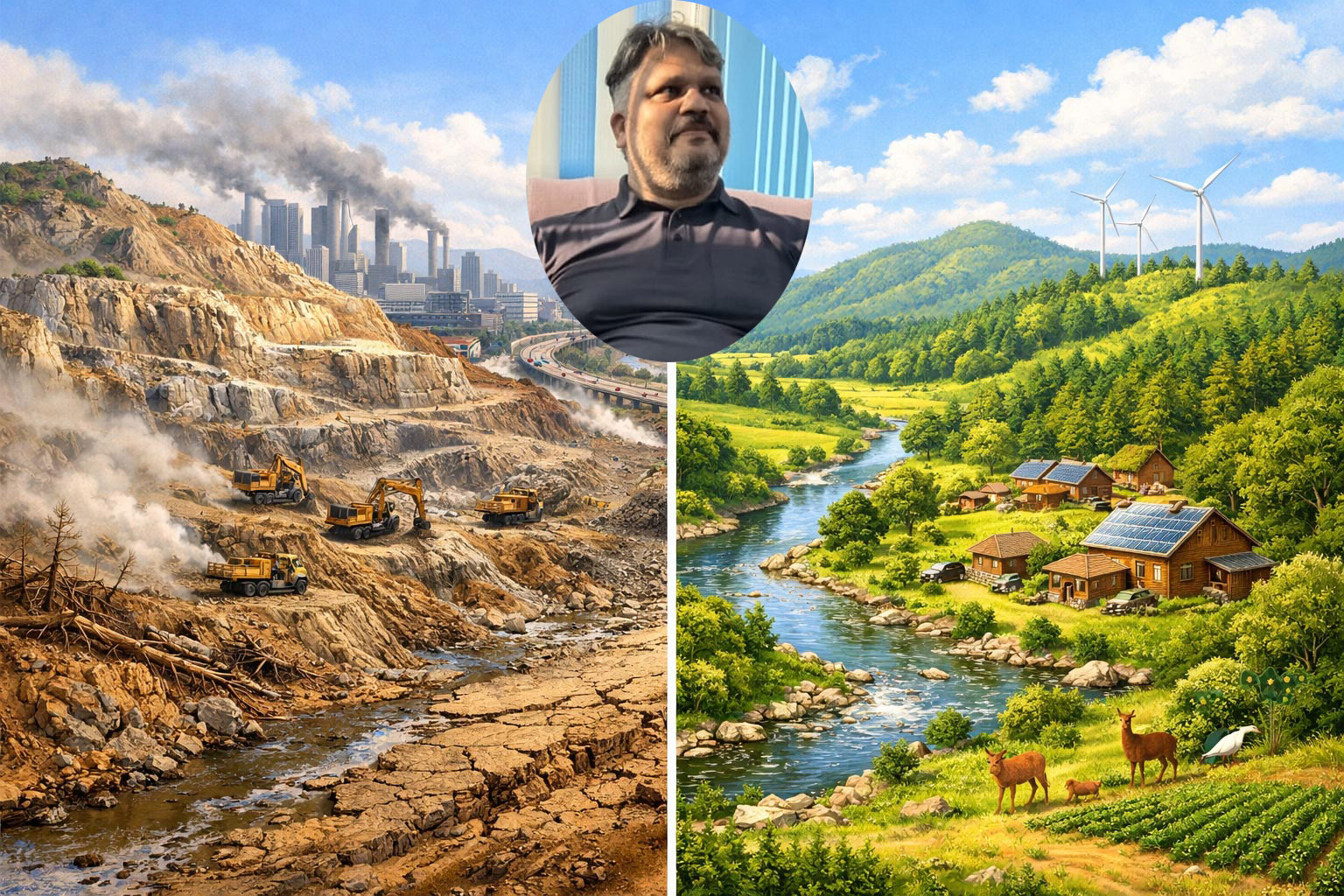
In the modern era, development is often measured by speed, growth, and material standards. Large infrastructure projects, industrial expansion, and urban sprawl are presented as symbols of progress. In this race, the question of at what cost all this is happening gets left behind. Deforestation, pollution of water and air, reckless exploitation of natural resources, and the declining biodiversity are often accepted as direct outcomes of development.
But the real question is whether such development, which weakens its own foundation, truly deserves to be called progress. When policies prioritize short-term gains and ignore long-term impacts, society has to pay a heavy price. Development should not mean only construction; it should also mean advancing while preserving.
The effects of environmental degradation are no longer confined to academic discussions or reports. Shortage of clean air, scarcity of drinking water, instability in weather, and sudden changes in temperature are impacting daily life. These changes not only create difficulties but also have a profound effect on human health, agriculture, and means of livelihood.
In this situation, the greatest damage is borne by those sections that are already economically and socially vulnerable. When water becomes scarce or weather turns unstable, these inequalities increase further. Thus, the environmental crisis is linked not only to nature but also to social justice and inequality.
Often, these problems are dismissed as natural disasters, but the reality is that many of them are the result of wrong human decisions. Interventions without scientific planning, weak implementation of policies, and lack of monitoring have made the environmental crisis even more severe. Despite the existence of laws and regulations, when they are not followed on the ground, nature suffers the most.
Responsibility is often distributed across various levels, and as a result, no one is held directly accountable. This weakens public trust, and environmental protection remains limited to documents. It becomes clear that environmental protection cannot be left as the responsibility of any single institution or government. Individual behavior, social thinking, and policy decisions are deeply interconnected.
When individuals make responsible choices in their daily lives and society values those choices, only then do policies move in that direction. Awareness for environmental protection should not be limited to symbolic actions or special days. It should be a continuous process strengthened through education, social discussion, and public participation. Without shared involvement, no effort can be sustainable in the long run.
It is very important to understand that balanced development is not an obstacle but a strong foundation for the future. Progress achieved by clashing with nature is temporary and often brings new crises with it. In contrast, development based on balance and sharing provides stability and security to society for a long time.
Protecting the environment is not the responsibility of one generation alone; it is an investment made for future generations. When this truth becomes an inseparable part of social thinking, only then does the meaning of progress become realized, and the human future can truly become secure.
- Davinder Kumar