Consumerism vs Sustainable Lifestyle

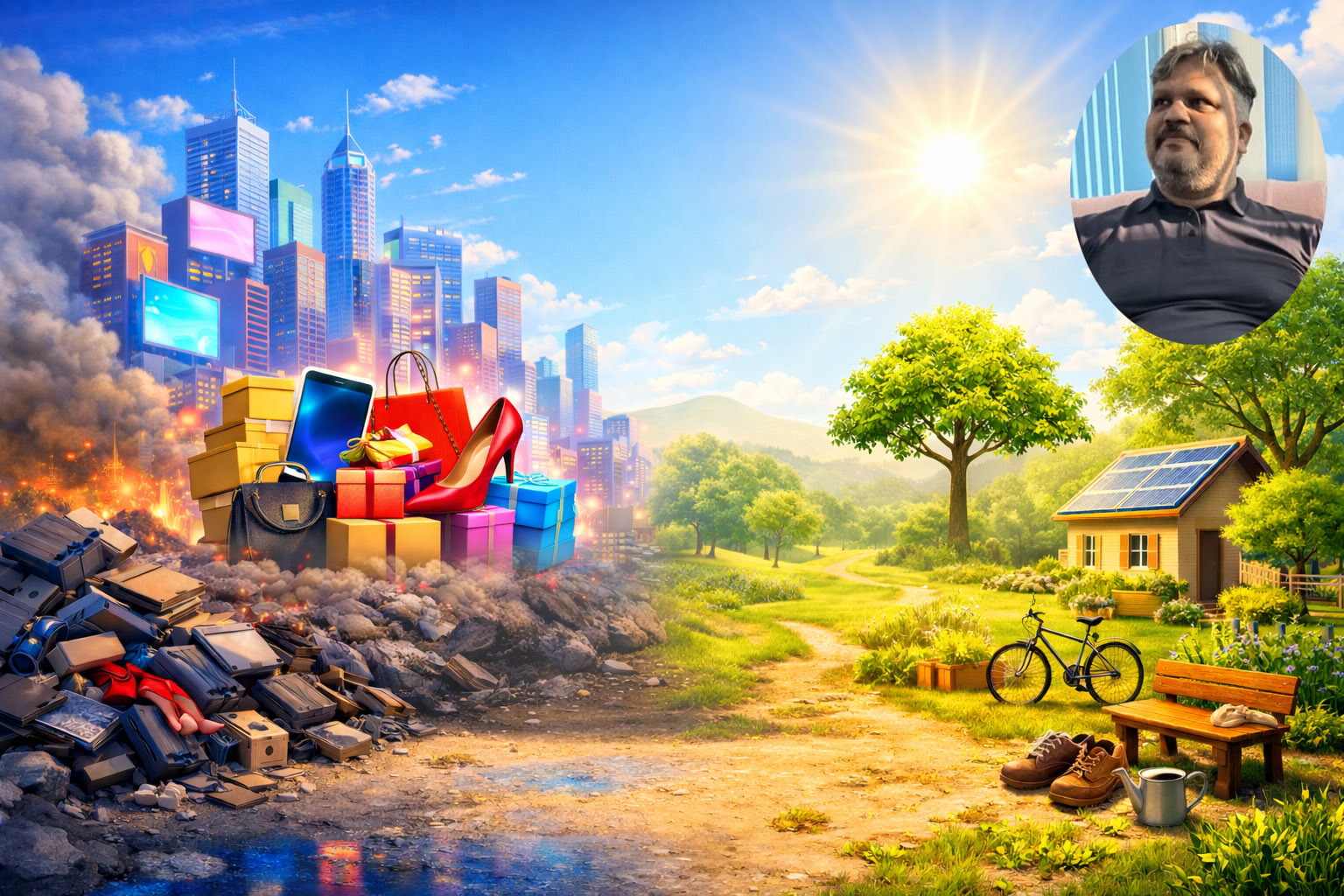
In today’s time, markets are no longer just places to buy and sell goods. They are also shaping our thinking, our identity, and our desires. A new model mobile phone, seasonal fashion clothes, festival discounts, and online offers are not just conveniences. They have become a kind of lifestyle. Buying is now more than a need. It has become like a habit. On the other side, the serious condition of the environment, climate change, water shortage, and mountains of waste remind us that everything has a limit. Standing between these two, society is going through deep reflection.
In today’s time, markets are no longer just places to buy and sell goods. They are also shaping our thinking, our identity, and our desires. A new model mobile phone, seasonal fashion clothes, festival discounts, and online offers are not just conveniences. They have become a kind of lifestyle. Buying is now more than a need. It has become like a habit. On the other side, the serious condition of the environment, climate change, water shortage, and mountains of waste remind us that everything has a limit. Standing between these two, society is going through deep reflection.
This issue is not as simple as “buy less” or “save more.” Consumerism has given speed to economic progress. Industries ran, jobs were created, new technologies came, and life became more comfortable. From villages to cities, goods reached homes that were once only a dream. Choices increased for the common person. Ignoring this side would mean closing our eyes to reality.
But the idea of sustainability raises different questions. We should think about whether what we buy is truly a need or only a desire. The life of every product remains limited to months, years, or sometimes just a trend. When we throw away an old item, we should think about where it finally ends up. These questions are not only related to nature but also connected to our way of living. Today’s marketing does not just sell products. It sells a new image such as “stay updated,” “do not fall behind,” and “new is better.” Social media has made this pressure stronger. Comparison has become easy, and satisfaction has become less. In such a situation, self control may seem like a weakness. But is it really a weakness?
Governments and policies are also part of this discussion. Waste management, control over plastic, and promotion of renewable energy are important steps. But policies must also be connected with economic balance. Industries provide employment, and employment is the backbone of society. Therefore, change does not come suddenly. It comes with careful thought. Business institutions are now using the word “green” more often. What is truly important is that promises are seen in action. Products should be made in such a way that they last for a long time. The culture of repair should also receive proper encouragement, and its value should increase in society. Sometimes sustainable options are expensive, which makes the choice difficult for the common buyer. It is necessary to understand that sustainability should not remain limited to the convenience of the wealthy class.
Earlier in our society, making do was considered a virtue. Clothes were repaired, shoes were stitched, and old items found new uses. Today, this habit has become weak. In fast paced life, buying a new item feels easier than repairing one. But easy is not always better. There is also a psychological side to this discussion. Shopping is often connected with human emotions such as happiness, reward, and satisfaction. In a time full of countless options, maintaining balance is not easy. A sustainable lifestyle is not a sermon. It is a practice that develops slowly.
The younger generation appears more aware about the environment. But the same generation is also the biggest participant in digital consumption. The older generation talks about simplicity, but it has also seen the benefits of industrial development. Therefore, instead of blaming each other, there is a need for dialogue. The real question is whether we can find a middle path between consumption and conservation. Another question is whether the economy can move toward a model where reuse, recycling, and sharing systems are strengthened. The definition of prosperity should not remain linked only to the number of goods. It should also be linked to the quality of life.
Society has many layers, and every person’s situation is different. But one thing is clear. Every choice, whether small or big, points in some direction. What we buy, how we use it, and how much we preserve it all together create the picture of the future. Consumerism has given convenience. Sustainability reminds us of balance. Perhaps the destination is not at either extreme, but somewhere in between, where development and responsibility can move together. The final decision is in the hands of society and in every home.
-Davinder Kumar