Rights Duties and a Distorted Balance

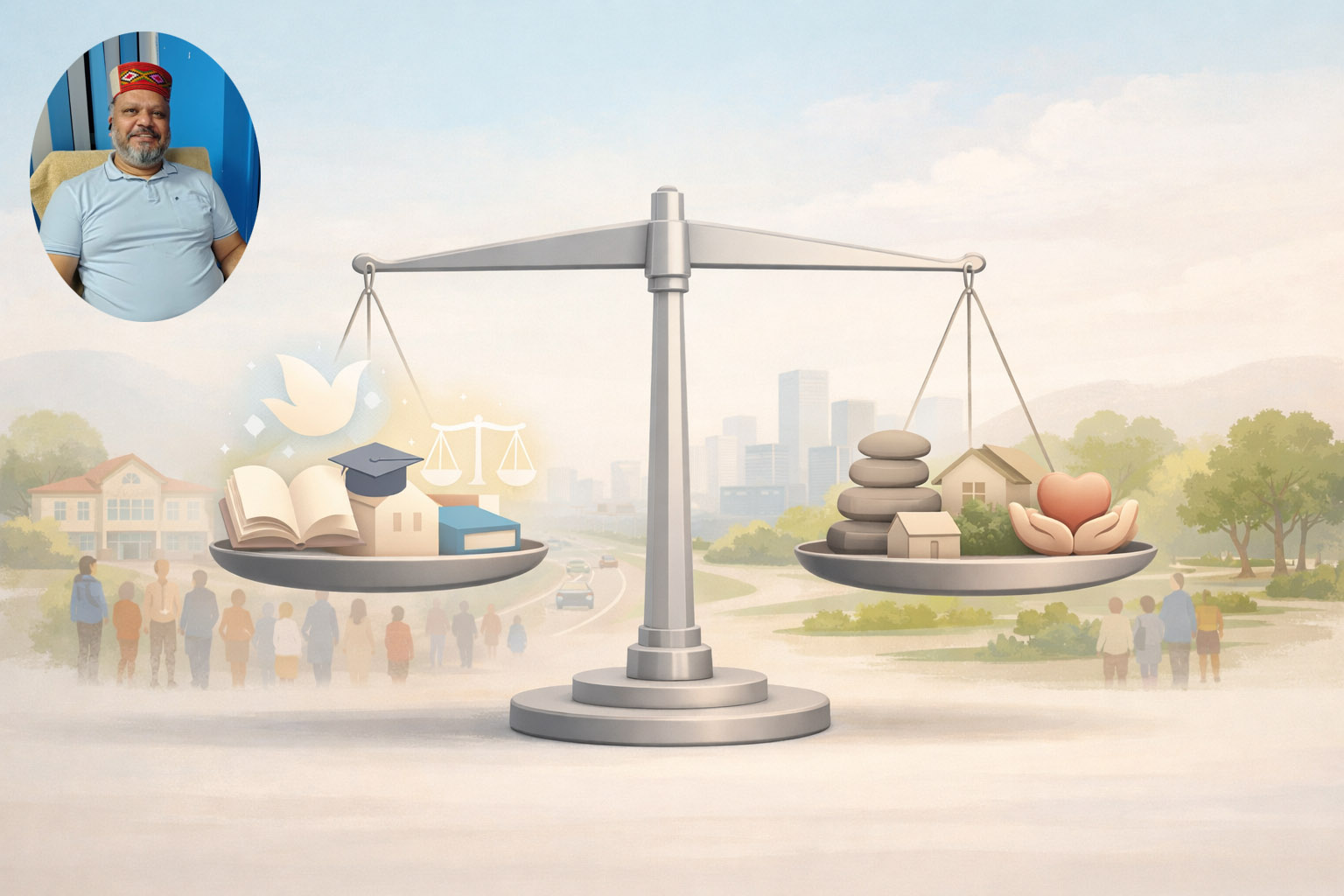
The strength of any democratic society is not measured merely by the existence of rights, but by the balance between rights and duties. Rights such as freedom, freedom of expression, equality, education, and justice are signs of an aware society. However, when these rights become detached from duties, democracy gradually begins to move toward disorder, arrogance, and conflict. The biggest crisis today is not that people lack rights; rather, it is that while the demand for rights is increasing, the understanding and observance of duties is declining.
The strength of any democratic society is not measured merely by the existence of rights, but by the balance between rights and duties. Rights such as freedom, freedom of expression, equality, education, and justice are signs of an aware society. However, when these rights become detached from duties, democracy gradually begins to move toward disorder, arrogance, and conflict. The biggest crisis today is not that people lack rights; rather, it is that while the demand for rights is increasing, the understanding and observance of duties is declining.
Talking about rights is easy. Every citizen is aware of their rights, and whenever an issue arises, the first question raised is about the violation of rights. But society’s wheel does not move on demands alone. Duties are the moral and social responsibilities that every individual must fulfill toward society, the nation, and the collective system of living. When duties are ignored, rights too lose their true meaning.
In a democracy, rights and duties are not opposed to each other; rather, they complement one another. There is a right to freedom of speech, but there is also a duty to use words with peace, truth, and responsibility. Freedom does not mean lawlessness. When rights are exercised without duties, hatred, misinformation, and conflict arise in society. In today’s times, this imbalance is especially visible in public life. Violating traffic rules on roads, damaging public property, throwing garbage in public places, or ignoring legal procedures—all these actions indicate that we remember our rights but forget our duties. A clean environment is a right, but keeping it clean is also a duty.
At the political level too, this balance is largely broken. Citizens demand accountability from governments, which is absolutely justified. But voting, making informed decisions, and participating in democratic processes are also civic duties. When people stay away from elections and then question governance, this too is a form of imbalance. Democracy is not merely a platform for demands; it is a shared responsibility.
In the education system as well, the lack of balance between rights and duties is evident. Students have the right to quality education, but the responsibility to learn, maintain discipline, and practice honesty are also their duties. When education is reduced to merely a means of obtaining a degree, society fails to produce capable and responsible citizens. Along with rights-based education, an understanding of duties must also be imparted.
Media and digital platforms have provided an even larger stage for rights. Every individual has the freedom to express their opinion, but this freedom cannot be devoid of responsibility. Spreading unverified information, presenting rumors as truth, and engaging in hate speech are all consequences of neglecting duties. When duties weaken, rights can become a danger to society.
The discussion of duties is often perceived as criticism or control, but in reality, duties form the foundation of social trust. Paying taxes, following the law, and respecting the rights of others—these are the actions that keep society functioning. When people think only about their own rights and violate the rights of others, democracy weakens.
Restoring this balance requires more than just laws. It is a social and moral responsibility. In schools, families, and public discourse, duties should be emphasized as strongly as rights. People need to be made to understand that fulfilling duties is not a burden, but a way of protecting their own rights.
Rights and duties are not two separate paths, but two sides of the same coin. Where rights without duties give rise to arrogance, duties without rights become oppression. For a healthy, just, and strong society, the balance of both is essential. If we become responsible citizens and respect our duties along with our rights, democracy will not only survive, but will also grow stronger.
— Davinder Kumar