
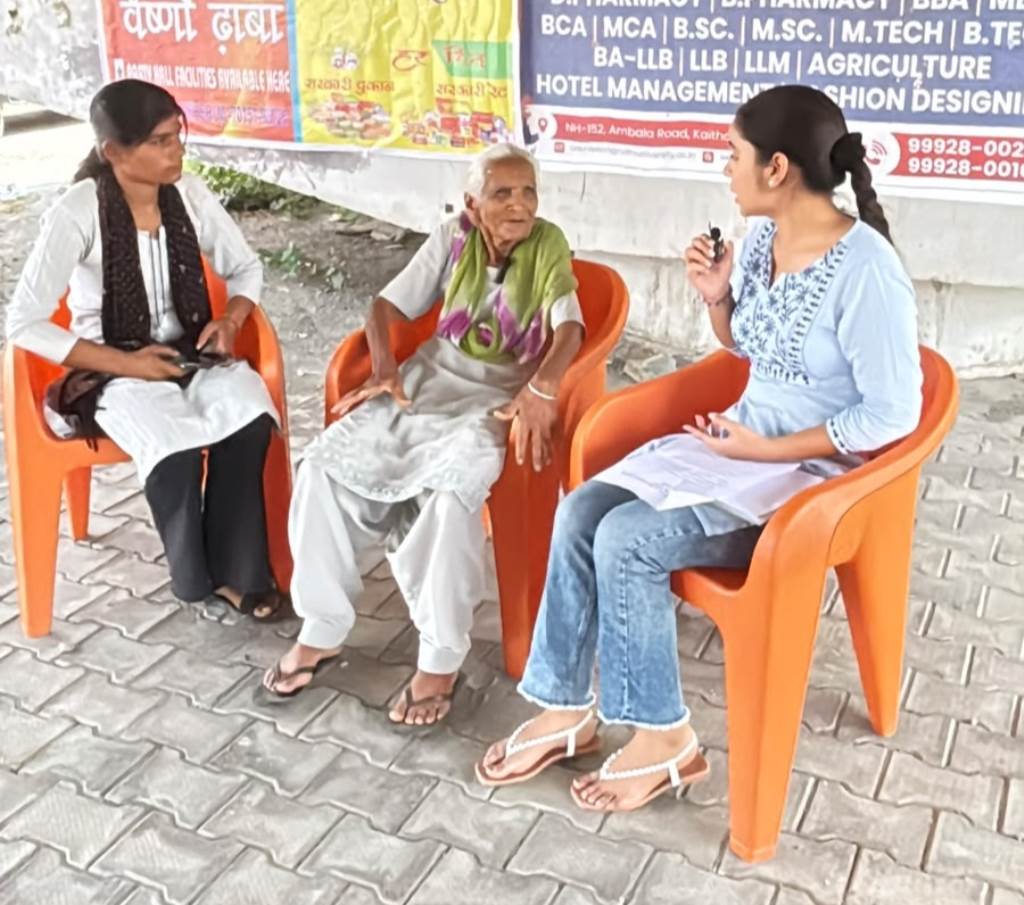
Nilokheri/Karnal, June 24: Students interning at the Haryana Institute of Rural Development, Nilokheri, toured the town and interacted with senior citizens who had settled in Nilokheri following the Partition. During these interactions, the students learned in detail about the hardships endured during the 1947 Partition of India, the circumstances of displacement, the rehabilitation process, and the experiences of starting a new life in Nilokheri.
Students from Kurukshetra University and Dyal Singh College, Karnal, recorded interviews with the elderly and documented their life journeys. They learned about the myriad challenges faced by lakhs of displaced families during the Partition and how Nilokheri was developed as a model settlement for the rehabilitation of refugees.
Dr. Virendra Singh Chauhan, Director of the Institute, stated that Nilokheri is not merely a town but a living saga of struggle, reconstruction, and self-reliance. It is essential to acquaint the new generation with their history and the sacrifices and struggles of those who established a new life here amidst adverse circumstances. Such initiatives not only connect the youth to their roots but also foster a sense of sensitivity towards history.
Dr. Chauhan mentioned that a documentary is being prepared based on these interviews and historical facts; it will be screened during the "Nilokheri Utsav" (Nilokheri Festival) scheduled for July. The documentary aims to familiarize the new generation with the history of Nilokheri, the tragedy of the Partition, and the struggles associated with rehabilitation.
The students remarked that listening to the experiences of the elderly was a deeply emotional and inspiring experience. Through these interviews, not only is history being preserved, but honor is also being paid to the courage and struggle of those who built new lives under challenging conditions. On this occasion, intern students—Rekha, Sonu, Manisha Rana, Arpita Kundu, and Tanishka Sharma—along with the institute's Public Relations Officer, Saurabh Arora, were present and provided assistance regarding the necessary information and coordination for the documentary's production.