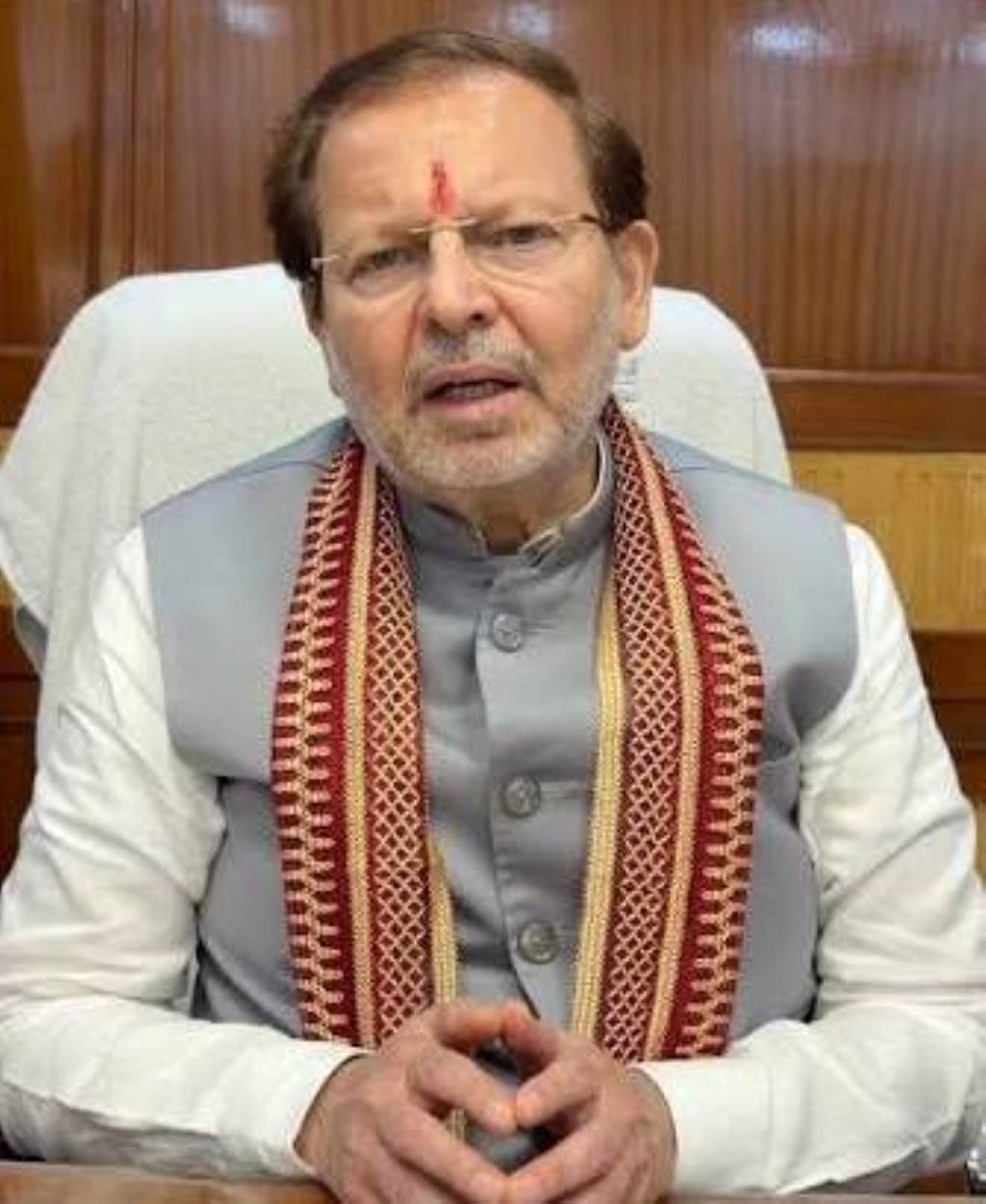
Chandigarh, September 13:- Haryana Cooperation Minister Dr. Arvind Sharma said that the basic principle of cooperation is ‘Not Me, But We’. By integrating cooperative institutions with technology, transparency, accountability and modern management, they are being developed as a strong foundation for the economic empowerment of farmers, employees, women and youth. The vision of Prime Minister Narendra Modi for a developed India and Union Home and Cooperation Minister Amit Shah’s mantra of ‘Prosperity Through Cooperation’ are being rapidly implemented on the ground in Haryana under the leadership of Chief Minister Nayab Singh Saini. He said that the Prime Minister’s vision is that all people will have an important role in making the country developed by the year 2047.
Dr. Arvind Sharma was addressing a programme of 'The Postal and RMS Employees Cooperative Bank' in Ambala Cantonment on Sunday. He congratulated the bank’s Chairman Sachin Kharb, Board of Directors, officers, employees and the postal and BSNL family on the institution’s long cooperative journey.
The Minister said that this cooperative institution, which was started in Lahore in 1928, came to Ambala Cantonment after Partition in 1947 and is today moving forward with a legacy of nearly a century. The association of more than 13,000 permanent employees of the Postal and BSNL departments from Jammu and Kashmir, Himachal Pradesh, Punjab, Haryana and Delhi as shareholders reflects the strength of cooperation. He said that the provision of immediate loan facilities of up to Rs. 11 lakh to a member in times of need reflects the institution’s commitment to the interests of its members. When a cooperative institution stands with an employee during their children’s education, marriage, housing needs or times of crisis, it is not merely a bank but plays the role of a family supporter.
Dr. Sharma said that in Haryana, PACS are being made multi-purpose instead of limiting them only to the distribution of fertilisers and loans. Work is being undertaken to make cooperative institutions strong centres of services in villages through the computerisation of 710 PACS and facilities such as Pradhan Mantri Kisan Samriddhi Kendras and Common Service Centres. HAFED and other cooperative institutions are playing an important role in procuring farmers’ crops and making fertilisers available, while dairy cooperatives are connecting thousands of livestock-rearing families with the market. Linking cooperation with Haryana’s identity, he said, "Doodh-dahi ka khana, yo se mhara Haryana." Our effort is that this strength of milk and curd should also become a source of economic prosperity for livestock rearers and rural families through cooperation. The Cooperation Minister called upon the bank management to keep the interests of members at the centre of every decision. He said that through the efforts of the present Board of Directors, the bank’s working capital has increased by nearly Rs. 200 crore over the past about two years. The greatest capital of any cooperative institution is the trust of its members, which is even greater than its balance sheet. This trust should be further strengthened through transparency and better services.
Referring to the contribution of postal employees, Dr. Sharma said that despite changing times and technology, society’s trust in the Postal Department remains intact. There was a time when the village postman brought not only letters but also the joys and messages of families. The bank is carrying that same trust forward with economic support and the strength of cooperation. He said that the government and the Cooperation Department are ready to provide all possible support in strengthening cooperative institutions that undertake positive initiatives. Our aim is that Haryana’s cooperative institutions become an example before the country in terms of service, transparency, modern technology and the interests of members.
Will Make Cooperatives a Strong Foundation for Prosperity Through Technology and Transparency Dr Arvind Sharma