

Chandigarh, September 30:- In accordance with the directions of Haryana Chief Minister Shri Nayab Singh Saini, the government’s decision to make the property registration process paperless is showing a major impact. With property registration being digitised, SOPs being prepared for 140 types of deeds and the role of intermediaries being eliminated, a new system has been established in the field of property registration. As a result of these comprehensive reforms, the state’s stamp duty revenue is increasing at a rate of around 9 to 10 per cent every year.
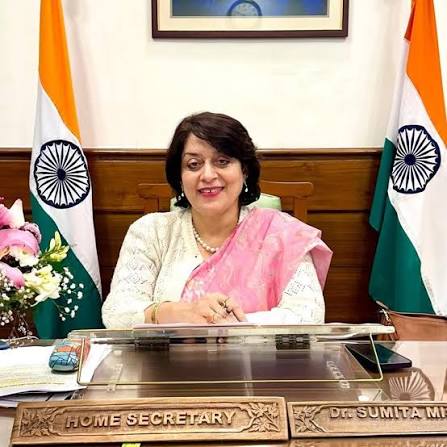
Finance Commissioner of the Haryana Revenue and Disaster Management Department, Dr. Sumita Misra, said that these reforms demonstrate that more simple, transparent and citizen-centric administration can be linked with strong revenue growth. Emphasising the need to review the entire system of tax exemptions and incentive concessions afresh, she said that such concessions should be linked with clearly defined policy objectives, should generate actual economic benefits and ultimately lead to an increase in tax revenue over time.
Dr. Sumita Misra was addressing a one-day national conference on strengthening Haryana’s own tax revenue and improving the tax structure and analytics-driven tax administration for Viksit Haryana 2047 in Chandigarh today. Referring to the comprehensive changes made in the property registration system in Haryana, she said that the state has moved beyond the old system in which citizens had to make repeated visits to tehsils and depend on stamp vendors, deed writers, lawyers and other intermediaries. She said that all these processes have been simplified.
Dr. Misra said that standard formats for around 140 types of deeds have been prepared for registration. At the same time, digital signatures, secure authentication and Aadhaar-linked processes have also been incorporated into the system. She said that citizens can complete the process themselves without taking assistance from any intermediary if they wish. Citizens only have to enter their details and submit the documents online, after which revenue officials scrutinise the documents within the prescribed time limit and return them. She said that since the launch of the new paperless registration system, more than 6.5 lakh registrations have been completed so far.
She said that the new system also has a safeguard to prevent files from being repeatedly sent back for corrections. Officials are allowed to return a deed a maximum of two times. She said that the processes have been made very simple and transparent.
Dr. Misra specifically said that simplifying and streamlining the processes has not had any adverse impact on government revenue. She said that stamp duty revenue in Haryana is continuously increasing, with an annual growth of 9 to 10 per cent. Discussing tax policy, Dr. Misra said that the entire system of tax exemptions, incentive concessions and rebates needs to be reviewed impartially. She said that it is necessary to see which provisions are actually effective and which are not.
She said that every tax concession should be clearly linked to a clearly defined public policy objective. She described green manufacturing and the circular economy as important areas where governments can use targeted and effective incentives. Referring to Haryana’s new industrial policy, she said that it covers areas such as manufacturing, logistics, supply chain and sustainable development.
Dr. Misra said that the fiscal impact of tax concessions should be made an important part of revenue planning. She said that in the medium term, the objective should be that this results in an increase in tax revenue. If a concession is effective, it should generate higher revenue in the medium term. She clarified that incentive concessions may lead to some reduction in revenue in the short term, but if they succeed in attracting the required investment, the government should benefit from it in the form of revenue in the long term.
Dr. Misra also emphasised the importance of stability and predictability in the tax system. She said that businesses want certainty in the tax system for making long-term plans. The greater the stability, the better the business plans will be. Making frequent changes in any tax system is one of the worst things. She suggested that when changes are necessary, they should be made together around the time of the budget rather than being made separately at frequent intervals.
Referring to her experience as a Senior Adviser to the Economic Advisory Council to the Prime Minister during the period after the implementation of GST, Dr. Misra said that discussions with small businesses, large companies, chartered accountants, tax advisory firms and other stakeholders had brought out two major concerns—complexity and constant changes. She said that it is important to improve policies on the basis of feedback, but instead of implementing reforms one by one, it would be more effective to implement them as a package. She suggested that five changes should be made in one package rather than making five different changes in five weeks.
Dr. Misra said that the objective of administrative reforms should not be limited only to efficient collection of taxes, but should also be to reduce the cost and complexities faced by citizens in complying with regulations. She cautioned that merely making a process digital does not automatically make it citizen-friendly. She said that despite digital systems, several tax forms are so complex that small businesses and ordinary citizens have to seek professional assistance to comply and file returns.
She said that the real challenge before governments is to view their systems from the perspective of an ordinary citizen. Dr. Misra said that being able to think like a citizen is a major challenge for governments. She said that the reforms made in Haryana’s property registration system show the way forward for administrative reforms. Removing intermediaries, simplifying processes, increasing transparency and ensuring time-bound services—all these reforms have been implemented in such a manner that government revenue can also be protected and continue to grow consistently.