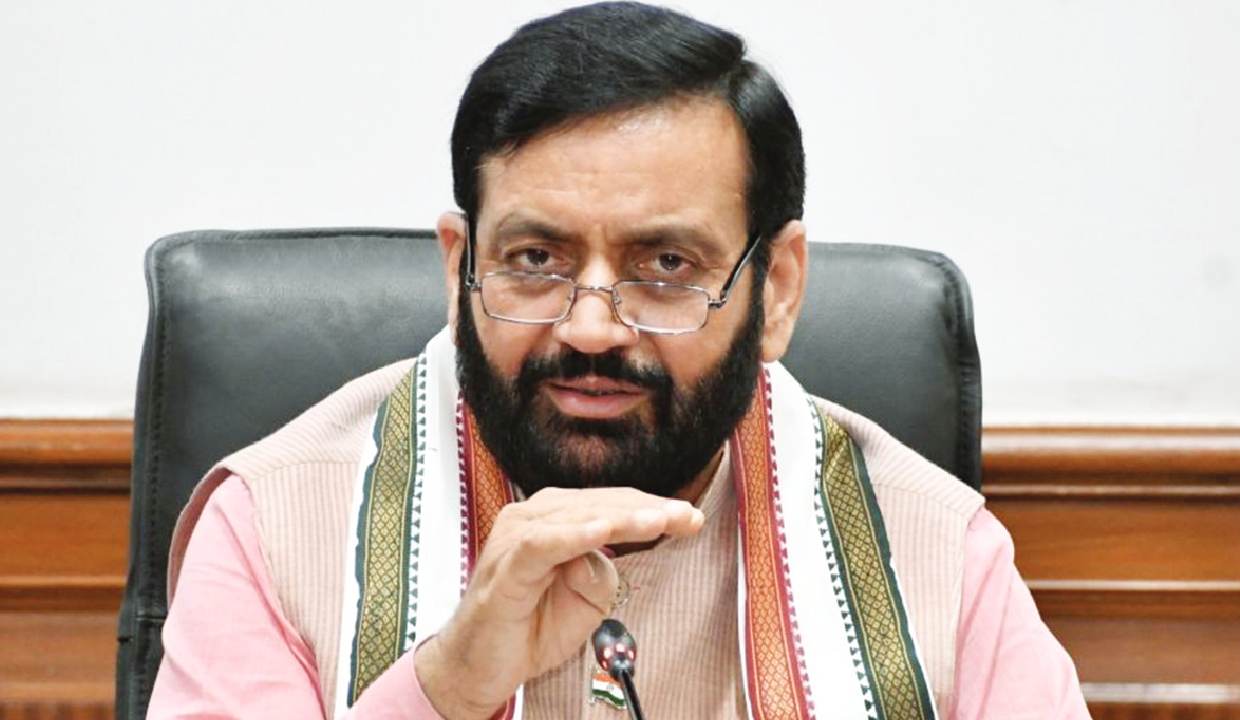

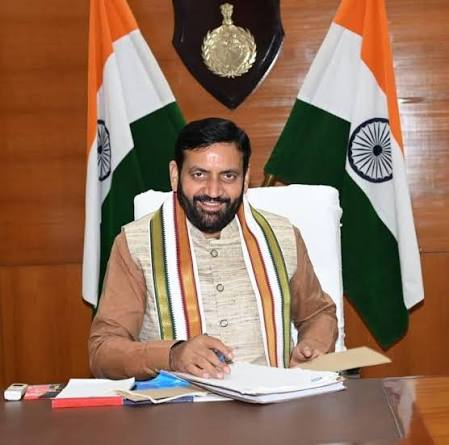
Chandigarh, September 30:- Haryana Chief Minister Shri Nayab Singh Saini said that the goal of strengthening Haryana’s own fiscal system would be achieved not by increasing tax rates, but by expanding the tax base, improving compliance, checking revenue leakage and making effective use of modern technology. The government’s clear objective is to enhance the state’s fiscal capacity without imposing an additional burden on honest taxpayers.
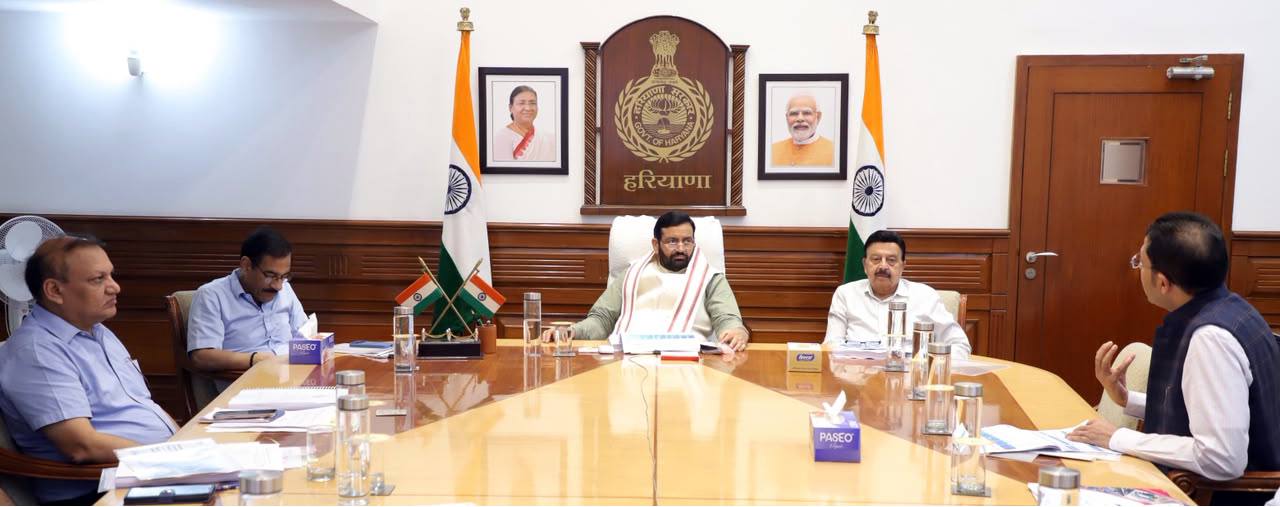
Chief Minister Shri Nayab Singh Saini was addressing the inaugural session of a national conference organised for the analysis and strengthening of ‘Haryana’s Own Tax-Fiscal System’ for Viksit Haryana 2047 on Wednesday. Organised by the Swaran Jayanti Haryana Institute for Fiscal Management (SJHIFM), the conference was attended by policymakers, tax administrators, economists, academicians and technical experts, including Chief Economic Adviser to the Government of India Dr. V. Anantha Nageswaran, Additional Chief Secretary, Finance Department, Shri Arun Gupta, Commissioner and Secretary, Excise and Taxation Department, Smt. Ashima Brar, Director General, SJHIFM, Dr. Raj Nehru, and Adviser Shri N.K. Bishnoi.
Chief Minister Shri Nayab Singh Saini said that the ultimate objective of a strong fiscal system is not merely to collect more revenue, but to improve the lives of ordinary people by providing better roads, schools, hospitals and public services. He said that it is the government’s priority to ensure that taxpayers receive clear information about rules and procedures and that tax compliance remains easy and transparent for them.
29 Per Cent Growth in SGST Collection:
The Chief Minister said that during the first five months of the current financial year, from April to August, Haryana’s State Goods and Services Tax (SGST) collection increased by 29 per cent to Rs. 24,662 crore. During the same period last year, the collection was Rs. 19,174 crore. In August 2026 also, Haryana’s SGST collection registered a growth of 21 per cent, while the national average growth was 13 per cent.
He said that Haryana accounts for less than 4 per cent of the country’s total GST taxpayers, but the state contributes around 7.7 per cent of the country’s total GST collection. The need now is to convert this growth into sustainable fiscal capacity.
Revenue Base to Grow Along with Economic Development:
The Chief Minister said that Haryana has rapidly moved from an agriculture-dominated economy towards an industry- and services-based economy. Global Capability Centres, IT, Artificial Intelligence and advanced services are expanding in Gurugram. The India International Horticulture Market in Ganaur, automobile manufacturing investments in IMT Kharkhoda and industrial and logistics projects in Rewari, Hisar and other areas are giving new momentum to the state’s modern economic activities.
He said that traditional MSME clusters such as Panipat’s textile industry, Ambala’s scientific equipment industry, Hisar’s steel industry, Yamunanagar’s plywood industry and Rohtak’s nut-bolt and auto-component industry are also an important foundation of the state’s economic strength. The Chief Minister said that every new industry, investment and enterprise creates possibilities for a new revenue base along with employment.
Target of 10 Per Cent by 2030 and 15 Per Cent by 2047:
Chief Minister Shri Nayab Singh Saini said that Haryana’s own tax revenue is currently less than 7 per cent of GSDP compared with the state’s economic capacity. A target has been set to take it to 10 per cent by 2030 and 15 per cent by 2047. He made it clear that this target would not be achieved by increasing tax rates. Emphasis would instead be placed on improving the efficiency, coverage and productivity of the existing fiscal system, expanding the tax base, encouraging compliance with rules and preventing revenue leakage. He said that the rate has to be increased through the base, not the burden, and compliance has to be increased. He said that since Prime Minister Shri Narendra Modi took charge of the country, the confidence of foreign investors in India has increased. The path to a developed India will become clear through a developed Haryana.
One-Time Settlement Period Extended Till November 30:
The Chief Minister said that the ‘Haryana One-Time Settlement Scheme, 2026’ has been implemented to resolve old pending tax disputes. Its objective is to settle old cases and reduce unnecessary litigation. Around 1 lakh 15 thousand traders had availed the benefit of the 2025 scheme. For the convenience of traders, the period of this year’s scheme has been extended till November 30. He said that through ‘Paperless Registration 2.0’ and the ‘Auto Mutation System’, the processes of registration and mutation are being made digital, transparent and timely.
Tax Administration to be Modernised with AI and Data Analytics:
The Chief Minister said that the fiscal system of the future should be data-driven and empowered by modern technology. By linking data from GST, registration, transport, electricity, urban development and other government systems, a comprehensive picture of economic activities can be prepared. This will help identify revenue potential and gaps. He said that risk identification, prevention of revenue leakage and improvement in compliance can be achieved through Artificial Intelligence, machine learning, advanced data analytics and integrated databases. However, the objective of technology should not be limited only to monitoring, but should also be to provide better services to honest taxpayers.
Action Plan to be Prepared with Taxpayer at the Centre:
The Chief Minister called upon experts at the conference to prepare a clear action plan on immediate measures for the next one to two years, medium-term reforms, future technology and data systems, and necessary institutional changes. He said that taxpayers should remain at the centre of the entire action plan. There should be better coordination among all departments, citizens’ time should be saved, their uncertainty should be reduced and they should receive better facilities. Citizens who pay taxes honestly should be respected, while an effective system should be in place against those who do not comply with the rules.
Chief Minister’s Principal Secretary Outlined Important Initiative:
Principal Secretary to the Chief Minister and Additional Chief Secretary, Finance Department, Shri Arun Gupta said that strengthening and broadening the state’s resources is essential to realise the goal of ‘Viksit Bharat-Viksit Haryana’. He said that the state receives resources mainly through grants and support from the Government of India, borrowings and its own revenue. In such a situation, the conference is an important initiative towards increasing the state’s own revenue, making the revenue collection mechanism more effective and addressing potential gaps in the fiscal system through necessary changes at the policy level. He said that the guidance and suggestions received during the conference would be taken forward at the policy level and concrete efforts would be made to strengthen the state’s revenue resources and Haryana’s economic structure.
Chief Economic Adviser Highlighted Haryana’s Economic Potential:
Chief Economic Adviser to the Government of India Dr. V. Anantha Nageswaran, while highlighting Haryana’s economic potential, said that the state has the capacity, economic dynamism, strong industrial base, spirit of entrepreneurship and good governance required to achieve the target of becoming a $1.5 trillion economy by 2047. Describing Haryana as one of the leading examples of India’s manufacturing sector, he said that the state is setting an example for other states in simplifying regulations and reducing the burden of compliance. He also emphasised trust-based and risk-based regulations and promoting small and medium enterprises.
Dr. V. Anantha Nageswaran said that around half of Haryana’s own revenue comes from State GST, with 51 per cent representing business taking place within the state and 49 per cent coming through IGST, which he described as a healthy mix.
Dr. Raj Nehru Described the Conference as an Important Link:
Director General of the Swaran Jayanti Haryana Institute for Fiscal Management, Dr. Raj Nehru said that the conference would prove to be an important link towards discussing essential aspects for achieving the Central Government’s goal of Viksit Bharat by 2047, making Haryana a $1.5 trillion economy, creating 50 lakh new jobs and fulfilling the concept of good governance, as well as adopting suggestions from experts.