
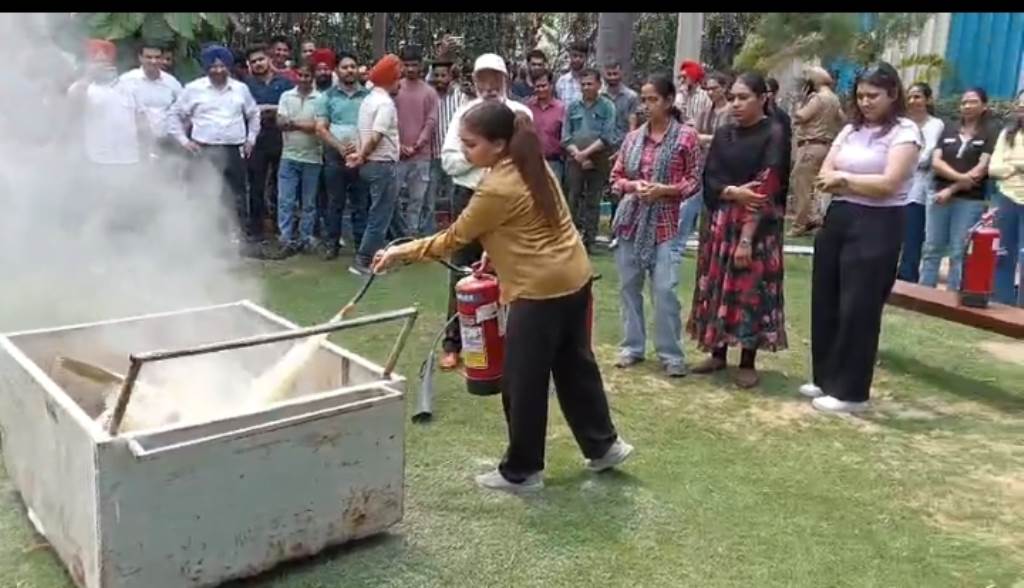
Paitala:- Harsimran Pal Singh stated that disaster management is achievable only through training, practice, and mock drills. Every year, fires caused by gases, electricity, petroleum, batteries, chemicals, and flammable substances result in the deaths of over a hundred thousand people—including employees and their family members—and cause losses amounting to billions of rupees. Citizens, institutions, and business establishments bear responsibility for this, as they often fail to undertake efforts to learn or teach procedures regarding fire safety, cylinder usage, and the rescue and transport of victims. While 90 percent of buildings are equipped with fire extinguishers, hoses, and other safety systems, training, practice, or mock drills on their usage are rarely conducted.
Harsimran Pal Singh, Plant Manager at the Amber Enterprises factory in Focal Point, expressed these views while observing the impressive execution of training and mock drills—and the resulting confidence among employees—aimed at preventing fire-related damage caused by rising temperatures, heat, and heatwaves. He thanked Kaka Ram Verma, a retired Red Cross training supervisor and disaster management trainer, noting that Verma acts like a guardian angel by conducting training, practice, and mock drills that help reduce accidents and save precious lives.
Kaka Ram Verma conducted mock drills by organizing ten different disaster management teams to provide training on the causes and types of fires, extinguishing methods (using water, soil, or starving the fire of oxygen), and the proper use of fire extinguishers. He emphasized that only those institutions, households, and business establishments that undergo training and practice in disaster management, fire safety, first aid, CPR, recovery positions, artificial respiration, and the care of the injured can remain safe, healthy, prosperous, and progressive. Thanking the factory officials, he stated that educational institutions, hospitals, malls, petrol pumps, hotels, *dhaba* operators, and drivers must conduct training sessions and mock drills twice a year. This is crucial because even a slight rise in temperature can ignite fires involving gas, electricity, petroleum, batteries, chemicals, and plastic materials—fires that spread within four to five minutes and wreak havoc.
Thousands of people lose their lives due to vehicle fires and smoke. Therefore, educational and commercial institutions should organize training, exercises, and mock drills for their associates, students, and staff. These measures—aimed at preventing loss of life and property and assisting victims during natural, seasonal, and man-made disasters or conflicts—can prove instrumental in averting such losses during future incidents.