Changing Economic Conditions and Rising Costs

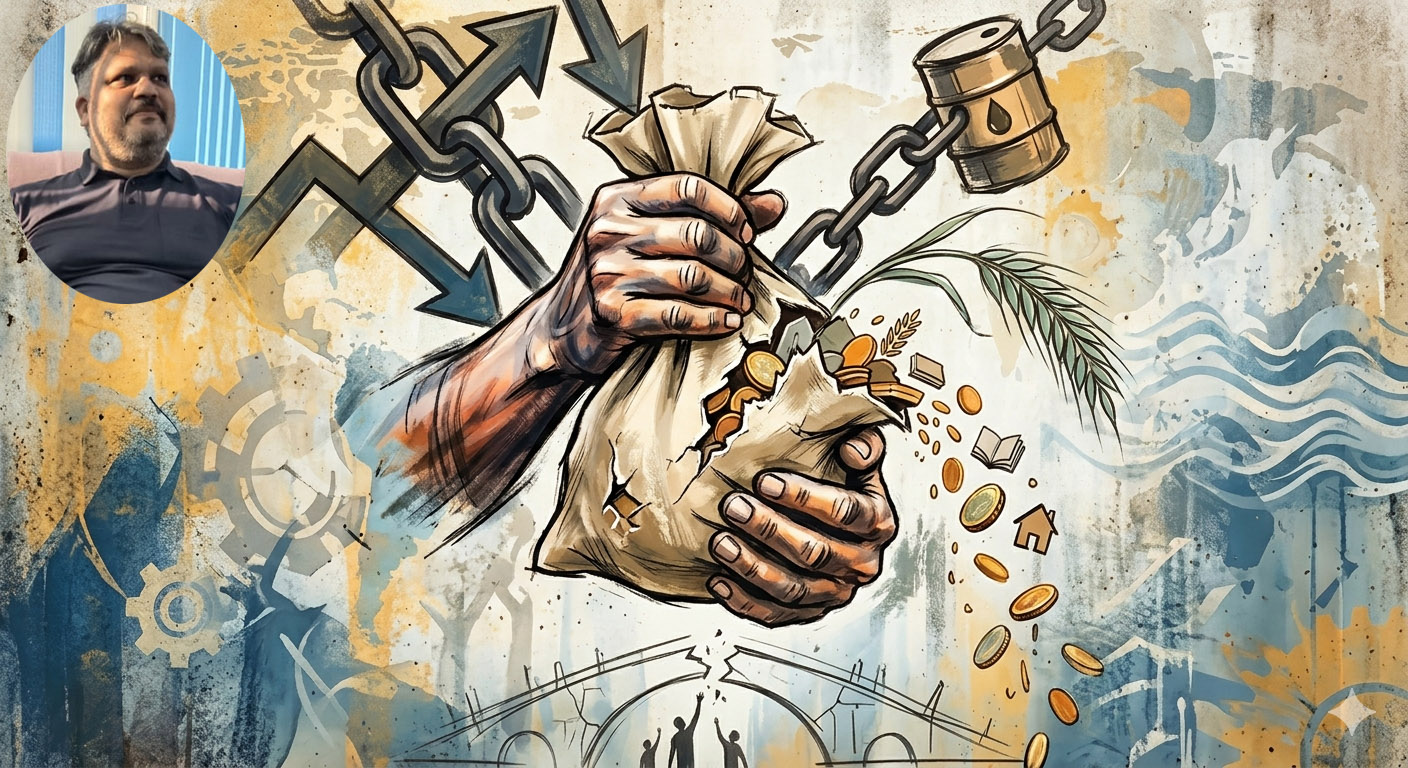
Over the past few years, a distinct change has been clearly felt in the lives of the common people, a topic that is discussed in almost every household—the rise in daily expenses. Household expenses, which could once be easily managed within a fixed income, now demand planning and caution for many families. Due to the increasing cost of kitchen expenses, children's education, healthcare services, transportation, house rent, electricity-water bills, and other essential needs, people have been forced to look at their monthly budgets in a new way. This situation is not limited to just one country or region.
Over the past few years, a distinct change has been clearly felt in the lives of the common people, a topic that is discussed in almost every household—the rise in daily expenses. Household expenses, which could once be easily managed within a fixed income, now demand planning and caution for many families. Due to the increasing cost of kitchen expenses, children's education, healthcare services, transportation, house rent, electricity-water bills, and other essential needs, people have been forced to look at their monthly budgets in a new way. This situation is not limited to just one country or region.
Many countries around the world are currently feeling the impact of rising prices and the increasing cost of living. There are several international factors behind this. Global conflicts, fluctuations in crude oil prices, the rising cost of maritime transport, supply chain disruptions, and the impact on agricultural production due to seasonal changes in many countries—all of these together are affecting prices. When oil becomes expensive in the international market, its impact is not confined to fuel alone; rather, due to increased transportation and production costs, it also affects the prices of many other commodities.
Climate change has also become a significant cause of this problem. In many countries, unseasonal rains, heatwaves, droughts, or flood-like situations have impacted agriculture. When crop production decreases in one region, its impact is not limited to that area alone, but is also seen in global prices. Today, the world is interconnected in such a way that the impact of an economic or natural challenge in one country is visible in the markets of other nations as well. In developing nations like India, the impact of this situation is felt somewhat differently. On one hand, there is talk of economic growth, investment in infrastructure, and the creation of new employment opportunities;
on the other hand, ordinary families are feeling the continuous rise in their daily expenses. Balancing the monthly budget has become more difficult than before for middle-class and fixed-income families. Where income growth happens at a slow pace, continuous changes in the prices of daily essential goods and services affect people's spending capacity. However, it is also a reality that the economic picture is not always of a single color. In some sectors, people's incomes and job opportunities have increased, technology and digital services have made many conveniences easier, and various efforts at governmental and private levels have also provided assistance to the people.
The impact of the rising cost of living is not the same on every section of society. People who have surplus income or financial security can adapt to the changing circumstances. In contrast, for families with fixed salaries or limited incomes, even a small increase in prices can impact their monthly planning. A balanced perspective is needed to understand this issue. On one hand, behind the price rise are several global factors that may even be beyond the direct control of the system. On the other hand, it is also true that every country tries to mitigate the impact on its people through its policies, production capacity, market management, and social support systems.
But the most important thing is that the rising cost should not be viewed merely by limiting it to statistics or the rate of inflation. It is also linked to people's daily lives, their hopes, their spending capacity, and future planning. For a family, this is not just a matter of a budget, but also a question of whether they will be able to sustain children's education, health, savings, and a balanced life. Rising cost is an issue that needs to be understood not just from the perspective of support or criticism, but also in the context of reality and changing global economic conditions.
- Davinder Kumar