BJPs 4000km Yatra Against Drugs Nitin Nabin to Launch Amit Shah to Conclude

Chandigarh:- The Punjab unit of the Bharatiya Janata Party (BJP), launching a major campaign against drugs in the state, has announced that four state-wide “Drug-Free Punjab Yatras” will be taken out from September 18. Being organised under the slogan “BJP’s slogan: Eliminate drugs completely”, the yatras will cover all 117 Assembly constituencies in Punjab and travel a total distance of 4,000 kilometres.
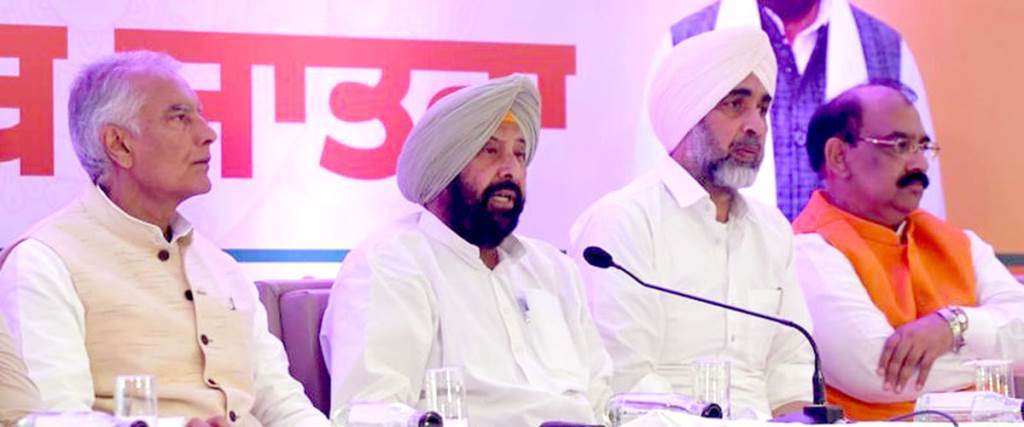
At a press conference in Chandigarh, state BJP president Kewal Singh Dhillon made the announcement in the presence of national vice-president Manpreet Singh Badal, former state presidents Sunil Jakhar and Ashwani Sharma, along with other senior leaders. Dhillon launched a sharp attack on the Aam Aadmi Party (AAP) government, saying that the government had failed to curb drugs and was adopting a dictatorial approach by harassing those who raised questions. He said the yatras would not only be against drugs but also against the deteriorating law-and-order situation and corruption allegedly spread from the tehsil level to the Chief Minister’s Office.
Under the programme, BJP national president Nitin Nabin will flag off the first yatra from Madhopur in Pathankot on September 18. The second yatra will begin from Fatehgarh Sahib on September 19, the third from the Sadiki border in Fazilka on September 20, and the fourth from Talwandi Sabo on September 21. Passing through various constituencies, the yatras will culminate in Jalandhar on September 30, where Union Home Minister Amit Shah will address the concluding event.
BJP national vice-president Manpreet Singh Badal said that the war against drugs cannot be won merely by registering FIRs against drug addicts and traffickers, but should primarily focus on rehabilitation. He said the real battle was to break the drug network by tracing the money trail instead of merely chasing the drug packets. Badal said the BJP would establish an anti-drug intelligence grid that would bring together the police, intelligence agencies, rehabilitation experts, and social and religious workers to find a comprehensive solution to the problem.