
Food safety is not ensured merely by reading labels

Food is the most basic need of human life. Therefore, food safety cannot be limited to the personal caution of the customer or merely reading the information written on the packet. The consumer must certainly check whether the expiry date, ingredients, nutritional information and other details of the product are correct or not, but before that it is the responsibility of the system to ensure that the product reaching the market is safe and as per prescribed standards.
Food is the most basic need of human life. Therefore, food safety cannot be limited to the personal caution of the customer or merely reading the information written on the packet. The consumer must certainly check whether the expiry date, ingredients, nutritional information and other details of the product are correct or not, but before that it is the responsibility of the system to ensure that the product reaching the market is safe and as per prescribed standards.
Recently, investigation reports that have come to light about India's packaged food sector have given new importance to this issue. The reports mention problems like incorrect or misleading labelling, changing the date of expired or near-expiry products and hygiene-related violations. FSSAI has also taken action in the recent past against illegal re-labelling and poor storage. This situation is not just a matter of a single company, shop or product. The real challenge is that India's food market is changing very rapidly. Along with packaged food, online grocery, quick commerce, ready-to-eat food, energy drinks and new types of processed food products are growing rapidly in the market. When the pace of the industry is so fast, it is essential for the system of rules, testing, monitoring and enforcement to also change at the same pace.
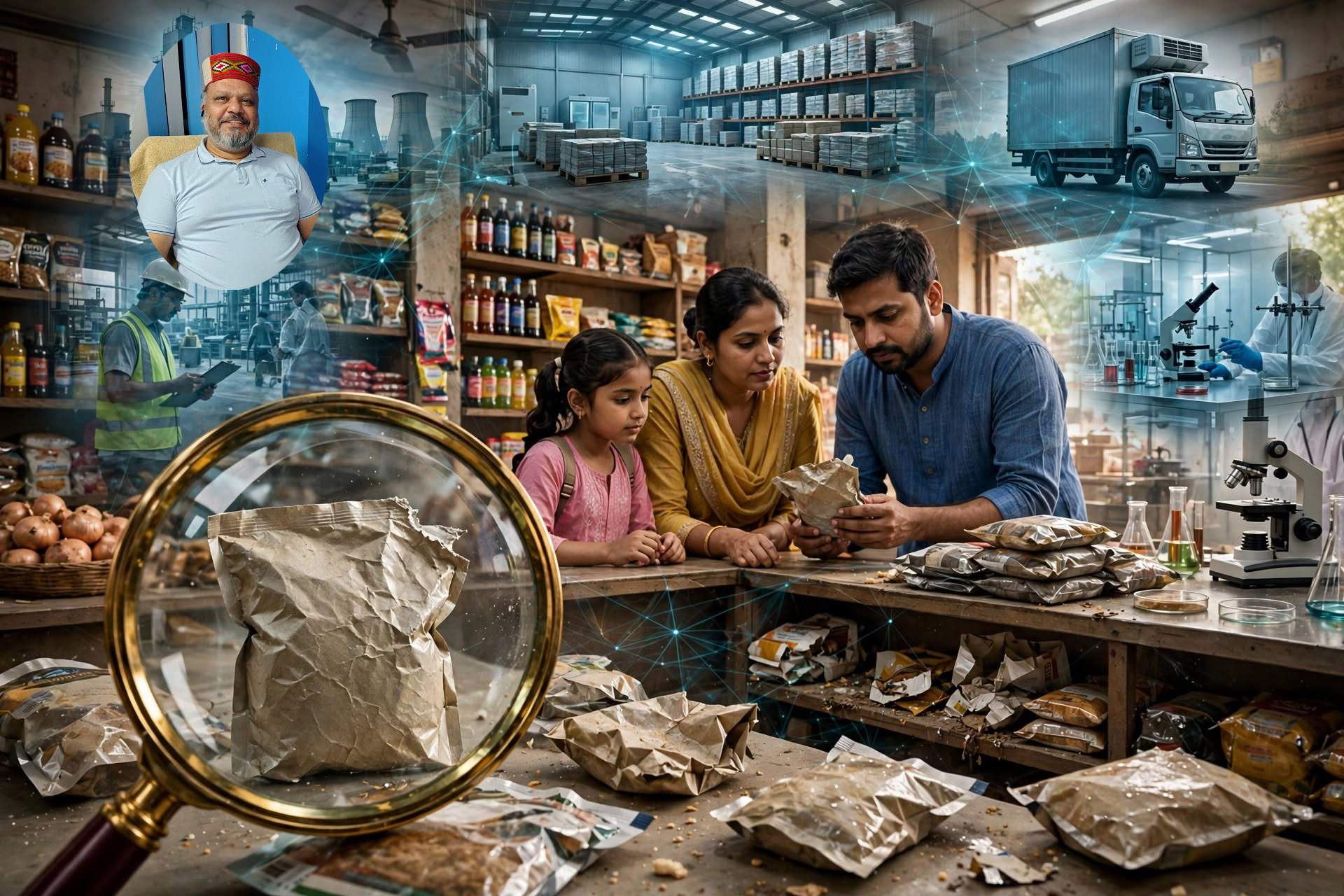
Here the issue of labelling holds special importance. The common consumer has no means to check the internal quality of a product or its preparation and storage process. He relies only on the information given on the packet. If this information is wrong or deliberately kept incomplete, then the caution of the customer also becomes limited. Therefore, the label is not just a means of information, but a link of trust between the consumer and the producer. Similarly, considering tampering with the expiry date as merely a commercial fraud is also not enough. The quality of food can change with time and in some products the risk can increase further due to wrong storage. Therefore, monitoring of the entire supply chain from preparation of the product to warehouse, transportation, retail store and the final consumer is important.
In this matter, the role of regulators also cannot be limited to only raids. Clarity of rules, regular sampling, modern laboratories, digital tracing, rapid investigation and timely action in case of violation — all these elements should work together. The existing records of FSSAI also show that amendments are being made from time to time in the rules related to labelling and display.
Another aspect is that of nutrition-related information. Today the consumer does not want to know only whether something is edible or not, but also wants to understand how much sugar, salt, fat and other nutrients are present in it. The ongoing discussion about putting more clear warning labels on packaged food shows this changing need. Its purpose is not only to control the industry, but also to give clear information to the consumer to take a better decision. The responsibility of the industry is also of the same level. Compliance with rules should not be only to avoid penalty, but should be for protecting the trust of the consumer. From big companies to small manufacturers and local vendors, it is necessary to make safe storage, cleanliness, correct labelling and quality checking a basic part of business.
At the same time, the role of the customer also does not end. The habit of reading expiry date, condition of package, storage and label is important. But expecting the customer to himself check the safety of every product is an impractical expectation. The common citizen has neither a lab nor information about the production process. Therefore, food safety needs to be seen as a shared but responsible system, in which the government makes rules and implements them effectively, industry honestly follows the standards and consumer remains aware. In a rapidly changing food market, facing new challenges with old methods will not be enough. If the food industry is changing with new pace, then the regulatory system will also have to become modern at the same pace. Because ultimately the trust of the consumer is a bigger thing than any label, and protecting that trust is the responsibility of the whole system.
- Davinder Kumar