AI at PU Moves from Buzzword to Research Practice

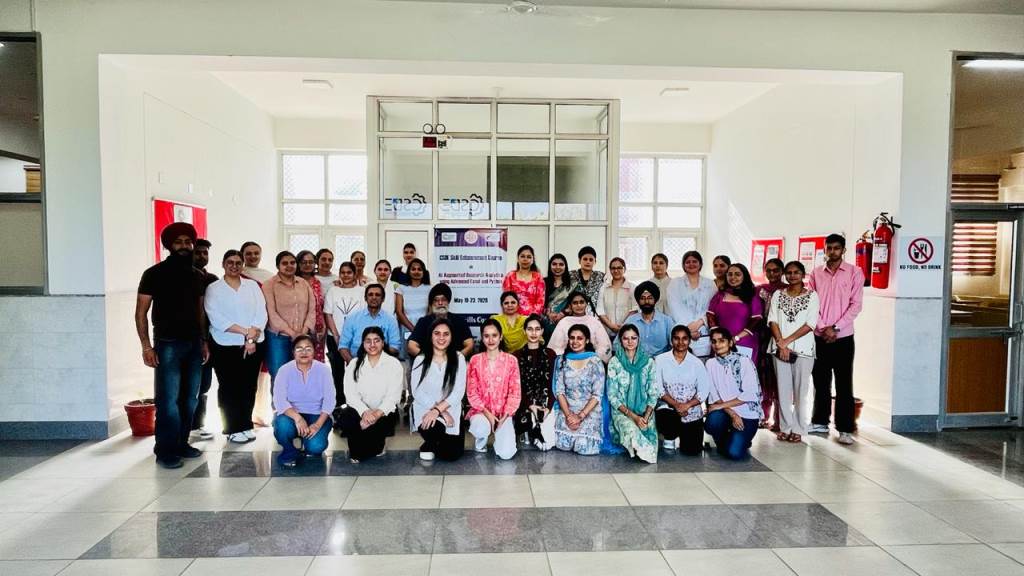
Chandigarh, May 23:- At Panjab University, Artificial Intelligence (AI) has moved beyond classroom discussions into practical research applications, as the Centre for Skill Development and Entrepreneurship (CSDE) successfully concluded its five-day Skill Enhancement Course on “AI-Augmented Research Analytics using Advanced Excel and Python” on Saturday.
The 30-hour program, conducted from May 19 to May 23, trained research scholars and faculty members in using Advanced Excel, Python, and AI tools for data-driven academic research. The course primarily focused on data cleaning, analysis, visualization, predictive analytics, dashboarding, generative AI, chatbot development, and AI-assisted application development.
The course proved highly significant in view of the growing shift toward data-supported research and AI-enabled academic practices in higher education. Participants were encouraged to view Excel, Python, and AI not as separate technical tools, but as parts of an integrated research workflow. This workflow extended from organizing raw data and identifying patterns to generating visual evidence and communicating findings with clarity. Throughout the course, emphasis was placed on practical capability, reproducibility, and the responsible use of technology in research.
Mr. Harshveer Singh, Managing Director of Drish Infotech Limited, attended the valedictory ceremony as the chief guest. Addressing the participants, he emphasized that AI and data analytics are no longer optional competencies but essential skills for researchers and young professionals. He stated that the future belonged to AI-augmented research, where technology assists researchers without replacing academic judgment.
He further said that the program reflected CSDE’s broader efforts to promote skill-based, interdisciplinary, and technology-enabled education at Panjab University. He added that modern research increasingly requires scholars to become comfortable with data, computation, and AI-supported workflows while remaining committed to methodological rigor and academic integrity.
The program concluded with the message that the future of research will not belong merely to those who use AI, but to those who can use it responsibly, critically, and creatively.