

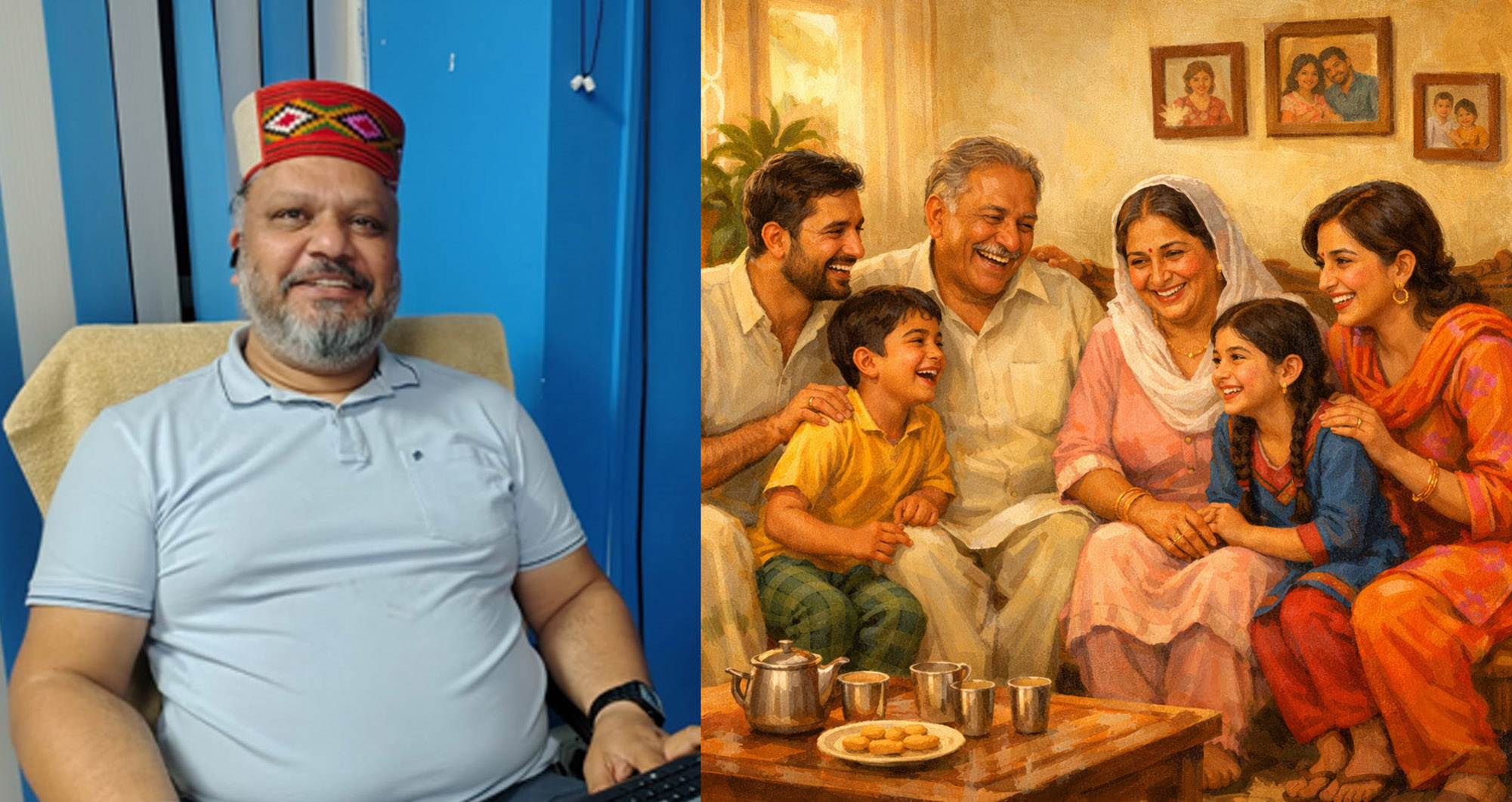
Family Relationships in Changing Times The Journey of Expectations Understanding and the Development of Personality

Family is the first and the most important institution in human life. It is here that a person learns the meanings of love, cooperation, responsibility, and sensitivity. Family relationships are not limited to merely living together; rather, they also play an important role in shaping a person’s temperament, thinking, and personality. With time, these relationships continue to evolve as well. If we look at the period from previous generations to the present day, several changes can be observed in the ways, expectations, and roles within family relationships.
Family is the first and the most important institution in human life. It is here that a person learns the meanings of love, cooperation, responsibility, and sensitivity. Family relationships are not limited to merely living together; rather, they also play an important role in shaping a person’s temperament, thinking, and personality. With time, these relationships continue to evolve as well. If we look at the period from previous generations to the present day, several changes can be observed in the ways, expectations, and roles within family relationships.
When joint families were common, family members lived together and shared most moments of life. Grandparents, parents, children, and other relatives lived in the same household. In such families, the foundation of relationships was based on shared living and mutual dependence. Elder members made household decisions based on their experience, and the younger members learned from them. At that time, certain expectations within the family were clear. Parents were expected to take responsibility for the safety of the family and its future. Children were expected to focus on their studies, respect elders, and continue family traditions. The advice of elders was given importance, and their experience guided the family in the right direction. Expectations sometimes took the form of discipline, but behind them there was a purpose—to keep the family united and to connect every member with the fundamental principles of life. In such an environment, children learned life experiences not only from their parents but also from grandparents and other relatives. This environment played an important role in the development of their personality.
However, as economic and social changes emerged in society, the structure of family life also gradually began to change. Educational opportunities and employment prospects attracted people toward large cities. As a result, small families gradually began replacing joint families. In smaller families, parents and children mainly lived together, while other relatives started living at a distance. With this change, the nature of expectations within the family also evolved. Now the opinions of children also began to be heard. Young people began to receive more options in education, career, and other life choices. Parents also began to understand that every child has their own abilities and interests.
In the present time, the situation of family relationships appears even more multi-dimensional. Urban life, overseas opportunities, and the influence of technology have given a new direction to family life. At times, family members live in different cities or countries, yet remain connected through technology. This has also changed the understanding of expectations within families. For example, the expectation of parents that children should study and work hard for their future is generally intended for their development. However, along with expectations, understanding and communication are also necessary. Similarly, children also have certain expectations from their parents, such as support and trust. When family members try to understand each other’s expectations, relationships become stronger. Participating in household tasks, respecting elders, and taking care of the younger ones are not merely rules; rather, they are fundamental values of life. The collective responsibility of joint families in earlier times and the importance of individual choices in the present time—these changes are shaped by experiences and circumstances.
Family is the place where a person finds their identity, love, and support. From the very beginning of life, the family plays an important role in laying the foundation of a person’s personality, because a child first learns to speak, listen, understand, and feel the warmth of relationships within the home itself. Moments spent with parents, grandparents, or other family members create values in the child’s mind that influence the whole of their life. Whether it was the shared families of earlier times or the smaller families of today, every family has its own ways through which it preserves relationships. The important point is that these family concepts have been tested by the test of time, and they have continuously evolved with changing times and will continue to do so in the future.
— Davinder Kumar
