
The Crisis of Traffic Jams in the Mountains

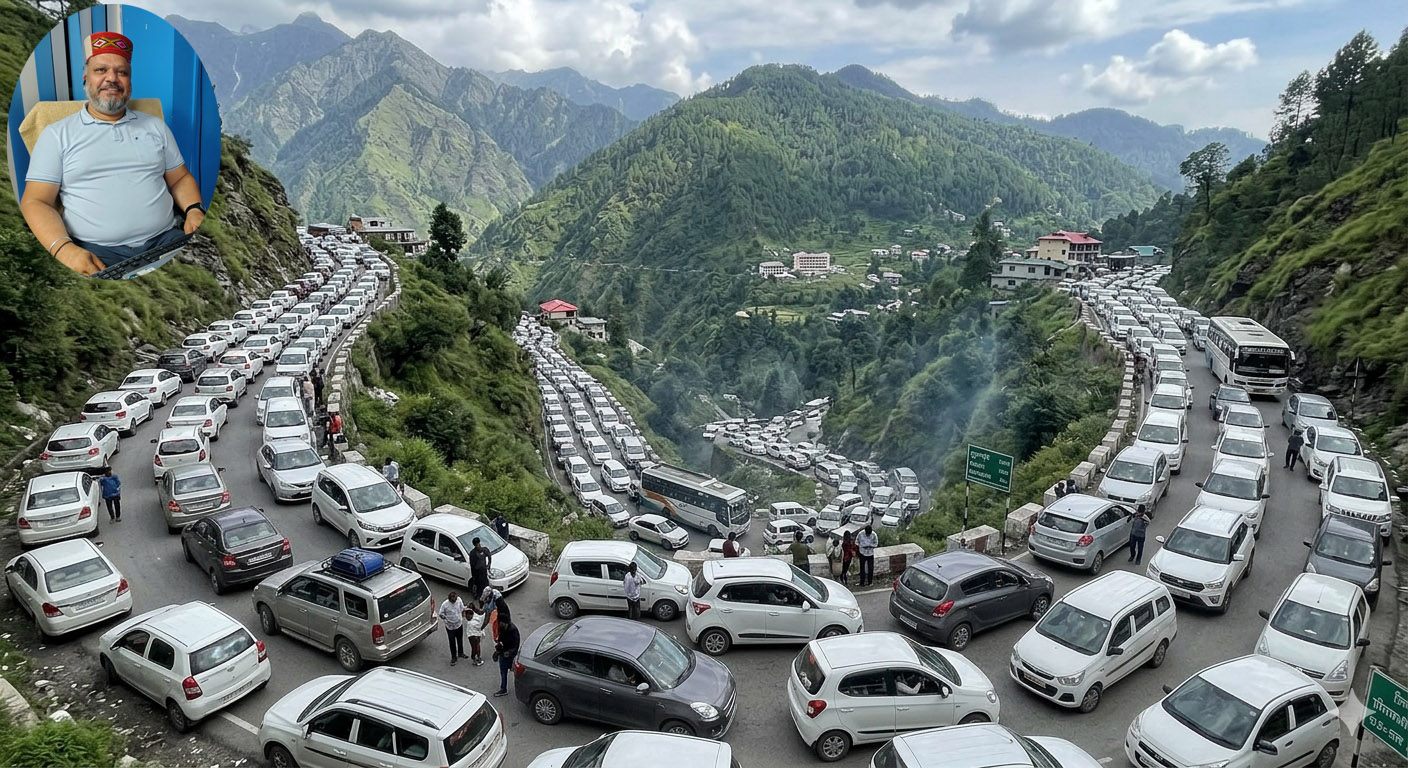
Mountains have always been symbols of nature’s peace, beauty, and simplicity. People head to the mountains to escape the hustle and bustle, pollution, and chaos of cities. But today, circumstances have changed so much that in many hilly areas, tourists witness traffic jams more than nature itself. Often, lines of vehicles remain stuck on the roads for 8 to 10 hours. People who set out to find peace in the lap of nature end up spending most of their time stuck in jams. This is not just a traffic problem; it shows that there is a need for greater foresight and planned thinking regarding development and tourism in mountainous regions.
Mountains have always been symbols of nature’s peace, beauty, and simplicity. People head to the mountains to escape the hustle and bustle, pollution, and chaos of cities. But today, circumstances have changed so much that in many hilly areas, tourists witness traffic jams more than nature itself. Often, lines of vehicles remain stuck on the roads for 8 to 10 hours. People who set out to find peace in the lap of nature end up spending most of their time stuck in jams. This is not just a traffic problem; it shows that there is a need for greater foresight and planned thinking regarding development and tourism in mountainous regions.
Himachal Pradesh is a prime example of this reality. In this state with a population of nearly 70 to 75 lakhs, more than 1.80 crore domestic tourists and about 83,000 foreign tourists arrived during the year 2024. The number of tourists arriving in a single year was more than two and a half times the state's total population. These figures highlight the economic importance of tourism, but they also indicate that the pressure on mountainous regions is constantly increasing. The roads, parking spaces, and civic amenities that were designed keeping a limited population in mind are now forced to bear the burden of millions of tourists.
The greatest characteristic of mountains is their fragility. Unlike plains, endless expansion is not possible here. Last year's monsoon brought this reality to the fore very clearly. Heavy rains, cloudburst incidents, landslides, road damage, and floods in many places reminded us that the geographical structure of the mountains is very sensitive. When forests are cut, slopes are cut for construction, and natural drainage paths are tampered with, nature begins to lose its balance. Traffic jams are just a visible part of this larger problem.
The current model of tourism is also making this crisis more severe. Earlier, people used to travel extensively by trains and buses, but now most families head to the mountains in their private vehicles. Thousands of vehicles come onto narrow and winding roads at the same time. Parking capacity is already limited, causing vehicles to be parked on the sides of the roads, which further affects traffic.
When a 10-hour traffic jam occurs on a mountain road, its impact is not limited to passengers alone. Thousands of liters of fuel are wasted, air pollution increases, local business is affected, and the speed of emergency services is reduced. Ambulances, fire trucks, and trucks carrying essential supplies have to pass through the same jam. Along with this, wildlife also endures the effects of increased noise and pollution. A long jam affects not only humans but the entire environment and local life.
The number of hotels, resorts, and commercial buildings in hill towns is constantly increasing. However, in many places, roads, parking, waste management, and water facilities have not developed at that pace. As a result, the benefits of tourism may appear to be increasing, but the price has to be paid by the environment and the local people.
Development does not mean just putting up new buildings, but also creating the infrastructure to support them. In this context, there is a need to think seriously about the planning of our cities. Hill towns cannot be made a copy of plain cities. Plans should be prepared by keeping in mind the geographical capacity, water resources, environmental sensitivity, and traffic limits of each region. The parameter of development should not be just the number of incoming tourists, but the capacity to handle them in a safe and sustainable manner.
The solution is clear. Public transport will have to be given a central place in mountainous regions. Asking people to leave their cars at home will only be effective when they get reliable and comfortable alternatives. Modern bus services, electric buses, shuttle systems, and large parking hubs built outside cities can be significant steps in this direction. There is a need not only to increase public transport but also to modernize it according to the needs of the time. Tourism is necessary for the economy of mountainous regions, but the measure of its success should not just be the number of tourists.
Traffic jams in the mountains are a warning that now, instead of unchecked growth, sustainable development must be prioritized. If the limits of nature are ignored, then in the coming years, these jams could paralyze not just the roads, but the environment, economy, and lifestyle of the mountains as well. The mountains are constantly giving us the message that if development and balance go together, only then can their beauty and natural heritage be saved.
- Davinder Kumar