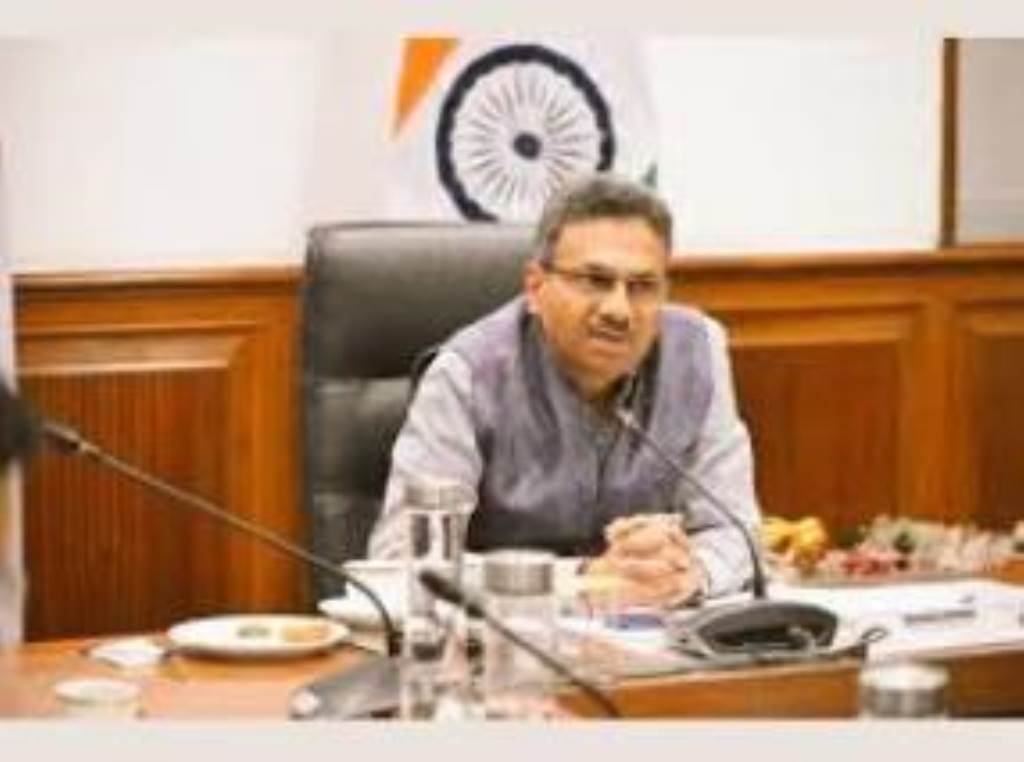
Chandigarh, June 9:- Haryana Chief Secretary Mr. Anurag Rastogi said that the state government is committed to making Yamuna clean and pollution free through a coordinated, time-bound and technology-based approach. He directed the concerned departments to expedite the implementation of all existing and proposed projects related to sewage treatment, industrial waste management and pollution control and said that they should be completed by December 31, 2027 so that the water quality of Yamuna river and its tributaries can be improved.
Mr. Rastogi was reviewing the progress of Yamuna Action Plan in a high-level meeting here today.
It was informed during the meeting that commendable progress is being made in the Yamuna catchment area through the development of new sewage treatment plants, common effluent treatment plants, micro-STPs and wastewater diversion infrastructure.
Haryana State Pollution Control Board Chairman Shri Vinay Pratap Singh informed that projects related to additional sewage treatment capacity of more than 425 MLD and industrial wastewater treatment capacity of more than 150 MLD are in the process of tender, approval and implementation at various levels.
The major projects reviewed in the meeting include the renovation of the existing STP of 10 MLD capacity located at Jatal Road, Panipat. After this, domestic sewage as well as industrial wastewater will be treated there. Apart from this, the plan to set up six micro-STPs in different villages of Karnal district was also reviewed. This initiative will help in reducing the flow of untreated grey water into drains to a great extent.
The proposed CETPs at Nathupur and Kundli in Sonipat and the addition of capacity at Rathdhana STP will further strengthen the wastewater treatment infrastructure in the rapidly developing industrial and urban areas. The meeting also reviewed the proposed CETP projects in Gurugram and Faridabad, including major projects related to industrial areas of Pratapgarh, Mirzapur and Gurugram.
The meeting paid special attention to the Mungeshpur drain (drain). Officials said that untreated wastewater is being diverted here to treatment facilities. Also, bio-remediation measures are being planned to improve the water quality before this drain enters Delhi. He also informed that the marked discharge points on major drains are being systematically tapped so that untreated sewage does not reach the natural water sources.
The Chief Secretary directed to ensure the discharge of sewage as per the prescribed norms in all STPs and CETPs and to maintain regular monitoring. He also stressed on taking strict steps to check incidents of dumping of waste in drains and illegal discharge of sewage. Stressing on the need for strict inspection of the quality of existing STPs and CETPs, he said that he would personally visit select plants to review their functioning and ensure compliance with the prescribed norms.
While reviewing the timelines of the projects, Shri Anurag Rastogi directed the departments to resolve the pending land and procedural matters on priority basis so that there is no delay in the construction works. He said that effective coordination between Urban Local Bodies, Development Authorities, HSIIIDC, Public Health Engineering Department, Haryana State Pollution Control Board and District Administration is essential to achieve the objectives of Yamuna Action Plan.
The officials said that major infrastructure projects related to wastewater treatment in Gurugram, Faridabad, Panipat, Sonipat and Rohtak are currently in the tender and approval stage and this will add appreciable value to the wastewater treatment capacity of the state in the coming years.
The meeting was attended by Additional Chief Secretary, Environment, Forest and Wildlife Department Shri Sudhir Rajpal and Managing Director, Haryana State Industrial and Infrastructure Development Corporation Shri Sushil Sarwan, among other senior officials.
Projects related to sewage treatment waste management and pollution control to be completed by December 2027