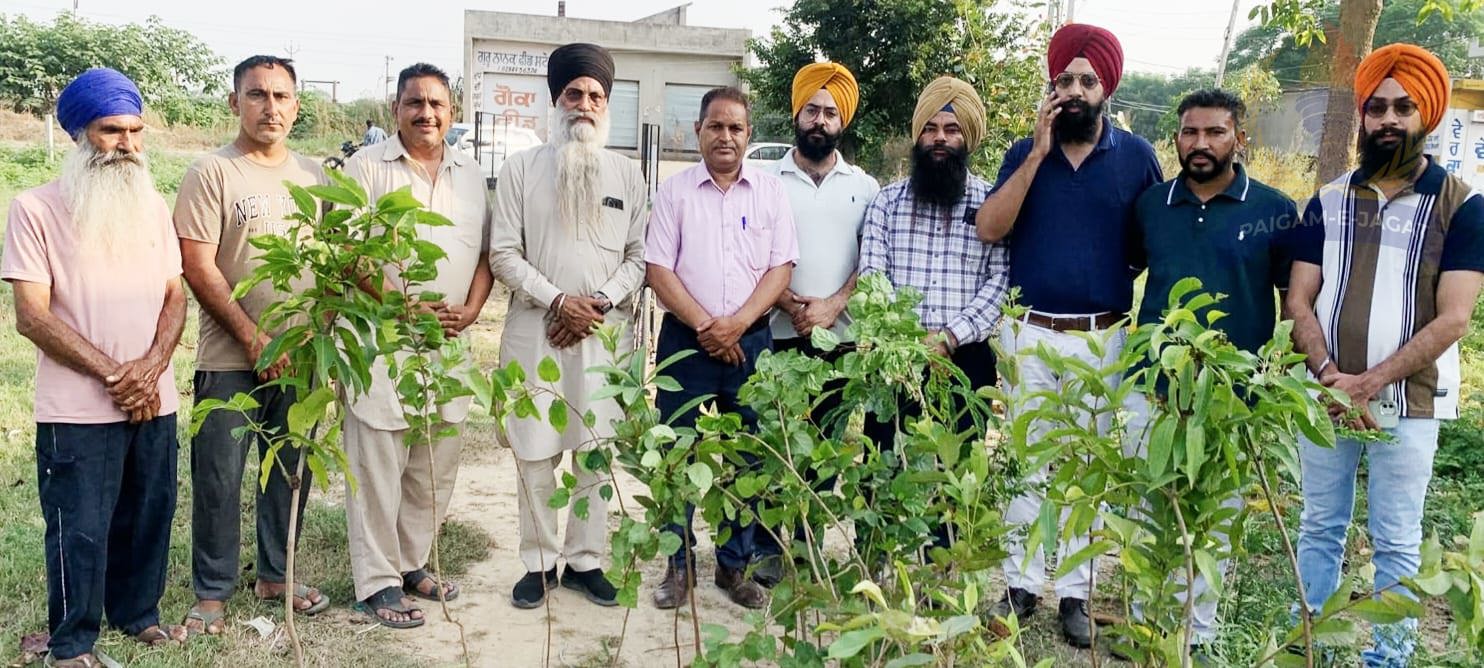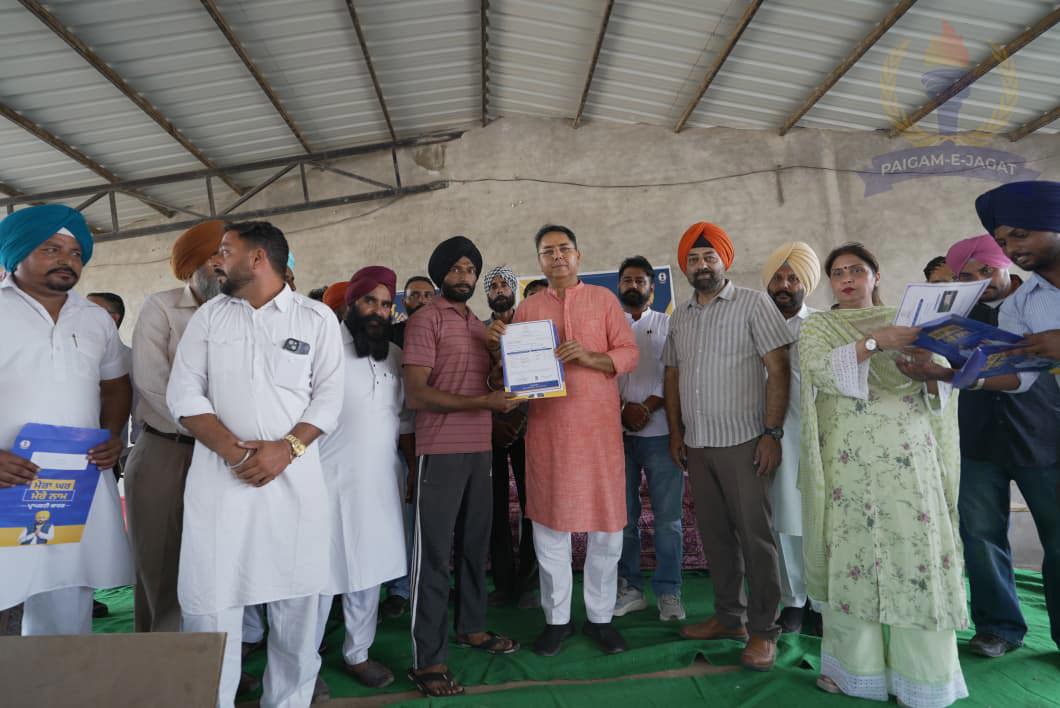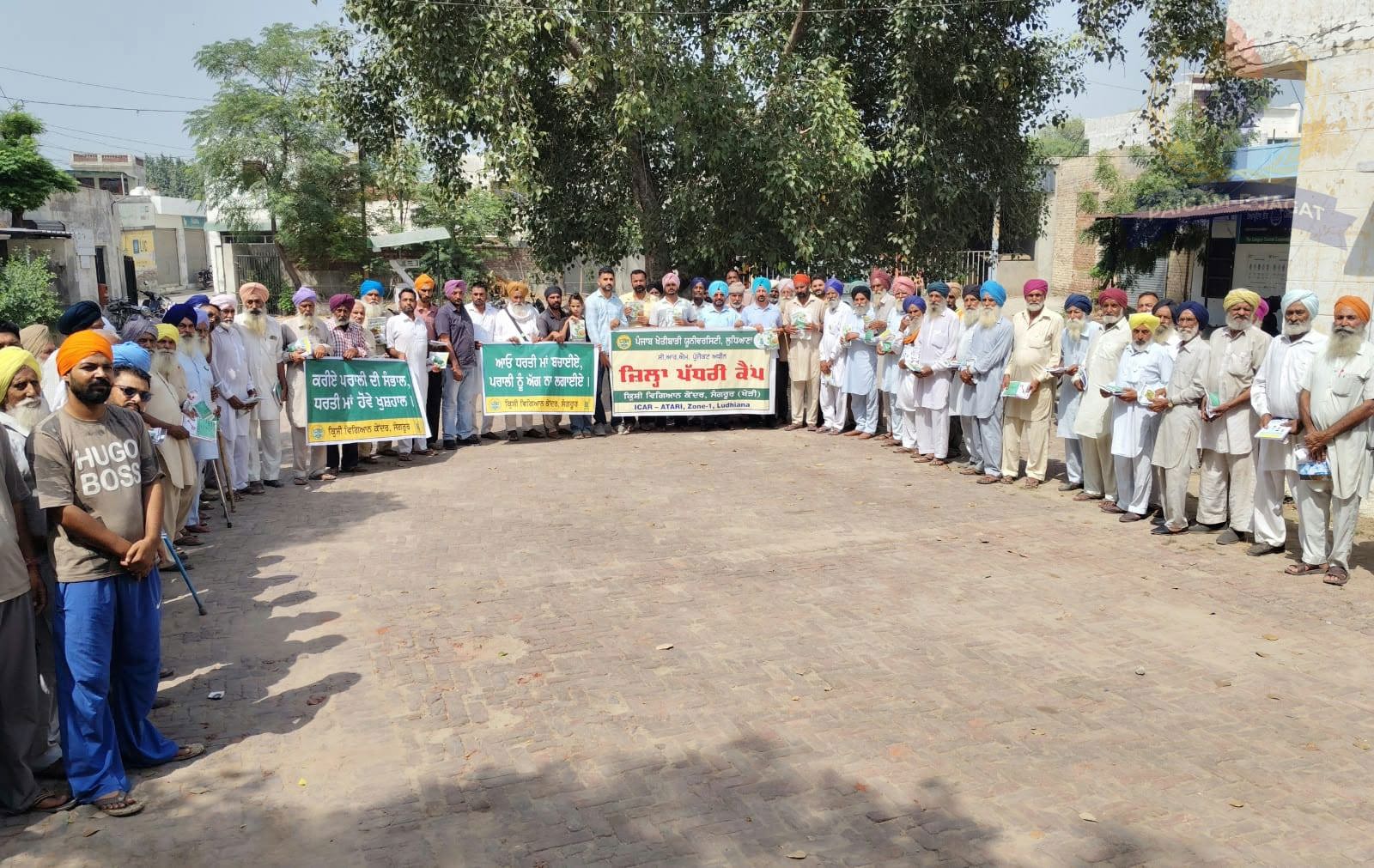
Sunam, 10 October:- As part of the campaign to discourage paddy straw burning, the Krishi Vigyan Kendra (KVK), Sangrur, of Punjab Agricultural University (PAU), organised a district-level farmers’ awareness camp in Chhajli village, Sunam Block, in collaboration with the Agriculture and Farmers Welfare Department and the Chhajli Cooperative Society. More than 150 farmers participated in the camp.
On this occasion, Dr. Mandeep Singh, In-charge of PAU-Krishi Vigyan Kendra, Sangrur, sensitised farmers to the harmful effects of stubble burning on the environment, soil health and human health. He explained that burning one tonne of paddy straw results in the loss of 5.5 kg of nitrogen, 2.3 kg of phosphorus, 25 kg of potash and 1.2 kg of sulphur.
He said that harmful gases released by stubble burning pollute the environment and cause several diseases. He urged farmers to adopt techniques for managing crop residue in the field itself. He explained that incorporating straw into the soil increases organic carbon, improves soil fertility, reduces expenditure on fertilisers and increases crop yield.
Dr. Mandeep Singh also provided information about the new high-yielding wheat variety PBW 887, which takes 155 days to mature and has an average yield of 24.60 quintals per acre. He also discussed PBW 872, PBW 826 and the special-quality varieties PBW Zinc 2, PBW 1 Chapati, PBW RS 1 and PBW 1 Biscuit. He encouraged farmers to grow rabi pulses and oilseed crops and to use fertilisers in a balanced manner.
Dr. Sunil Kumar, Assistant Professor (Farm Machinery), gave detailed information about machinery developed by PAU, including the Smart Seeder, Super Seeder, Surface Seeder, Happy Seeder, reversible plough, mulcher and baler for making straw bales. He emphasised the importance of managing crop residue within the field.
Narinderpal Singh Cheema, Agriculture Development Officer, Sunam, urged farmers not to burn paddy straw and to fulfil their responsibility towards environmental protection. He also explained the process of creating a Farmer ID and its importance.
At the conclusion of the camp, farmers’ questions were answered, and university-developed gobhi sarson seeds and agricultural literature were distributed.
The president and secretary of the Cooperative Society and the village sarpanch were specially present on the occasion.