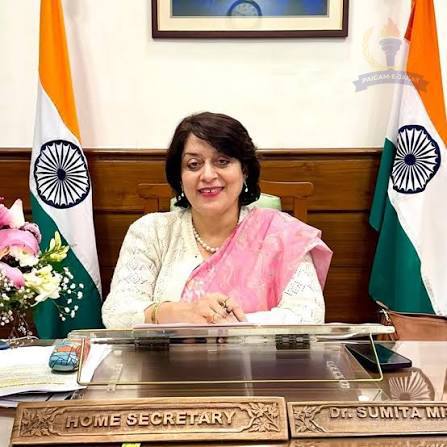
Chandigarh, 21 November:- Haryana Financial Commissioner Revenue and Additional Chief Secretary Dr. Sumita Misra said that the state has accelerated efforts to strengthen inter-state boundary demarcation and modernise revenue administration. As part of these initiatives, 802 boundary pillars have been installed along the Haryana-Uttar Pradesh border, while 2,287 paperless land demarcation reports have been accepted across the state.
During a meeting with Deputy Commissioners and District Revenue Officers late yesterday evening, while reviewing the progress of key revenue initiatives, Dr. Misra directed district administration officials to expedite pending work, strengthen field-level monitoring and ensure time-bound delivery of revenue services. She emphasised that accurate land records, transparent procedures and prompt resolution of revenue matters are essential to protecting citizens' property rights and strengthening public trust in the administration.
**Special Focus on Palwal to Complete Boundary Pillar Installation**
Reviewing the progress of demarcation along the Haryana-Uttar Pradesh border, Dr. Misra informed that out of the 1,221 boundary pillars identified by the Survey of India, 802 have been installed across five districts.
According to the progress report as of 13 November, Sonipat has installed 157 of its 173 identified pillars, Faridabad 145 out of 159, Palwal 194 out of 385, Karnal 181 out of 302, and Panipat 125 out of 202.
Dr. Misra called for special attention to Palwal district, where a significant number of pillars are still pending installation. She directed the concerned officials to accelerate efforts to complete the remaining boundary pillar installations and deploy additional manpower wherever required. She said that district administrations should work in close coordination with executing agencies to resolve operational bottlenecks and speed up the work.
**2,287 Paperless Land Demarcation Reports Accepted**
Dr. Misra informed that 2,287 paperless land demarcation reports had been accepted across Haryana as of 17 November. Notably, 143 reports were settled in just 13 days, reflecting progress in the adoption of digital processes for land demarcation.
She directed District Revenue Officers and Kanungos to ensure timely scrutiny of pending reports and strengthen field-level monitoring. She said that paperless demarcation would help bring greater transparency, accuracy and accountability to land-related processes while making services more convenient for citizens.
**Swamitva Urban Programme: Time-Bound Decisions on Pending Applications**
Reviewing the Swamitva Urban Programme, Dr. Misra said that a total of 237 applications had been received across the Revenue, Land Records and Consolidation Departments. Of these, 40 applications had been decided, including 11 approvals and 29 rejections, while 197 applications remained pending.
She directed the concerned officials to expedite the scrutiny of pending applications, resolve departmental objections and ensure that eligible cases are decided transparently within stipulated timelines. She emphasised that the programme should facilitate better documentation of property and make ownership-related services more accessible to citizens.
**Deputy Commissioners to Review 'Khanakasht' Cases**
The meeting also reviewed the correction of 'Khanakasht' (self-cultivation) entries in revenue records. Dr. Misra directed Deputy Commissioners to personally review these cases to ensure that errors are identified and rectified in a systematic and time-bound manner.
She stressed the need for district-wise targets, monthly progress reviews and clearly defined timelines. Deputy Commissioners were asked to closely monitor the work and ensure effective coordination between revenue officials and field-level staff.
**Sirsa District Appreciated for Comprehensive Revenue Work**
Dr. Misra appreciated Sirsa district for its comprehensive efforts in revenue administration and the progress made across various revenue-related activities. She said that a structured approach at the district level, effective coordination and regular monitoring are essential for achieving better results.
She encouraged other districts to adopt a similarly comprehensive approach to revenue work, with emphasis on accurate records, timely disposal of cases and improved citizen services.
Dr. Misra said that the benefits of revenue administration reforms must be reflected in tangible improvements in citizens' everyday experiences. She urged all Deputy Commissioners and revenue officials to closely monitor ongoing initiatives, ensure accountability at every level and make effective use of digital systems to deliver transparent, efficient and time-bound services.