Chandigarh, February 3:- Punjab Agriculture and Farmers Welfare Minister S. Gurmeet Singh Khudiyan said that the Punjab government led by Chief Minister S. Bhagwant Singh Mann is taking concrete steps to promote crop residue management in a scientific manner so that environmental problems can be addressed, soil health can be improved and farmers’ income can be increased.
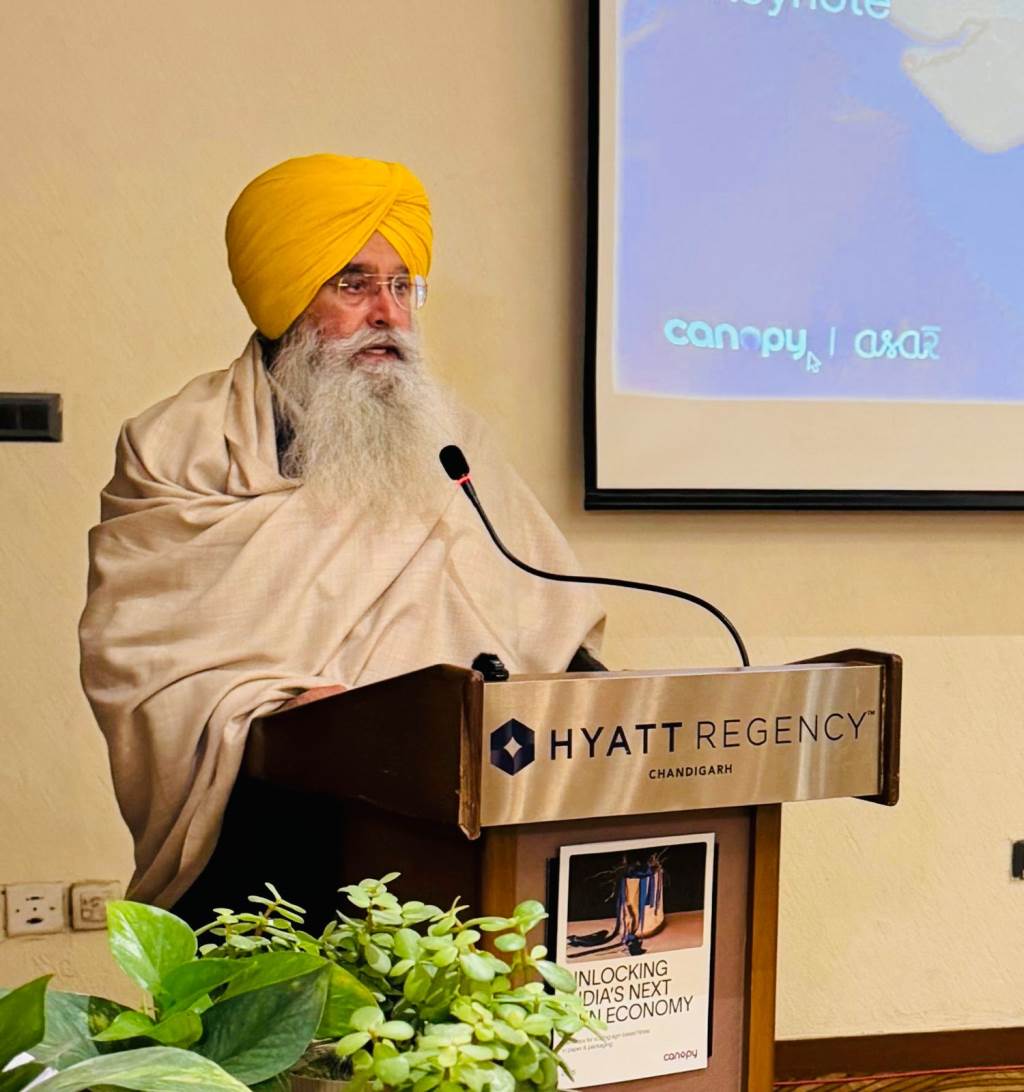
He was addressing a state-level conference organized by ASAR in collaboration with Canopy here today.
S. Khudiyan said that Punjab has been successful in converting the long-standing problem of stubble burning into beneficial economic and environmental opportunities. He said that Punjab’s efforts for proper management of crop residue are showing effective and positive results as there has been a 53 percent decline in the incidents of stubble burning in the 2025 Kharif season. He said that the number of such incidents in the year 2024 was 10,909, which has now come down to 5,114.
The Agriculture Minister attributed this success to the availability of subsidized crop residue management machinery, incentives and practical options for stubble utilization. Sharing details, he said that more than 80 percent of the 20 million tonnes of stubble generated every year by the state is being scientifically managed using modern in-situ and ex-situ methods to improve soil health.
S. Khudiyan said, “Crop residue is also being used in ex-situ applications like biomass-based power plants, bio-CNG units and bio-ethanol projects, which are creating energy and employment opportunities. Stubble, which was earlier a cause of smoke, is today becoming a source of energy, industry and employment.”
The Agriculture Minister expressed hope for a future where farmers will be able to take full advantage of crop residue management. He said, “When crop residues are being converted into fuel, energy or any packaging, it creates rural employment and our youth get employment opportunities close to their homes. This inclusive and sustainable development is our goal.”
S. Khudiyan invited the industries to take advantage of the green and sustainable business potential of Punjab, which is poised to become India’s first circular economy region. He cited the state’s ability and potential to convert stubble into income and said, “By converting stubble into income instead of smoke, Punjab is converting pollution into prosperity. Punjab is proving that climate action and economic development can go hand in hand.”
Gurmeet Khudiyan calls on industries to invest in Punjabs green energy sector with immense potential