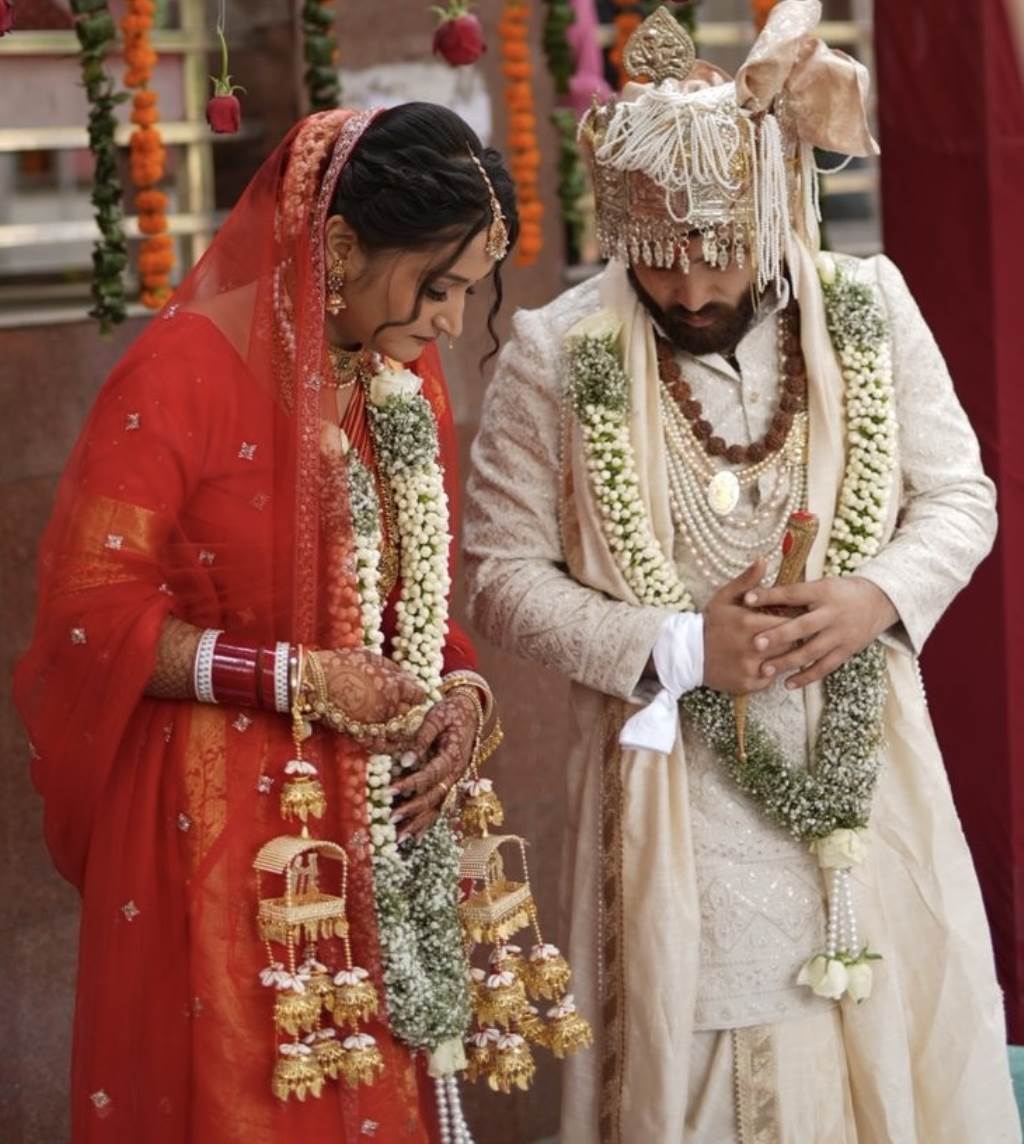
Ambala, December 20: In an era where weddings have become synonymous with ostentation, lavish decorations, dowry, and social media displays, the simple temple wedding of Archit Ahuja and Udita Singhal in Ambala Cantonment has emerged as a powerful and inspiring message for society.
This wedding was not only a symbol of faith and spiritual connection but also a living example of environmental conservation, social equality, and a dowry-free mindset. The wedding began with a six-year-old college friendship that, over time, transformed into trust, companionship, and support, and finally culminated in the sacred bond of love.
Archit Ahuja and Udita Singhal's decision regarding their wedding was clear from the beginning – a wedding should not be about pomp or transactions, but a celebration of faith, simplicity, and equality. With this thought in mind, they decided to get married in a temple and sent a clear message against dowry.
Initially, the idea was to get married at the Triyuginarayan Temple near Kedarnath, but this plan had to be dropped due to the long journey for the elderly. Then, a temple in Kalesar National Park was chosen, but this was canceled at the last minute due to personal reasons. The date was fixed, but the location wasn't – causing the family considerable stress.
Meanwhile, the bride's mother suggested the 'Rani ka Talab' temple in Ambala Cantonment. The couple felt a deep connection with the serene lake in front of the temple and its spiritual energy. The permission process took time, but with patience and faith, all the formalities were completed.
The wedding was completely simple. Only 40 people – the closest family members and a few close friends – witnessed this sacred occasion. Only natural flowers were used for decoration; there were no artificial decorations or unnecessary expenses.
Further reinforcing the social message, the couple made it clear that no dowry was taken, nor were any gifts accepted from the bride's side. This initiative promoted equality, respect, and self-esteem for daughters in society.
Prioritizing environmental protection, single-use plastics were completely banned from the wedding. Food was served on plates and in cups made from sugarcane pulp, and wooden spoons were used. No alcohol was served during the wedding ceremony.
After the wedding, instead of being thrown away, the used flowers were composted and used in the kitchen garden. In this way, the entire event was almost waste-free. The couple and their family members also cleaned the temple premises themselves, leaving it with the same sanctity and respect they had found it with.
According to the couple, this wedding was not just a social event for them, but a spiritual union—simple, mindful, and close to God.
This wedding sends a message to society that a true marriage is not successful because of ostentation, dowry, and extravagance, but because of love, equality, faith, and responsibility.
A Temple Wedding in Ambala Sets an Example of Right Thinking and Social Reform