AIgenerated fake verdicts pose a threat to the entire world Supreme Court

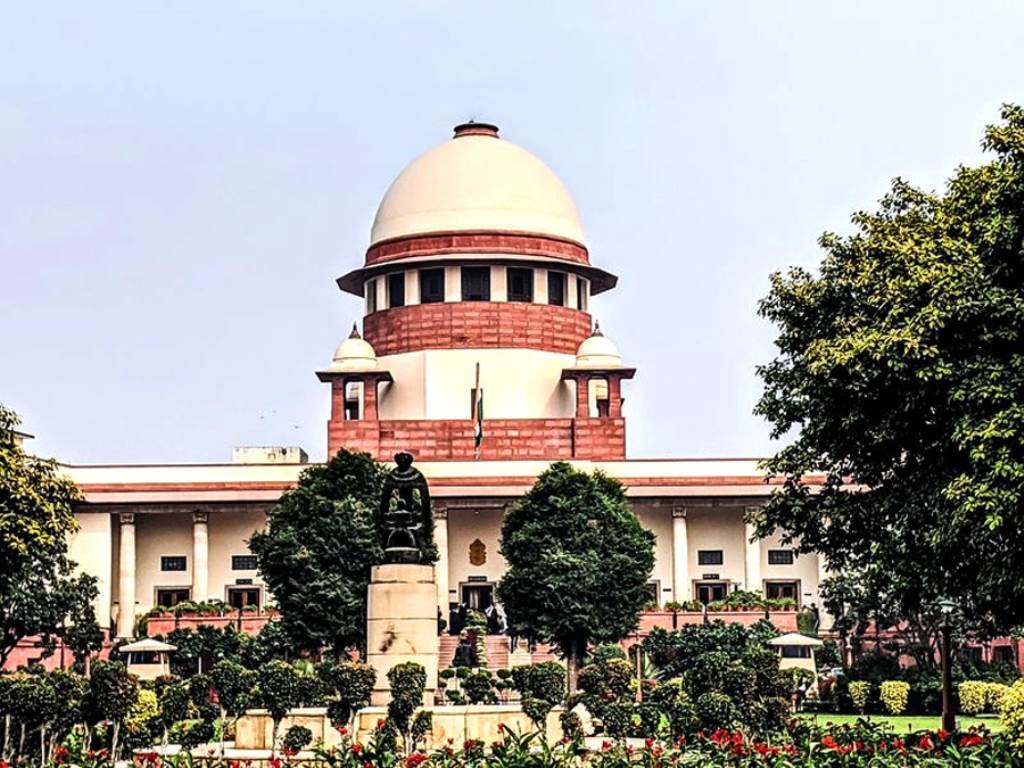
New Delhi: Expressing concern over the problems being faced by courts due to AI-generated fake verdicts, the Supreme Court has asked litigants to be cautious about it.
A bench of Justices Rajesh Bindal and Vijay Bishnoi said, "The truth is that this menace (of AI-generated fake verdicts) has now spread to all courts, not only in India but across the world. Everyone needs to be cautious about this."
The bench was hearing a special leave petition filed by the director of 'Heart and Soul Entertainment Limited', seeking removal of the observations made by the Bombay High Court. These observations were made when the petitioner had referred to a verdict prepared using AI in a Maharashtra Rent Control Act case which did not actually exist.
The Bombay High Court had on January 7 said that the petitioner's arguments were prepared using Chat GPT, which included a decision that did not exist and the High Court and its clerks were unable to find the decision in that case despite considerable difficulty.
The High Court had imposed a fine of Rs 50,000 on the petitioner and directed him to deposit this amount in the 'Bombay High Court Employees Medical Fund'.
The High Court had strictly said that piling up of unnecessary documents and production of non-existent material in the court will not be tolerated. Providing such incorrect information does not help in the delivery of justice, but rather serves to unnecessarily delay and delay the case. Those who commit such acts will have to pay a hefty fine and if any lawyer is found involved in it, strict action can be taken against him through the Bar Council.
The company's director, who appeared in the Supreme Court through video conference, said that he only wanted to remove the observations made in paragraph number 22 of the Bombay High Court judgment. These observations were related to the reference to the non-existent judgment, which was presented during the case.
Without paying much attention to the justifications given by him, the Supreme Court removed the comments made in the paragraph of the High Court order and said that this ((AI-generated judgments) is not only an Indian problem but a global problem and everyone needs to be careful about it.
A case of fake AI-generated judgments being presented in a trial court in Andhra Pradesh had also come to light. Seeing this serious problem, the Supreme Court had on March 2 issued notices to Attorney General R. Venkataramani, Solicitor General Tushar Mehta and the Bar Council of India to find ways to deal with this problem.
The same day, on January 20, the apex court had expressed concern over the use of fake evidence generated through AI in marital disputes. The court had said that nowadays, couples are creating false allegations and fake evidence by misusing technology to teach each other a lesson.
The court made the comment while granting divorce to a Delhi couple "In today's time, making false accusations has become common. In the era of AI, evidence is not only collected, but also fabricated at will so that the other party can be shown to be inferior."