Fuel tax A source of revenue or a burden on the public

For a long time, tax on fuel has been the easiest and most reliable source of revenue for governments. Levying tax on products like petrol, diesel and LPG is easy because their consumption is widespread. In developing countries, where government expenditure—such as infrastructure, health, education and social welfare—is constantly rising, fuel tax becomes a key revenue source. But in today’s changing economic and global situation, the question arises whether this tax is within reasonable limits or has become a burden for common people.
For a long time, tax on fuel has been the easiest and most reliable source of revenue for governments. Levying tax on products like petrol, diesel and LPG is easy because their consumption is widespread. In developing countries, where government expenditure—such as infrastructure, health, education and social welfare—is constantly rising, fuel tax becomes a key revenue source. But in today’s changing economic and global situation, the question arises whether this tax is within reasonable limits or has become a burden for common people.
This issue is not only about levying tax or not, but about its amount, structure and timing. Governments believe that revenue from petrol builds roads, develops villages and runs various welfare schemes. To some extent this is true. But when this tax becomes excessively high, it directly affects people’s expenses.
The current global situation makes this discussion even more serious. Instability in West Asia has once again shown how fragile global oil supply is. Tensions, disruptions in supply routes and risks to maritime transport are bringing volatility in crude oil prices. Even if this does not immediately turn into shortage, fear and instability in the market push prices up. Countries like India, which import a large part of their requirement, are more affected in such conditions. As international prices rise, a rise in domestic prices is natural. But when high tax is also added on top, the burden increases manifold. Many times the price paid by consumers has a larger share of taxes than the actual cost of oil.
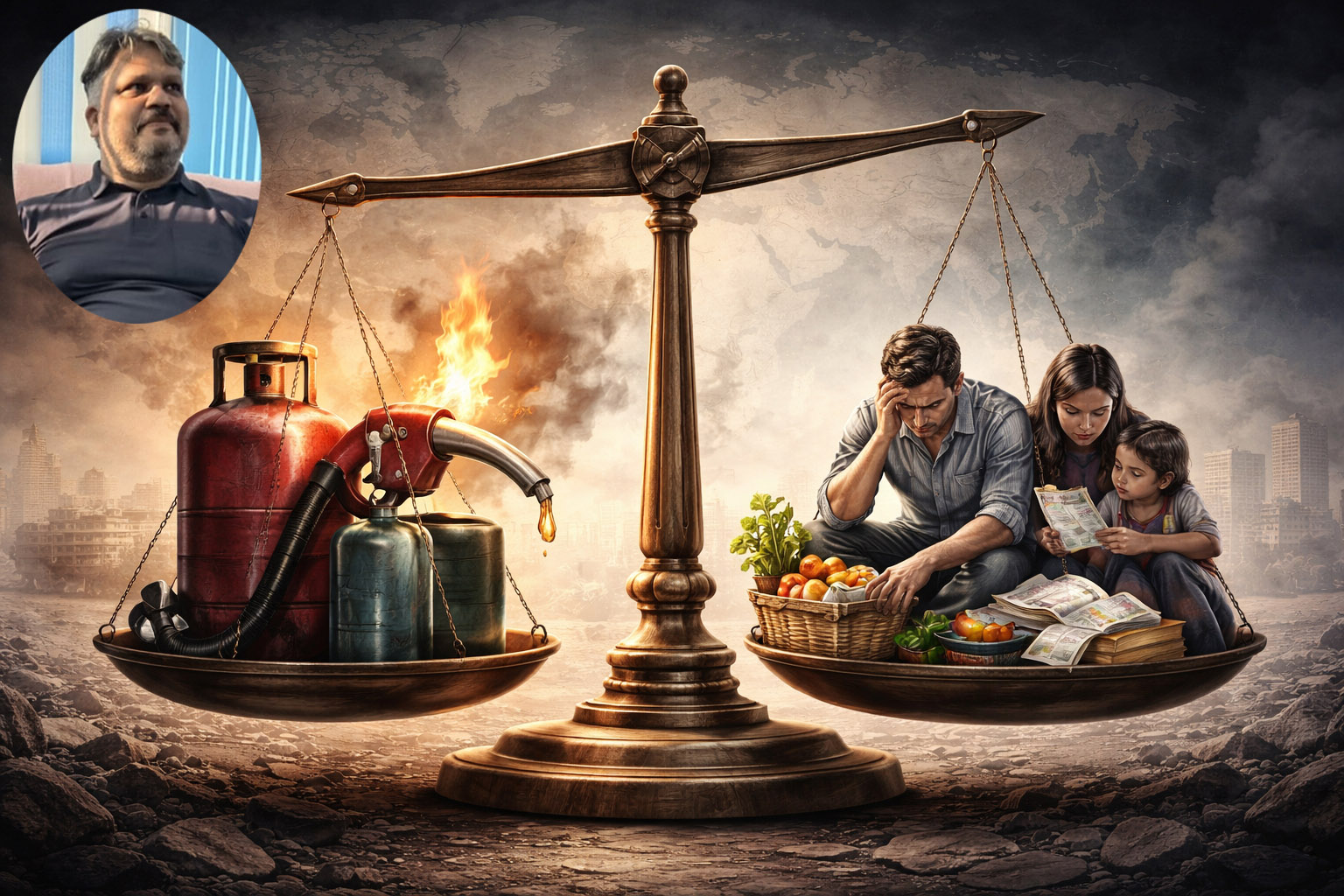
Its impact is not limited to fuel alone. Fuel is the backbone of every sector—transport, agriculture, industry and trade all depend on it. As soon as the price of petrol rises, everything starts becoming costlier. This increases inflation and reduces the purchasing power of common people. The middle class, small traders and wage earners are the most affected, who have to take tough decisions like cutting expenses or taking loans.
In the case of LPG the situation becomes even more sensitive. It is not just a product but a basic need of household life. In villages and small towns many families may revert to wood or other traditional fuels when its price rises. This negatively affects not only the environment but also health. Supporters of high tax on petrol say it is an important source of revenue for the government and reducing it will burden the exchequer. This is true to some extent. But it is also true that the burden of raising revenue should not fall only on common people. If the design of taxes is not balanced, it can further increase economic inequality.
The solution to this problem lies in a flexible and sensitive policy. Governments should change tax rates according to international prices. When prices rise in the world market, relief can be given to people by reducing tax. And when prices are stable or low, revenue can be maintained by keeping taxes at a reasonable level. Along with this transparency is also very necessary. People should know where the tax they pay is being used. When the government shares this information openly, trust is built among people and resentment reduces.
It is clear that tax on fuel is not entirely wrong, but its excess becomes a problem. In the current period of global instability, when conflicts in far-off regions are directly affecting our household expenses, sensitivity in policy making becomes even more necessary. The relationship between government and public needs to be seen as shared responsibility instead of conflict. If fuel tax is balanced and fair, it can become a tool of development. But if it becomes unchecked, it becomes a burden on the public. Therefore the need of the hour is to maintain the right balance between revenue and relief.
-Davinder Kumar