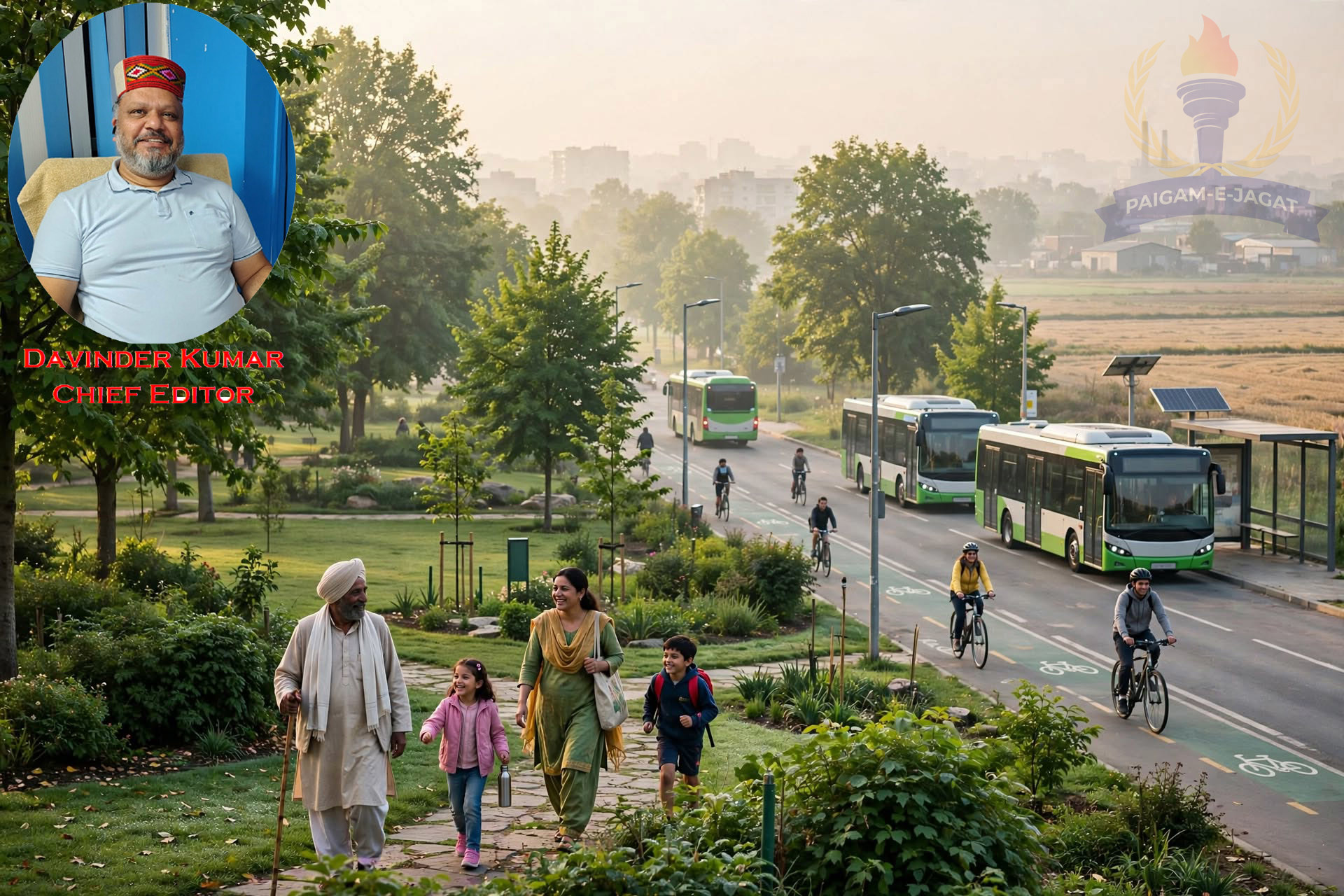
Towards end of October month, with weather, air quality also starts changing in Punjab. After summer season, beginning of cold, less speed of wind, humidity and particles of dust and smoke present in environment play big role in polluting air. At this time in many areas of Punjab, problem of air pollution takes serious form. Especially after paddy harvesting, management of remaining stubble in fields, smoke of vehicles, industrial activities, dust flying from construction works and reasons like putting fire to garbage affect air quality.
Every year as soon as winter starts, discussion about air pollution becomes intense. But this problem is not limited to only few weeks or any one season. Factors spreading pollution in environment remain present throughout year, but weather conditions further increase their effect. When wind speed is less then polluted particles cannot easily go from one place to another. Due to this, amount of pollution increases around roads, residential areas and cities. This situation does not remain limited to only visible fog or smoke, but fine particles present in air also reach inside body through breath.
Issue of stubble burning in Punjab demands special attention at this time. After harvesting of paddy, farmers face challenge of preparing field for sowing of next crop. Due to shortage of time, shortage of laborers, cost of machines and compulsions of crop cycle, some farmers adopt path of burning stubble. Smoke emanating from this does not remain limited to only fields, but reaches far flung areas with wind. Solution of this problem cannot be only with fines or strict rules. Giving required machines to farmers for stubble management, economic assistance, technical information and timely available services is equally necessary. Alternatives of preparing fertilizer from stubble, fodder for cattle, biogas and other products also need to be increased.
Continuously increasing number of vehicles in cities is a big reason for pollution. Smoke emanating from old vehicles, engines continuing to run for long time during traffic jam and use of private vehicles without need increases amount of harmful gases and particles in air. There is need to make public transport smooth and cheap, expand bus services, regular pollution check of vehicles and ensure compliance of rules regarding old vehicles. Smoke emanating from industrial areas and dust flying during construction works also affect air quality. At many places construction material remains lying in open, negligence in cleaning of roads and debris is taken from one place to another without covering. Similarly smoke is also produced by putting fire to dry leaves and household garbage. To stop these activities regular monitoring at local level, arrangements to control dust and action against violators of rules is necessary.
Worst effect of air pollution falls on human health. Children, elderly and people with breathing or heart related problems are sensitive to its effects. Breathing continuously in polluted air increases cough, irritation in eyes, difficulty in breathing and other health problems. Health advice regarding safety of children in schools and limiting outdoor physical activities on very bad air days should also reach people.
In all this situation importance of trees and greenery increases. There is need to plant trees suitable to local weather at cities, villages, road sides and open public places and take care of them. Only running campaigns of planting saplings is not enough, but arrangement of water and care till they grow big should also be there. Along with this saving open spaces and green areas in cities is also necessary. Most important thing is that air pollution should be seen as joint responsibility instead of understanding as problem of any one department, class or season. Right decisions taken today itself can give clean air and healthy environment to coming generations.
- Davinder Kumar