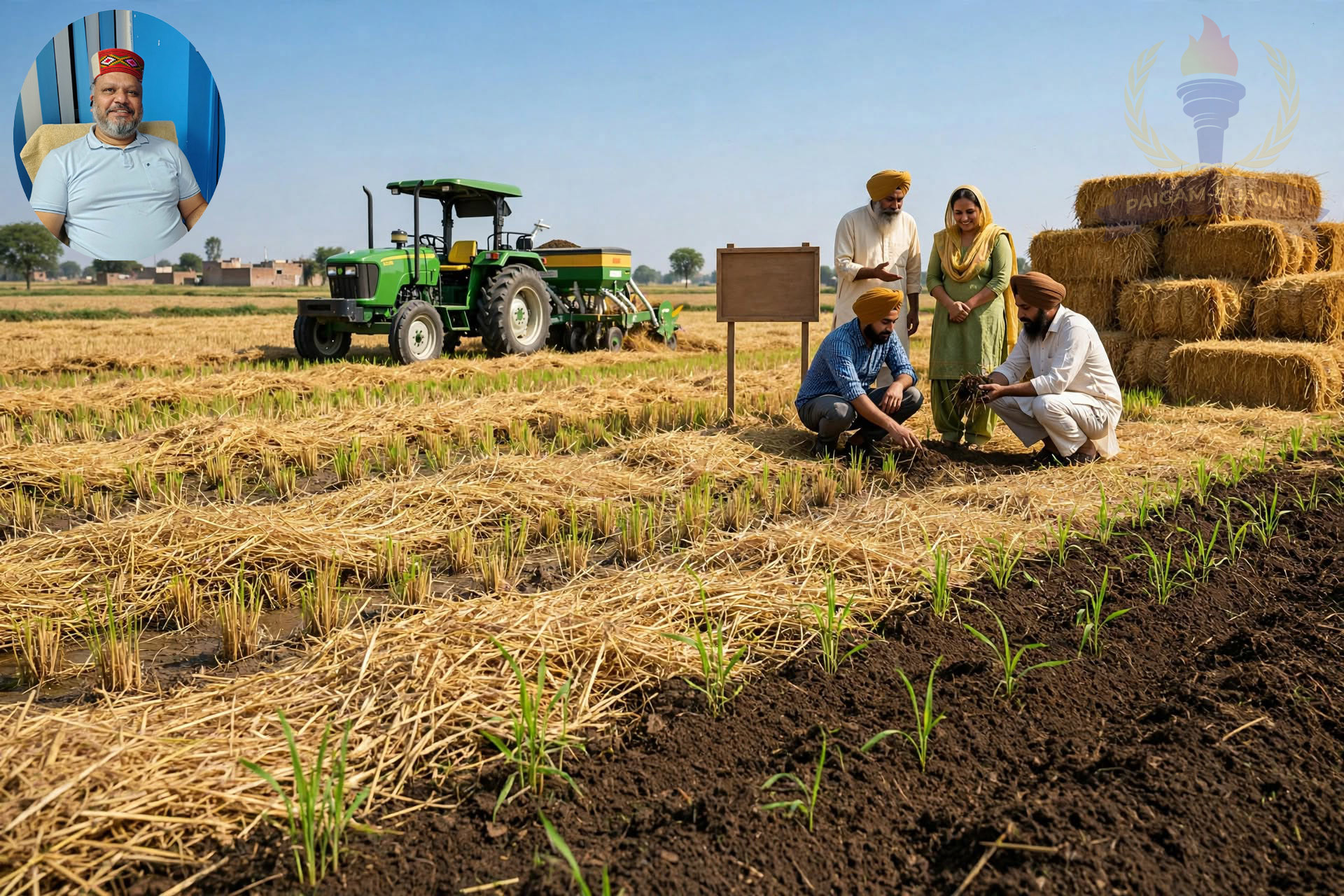
Every year as soon as time of paddy harvesting comes near, problem of stubble burning again becomes topic of discussion. Smoke rising from fields affects air quality and its effect is felt from villages to cities. Along with difficulty in breathing and irritation in eyes, fertility of soil and environment also gets damaged. Therefore prevention of stubble burning is not just a seasonal campaign, but issue connected with agriculture and public health. But while finding solution to this problem it is also necessary to understand real needs of farmers and economic compulsions of farming. Time between paddy harvesting and next wheat sowing is very less. For farmers preparing field quickly becomes a big challenge. If machinery needed to manage stubble is not available in time or its rent is high then difficulty increases further for small and medium farmers. Besides this repair of machines, diesel expense, shortage of labourers and management of residue left in fields is also before them. In such conditions only creating fear of fines or legal action cannot be permanent solution to problem.
Where stubble burning pollutes air, beneficial bacteria and organic elements present in soil are also affected. Fire can damage upper layer of soil and some nutrients present in it get destroyed. Therefore instead of putting fire to stubble encouraging ways to conserve it in field itself or other use of it is need of time. During last some years many types of machinery and techniques have come for management of stubble. Through Super Seeder, Happy Seeder, Surface Seeder and other farm implements next crop sowing can be done by keeping stubble in field. Besides this ways also exist for use by making bales of stubble for bedding for animals, industrial fuel and other products. But success of these ways depends on whether farmers get machines, technical knowledge and suitable market for purchase or use of produce or not.
Role of cooperative societies, Farmer Producer Organizations and Custom Hiring Centres can be important in this regard. Buying costly machine is not possible for every farmer. If machines are available on rent at village level and time is fixed beforehand for their use then large number of farmers can take benefit. Along with this facilities should be there at local level for repair and maintenance of machines, so that during busy days of harvesting farmer does not face difficulty due to any implement getting spoiled. Strong arrangement is also needed to collect stubble from fields and use for other works. Till industries which purchase it, electricity production units and other users do not reach near farmers, till then cost of transportation of stubble can make its use expensive. With this stubble instead of becoming burden for farmer can also become an additional source of income.
Monitoring and awareness are also important parts of this campaign. With timely identification of incidents of fire in fields, information at local level and activeness of administrative teams damage can be reduced. Purpose of monitoring should also be to understand cause of problem and give suitable alternative to farmer. Where rules are violated intentionally, action can be taken as per rules, but those farmers who have shortage of machinery or other arrangements, it is necessary to first reach assistance to them. Farmers' organizations, Agriculture Department, Agricultural Universities and village level institutions together can find such ways which are beneficial as per local conditions.
Solution to problem of stubble burning is not responsibility of any one party. Farmers should play their role in protection of environment, while administration and concerned institutions should ensure needed means and facilities for them. Need of clean air and healthy soil is common need of whole society. Therefore management of stubble needs to be seen not just as prevention campaign, but as joint responsibility of farmers and society.
- Davinder Kumar