
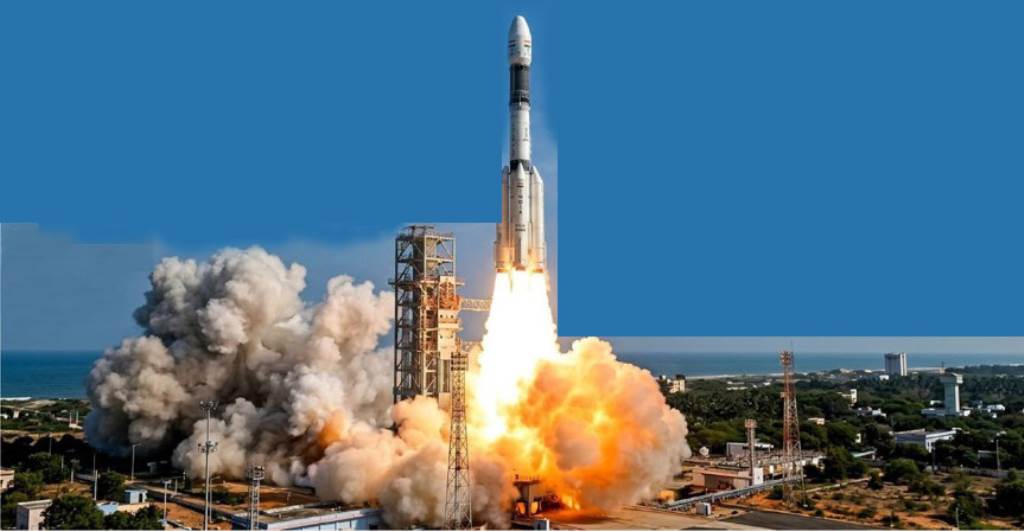
Sriharikota:- The Indian Space Research Organisation successfully launched the country's first dedicated geo-imaging satellite, EOS-05, early Friday morning using the GSLV-F17 rocket. After a flight lasting approximately 18 minutes, the 2,367-kg satellite was placed into the designated sub-geosynchronous transfer orbit. With this success, ISRO achieved its first successful launch of the year 2026.
Through subsequent orbital manoeuvres, EOS-05 will be positioned on a geo-platform at an altitude of approximately 36,000 kilometres. According to ISRO, the satellite is expected to provide near-real-time images. These images can be used for agriculture, disaster management and other national activities.
After the launch, ISRO chief V. Narayanan said that GSLV-F17 precisely placed the advanced EOS-05 satellite into the designated orbit. He said this was the 107th launch from Sriharikota and the 19th mission for GSLV.
He commented that the capabilities of the GSLV have been continuously improved. Following structural mass optimisation and improvements in the propulsion system, the rocket has now launched its heaviest satellite to date, weighing 2,367 kg.
Flight after a 27-hour countdown
EOS-05 was launched at 2:55 a.m. on Friday from the second launch pad of the Satish Dhawan Space Centre. The 51.7-metre-long, three-stage GSLV rocket lifted off with a mass of 420.5 tonnes. A cryogenic engine was installed in its third stage. Despite the early morning hours and rainy weather, a large number of people gathered to watch the launch. According to ISRO, the satellite's solar panels have been successfully deployed, and all its systems are functioning normally. Mission Director Thomas Kurian described EOS-05 as a special satellite capable of real-time imaging. Project Director (Satellite) Imtiaz Ahmed described it as a complex satellite with multi-band capabilities.
The GSLV-F17/EOS-05 mission was developed following the unsuccessful GSLV-F10/EOS-03 mission in 2021. In that earlier mission, the onboard computer aborted the launch 307 seconds after liftoff; an investigation attributed the failure to a technical problem in the cryogenic upper stage.
In addition, during the PSLV-C62 mission on January 12, 2026, a technical malfunction in the third stage prevented 16 satellites from being placed into their designated orbits. Achieved after a gap of nearly eight months, this success marks a significant milestone for ISRO.