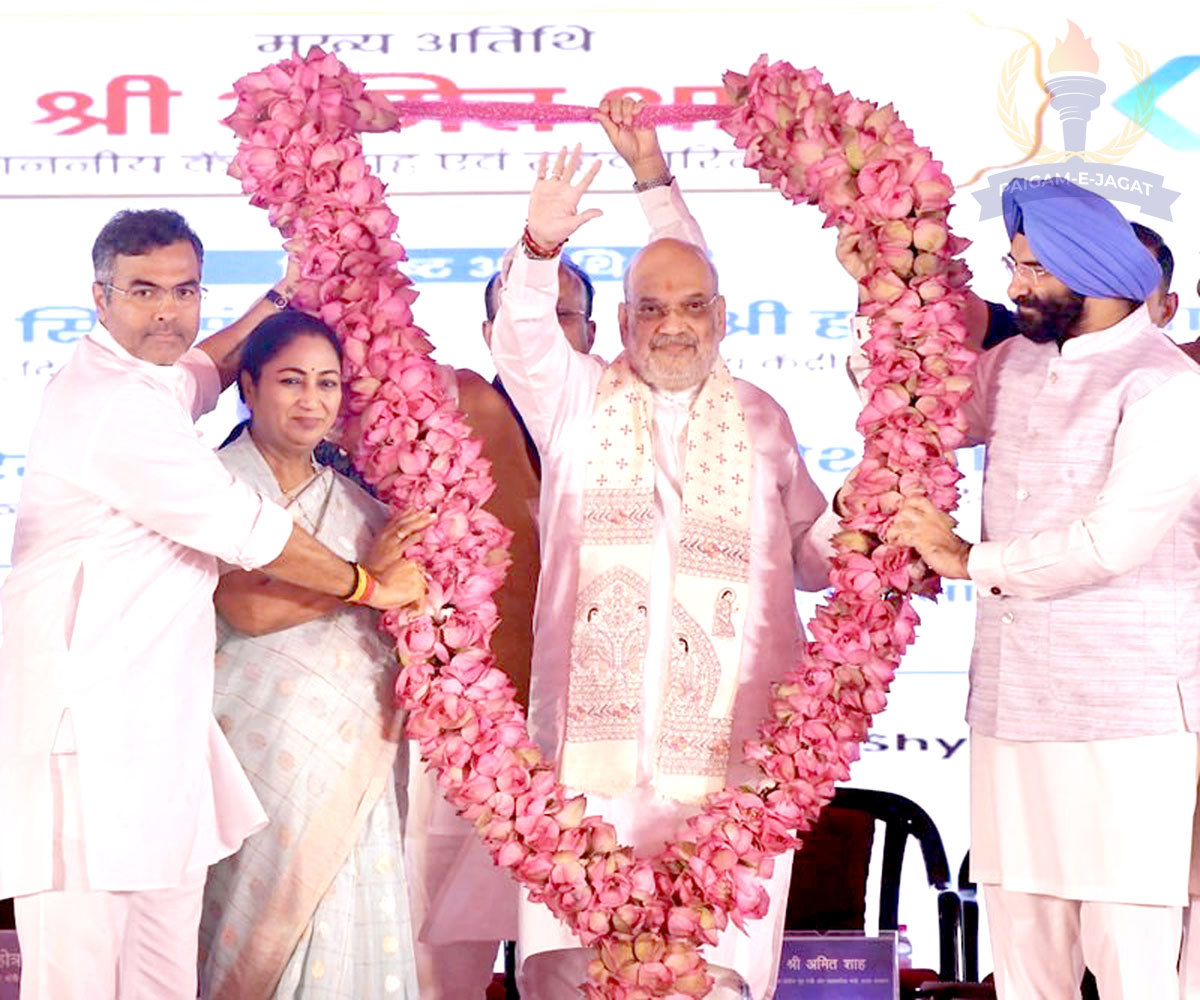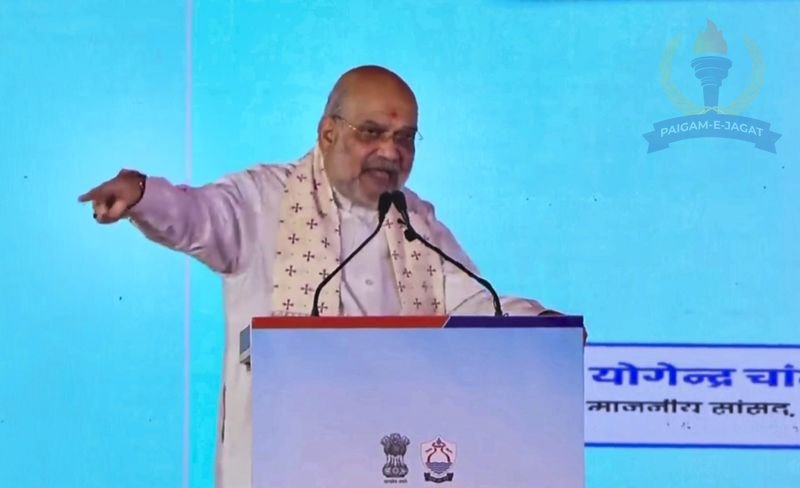
New Delhi:- Union Home Minister Amit Shah launched a sharp attack on the Congress and the Aam Aadmi Party (AAP) on Thursday, predicting that the Congress would remain out of power for the next 30 years because of its “negative politics”. He also warned AAP national convener Arvind Kejriwal that voters would uproot his party’s government in Punjab.
Addressing a gathering in Dwarka, Shah accused Congress leader Rahul Gandhi of making allegations of “vote theft”. According to Shah, Rahul Gandhi was doing so to protect a “vote bank” that, he alleged, included infiltrators. He also dismissed the Congress’s repeated questions about the impartiality of the Election Commission of India, saying the party accepts the poll panel when it wins elections but blames it when it loses.
Shah said, “I want to tell Rahul Gandhi that by making allegations of vote theft, you want to protect the votes of infiltrators.” He argued that the Congress had remained out of power for decades in several states even before Narendra Modi became Prime Minister.
He further said, “The kind of negative politics you are pursuing... you will not be able to win elections even in the next 30 years. Wherever you win, the Election Commission is doing a good job, but whenever you lose, the Election Commission is held responsible.” He added that the Congress would not get its “turn” even in 2030.
Targeting Kejriwal, Shah accused the former Delhi Chief Minister of failing to resolve basic civic problems in the national capital and relying on sit-ins and protests. He said, “People will uproot the AAP government in Punjab and give you an appropriate response.” Shah specifically referred to Delhi’s landfill sites, alleging that Kejriwal had done nothing to remove the “mountains of garbage”. He said the Centre was working to clear these dumping grounds and that they would soon be transformed into public gardens.
These political attacks came during the launch and foundation-laying ceremony for 43 Delhi Jal Board projects worth Rs 8,941 crore. The projects aim to improve sewage treatment and disposal, drinking water infrastructure, and the rejuvenation of the Yamuna.