

Reduce the Use of Plastic as It Is Harmful to Health Prof Baldev Raj Kamboj

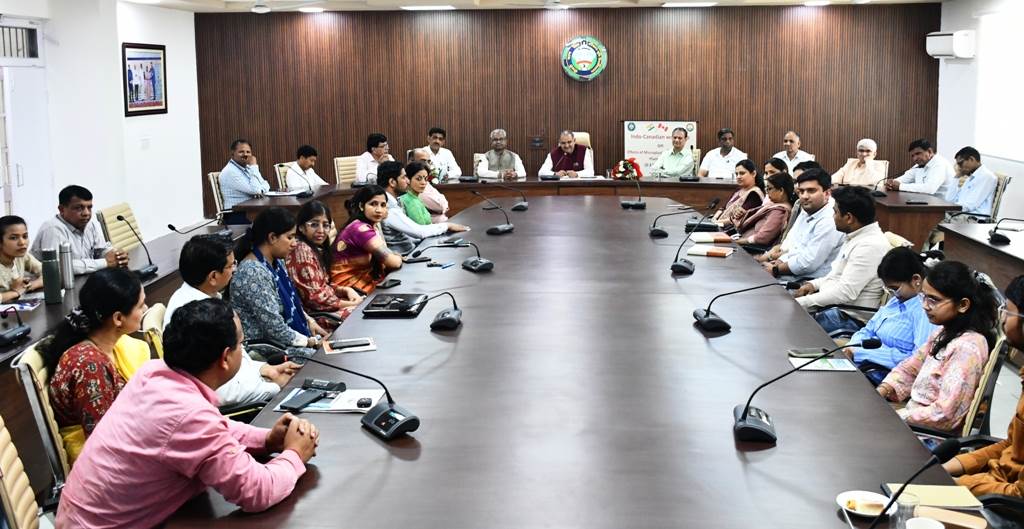
Hisar, March 5:- A brainstorming session on the topic “Impact of Microplastics on Human and Environmental Health” was organized by the Department of Botany and Plant Physiology at the College of Agriculture, Chaudhary Charan Singh Haryana Agricultural University. The university’s Vice-Chancellor Prof. Baldev Raj Kamboj attended the program as the chief guest, while Prof. Devki Nanda from the University of British Columbia, Canada, was present as the guest of honor.
Researchers and faculty members from different disciplines, including Botany, Plant Physiology, Environmental Sciences, Fisheries, Agriculture, and Biotechnology, participated in the program.
In his address, Prof. Kamboj said that plastic, although created to make human life easier, has now become a major threat to human health. The term microplastic is derived from two words — “micro,” meaning extremely small, and “plastic,” meaning synthetic polymer material. Tiny particles found in plastic bottles, plastic fragments, and plastic bags gradually accumulate in the human body and can cause serious health problems.
He explained that microplastics are also affecting plant growth and soil health, which ultimately impacts crop production. These particles are entering the human body not only through food and water but also through air and even salt.
To reduce exposure to microplastics, he advised people to use glass or stainless steel bottles instead of plastic ones, avoid cooking or heating food in plastic containers, and choose fresh food whenever possible. He also recommended using high-quality filters for drinking water. Prof. Kamboj emphasized that reducing microplastics requires collective efforts from scientists, policymakers, and society. Moving forward, awareness must be followed by concrete action and the application of science-based knowledge.
Speaking online, Prof. Devki Nanda discussed the presence of plastic particles in soil, their translocation within plants, and their impact on crop productivity and the food chain. She also highlighted the importance of interdisciplinary research collaboration between India and Canada and discussed advanced analytical techniques and biological solutions to tackle this global environmental challenge.
Dean of the College of Basic Sciences and Humanities Dr. Rajesh Gehra welcomed the guests at the event. Dr. Vinod Goyal expressed gratitude to all participants. Dr. Priyadarshan Hari from the Indian Institute of Space Science and Technology and Dr. Rajesh Jalota also participated in the program. Deans, directors, officers, and scientists from various colleges were present on the occasion.
