
ITBP Officers Visit Vet Varsity Appreciated Clinical Extension and Research Facilities

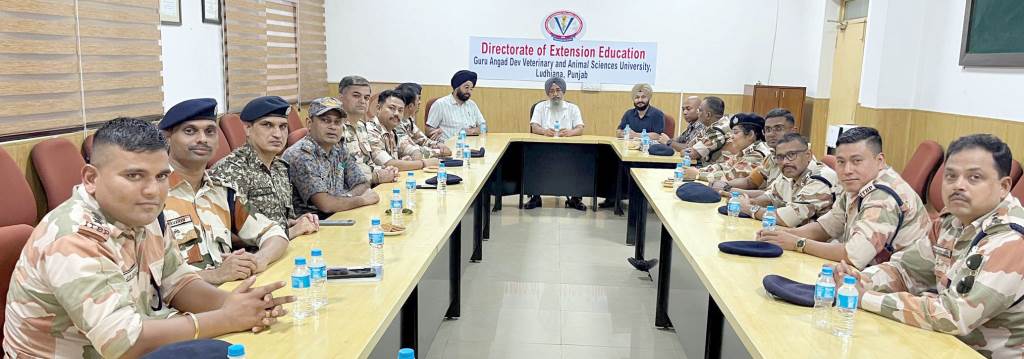
Ludhiana, 26 August, 2026:- A team of officers from the Indo-Tibetan Border Police (ITBP) visited Guru Angad Dev Veterinary and Animal Sciences University, Ludhiana, to acquaint themselves with the University’s facilities related to veterinary healthcare, livestock production, extension education, dairy processing, One Health and research.
During the visit, the officers visited the Multi-Speciality Veterinary Hospital, where they interacted with the faculty of the Teaching Veterinary Clinic Complex and learned about the clinical, diagnostic and treatment facilities available at the University. The team also visited the Livestock Farm of the university, where they interacted with the faculty and gained insights into scientific livestock production, management and breeding practices. At the One Health Centre, the officers were apprised of the University’s multidisciplinary approach towards animal, human and environmental health. At Experimental Milk Plant they interacted with the concerned faculty regarding dairy processing, value addition, milk products and related research activities.
Dr. J. P. S. Gill, Vice-Chancellor, stated that such visits provide an excellent platform for interaction, knowledge exchange and showcasing the University’s expertise and facilities. He emphasized that such institutional linkages help in wider dissemination of scientific knowledge and strengthen Varsity’s efforts towards serving farmers, livestock owners and society. Dr. R. S. Grewal, Director, Extension Education informed them about various extension initiatives undertaken by the university for the benefit of farmers and livestock owners.
The visit was coordinated by Dr. Ravdeep Singh and Dr. Parteek Singh Dhaliwal. The visiting officers appreciated the state-of-the-art facilities and multidisciplinary infrastructure of the institute. They particularly appreciated the University’s efforts towards providing quality veterinary services to farmers and livestock owners, promoting scientific livestock production, undertaking need-based research and transferring improved technologies and knowledge to the farming community.