

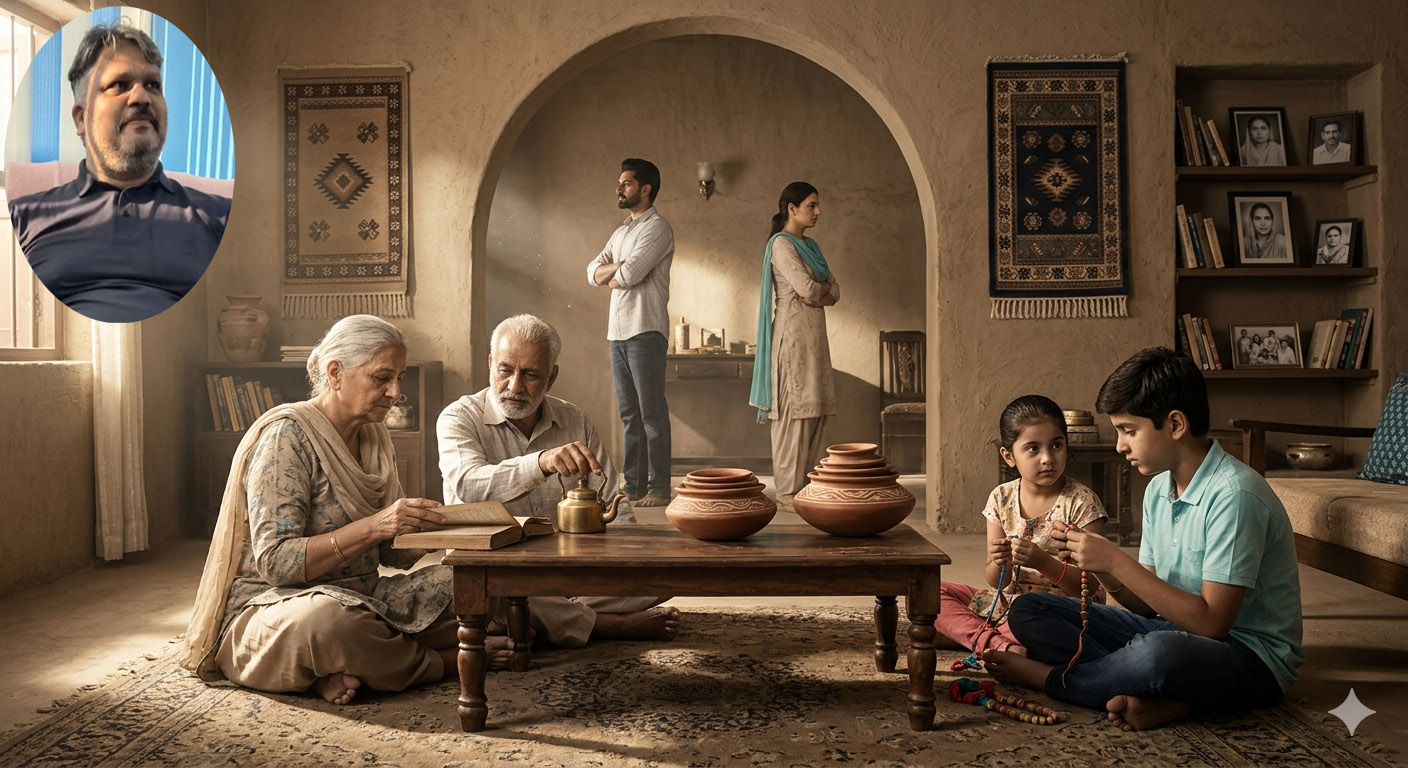
Emerging Challenges with Changing Family Structures

Family life never remains the same. With time, the structure of homes, perspectives, and expectations constantly evolve. Social changes, economic pressures, increased education, and new ideologies reshape the domestic environment. The lifestyle that was once considered stable is now in a state of continuous flux. While this change is a sign of progress in many aspects, it also brings certain challenges, especially regarding how family members communicate, resolve disagreements, and the kind of environment they create for the next generation.
Family life never remains the same. With time, the structure of homes, perspectives, and expectations constantly evolve. Social changes, economic pressures, increased education, and new ideologies reshape the domestic environment. The lifestyle that was once considered stable is now in a state of continuous flux. While this change is a sign of progress in many aspects, it also brings certain challenges, especially regarding how family members communicate, resolve disagreements, and the kind of environment they create for the next generation.
In today’s homes, the confluence of diverse ideologies is common. Disagreements often arise due to the generational gap in thinking, new social roles, and the influences of modern life. Disagreement, in itself, is not a bad thing; it provides an opportunity to learn, understand, and develop one's views. However, when these disagreements turn into constant conflicts or remain unresolved, they affect the household atmosphere, particularly impacting children.
Children are highly sensitive. They do not just hear what is said; they feel the energy of the home. If a house is filled with frequent tension, loud arguments, or bitter words, it can create a sense of instability in a child's mind. Over time, this effect manifests in their behavior. Some children become anxious, some withdraw into themselves, and others show increased anger or irritability. This psychological instability sometimes affects their physical health as well, leading to lack of sleep, poor concentration, or fatigue.
Family tension is not a new phenomenon. Every generation has faced such situations in its own time. In the past, disagreements existed too, but their causes and forms were different—often tied to rigid social traditions or limited opportunities for dialogue. Today, disagreements are mostly linked to freedom, personal choices, and modern thoughts. Yet, the core issue remains the same: how differences are managed within the home. The issue is not the disagreement itself, but the method of resolving it. A healthy home is not one where there is no friction, but one where respect and balance are maintained despite disagreements. "Domestic atmosphere" does not just mean living together; it means creating an environment where every individual feels safe and valued.
It is essential to change the way we communicate. When the purpose of a conversation is merely to impose one's point of view, the conflict escalates. But if the goal is to understand the other person, the atmosphere naturally softens. Everyone should get a chance to speak without interruption. Sometimes the issue isn't large, but the manner of speaking spoils the mood. When a conversation starts getting heated, one should pause. This is not a sign of weakness. It is crucial to keep the ego in check. Often, disputes linger because no one is willing to step back. Sometimes letting go of a small matter can save a large relationship.
Prioritizing peace at home over one's ego is beneficial for the future. For children, all of this becomes a lesson. If they see elders resolving disagreements with respect, they learn to do the same. This develops patience, understanding, and balanced thinking in them—qualities that serve them in every field of life. A peaceful and supportive home possesses the strength to face external pressures, whereas a tense environment can weaken one from within. Therefore, maintaining family balance is not just a present-day necessity but an investment for the future.
The way we talk in our homes today influences the thoughts and health of tomorrow's generation. Change is inevitable, and disagreements will remain a part of family life. However, if we handle them with wisdom, patience, and respect, a home can become a place where everyone feels secure and strong.
— Davinder Kumar