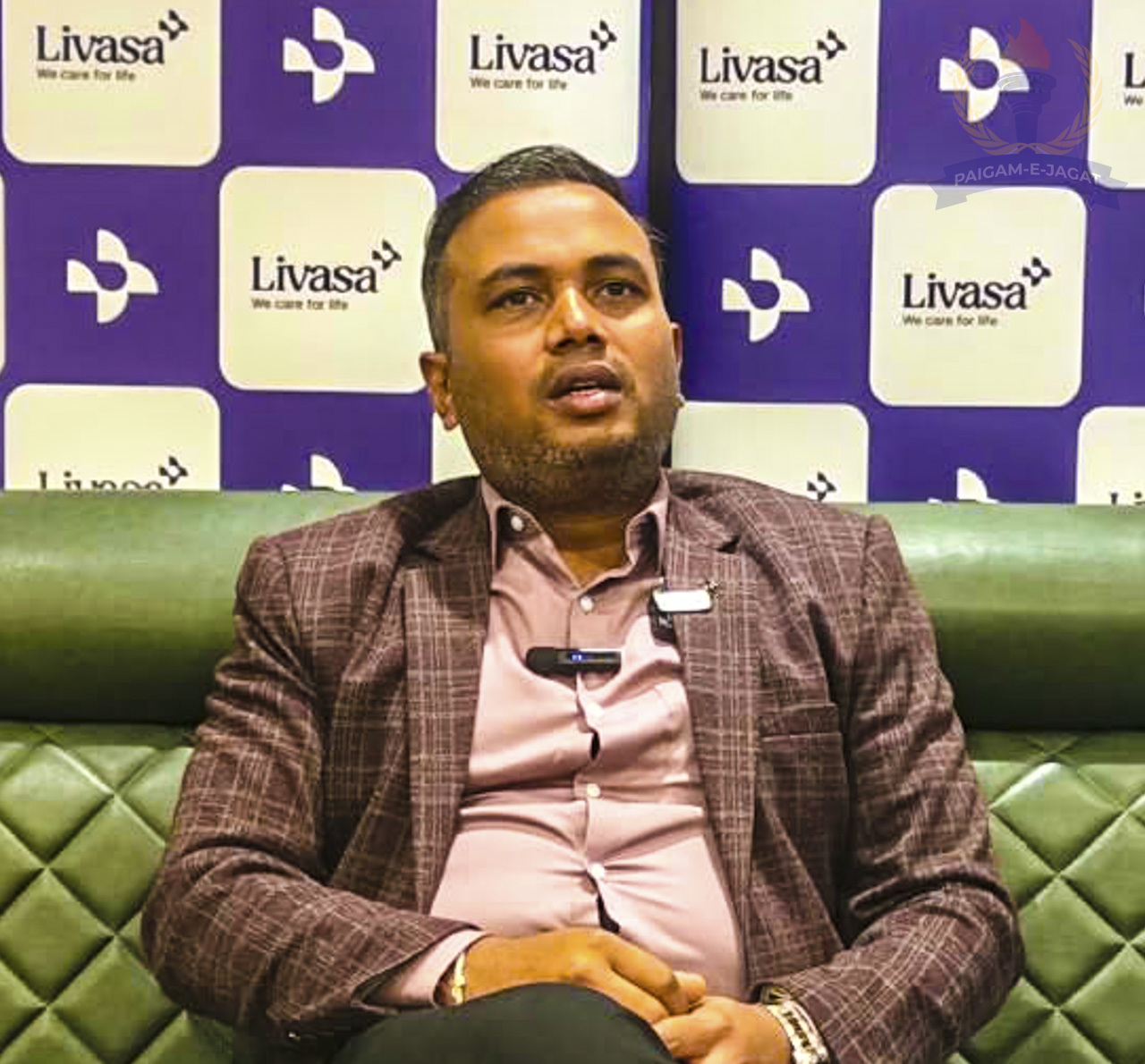
Srinagar (Jagmeet Ghuman): Two patients from Srinagar and Anantnag received a new lease of life following complex spine surgeries at Livasa Hospital, Mohali. Addressing a press conference in Srinagar on Monday, Dr. Ajay Singh, Brain and Spine Specialist at Livasa Hospital, Mohali, shared details of these two challenging cases. He explained that expert surgical skills, treatment plans tailored to individual patient conditions, and timely medical intervention play a crucial role in treating complex spinal disorders.
The first case involved a patient from Srinagar who developed a severe spinal infection following an earlier surgery. The infection was complicated by sepsis, causing his condition to deteriorate significantly. His condition became so serious that he was unable to sit, stand, or even turn over in bed. With his mobility completely affected, he was brought to Livasa Hospital, Mohali, on a stretcher for further treatment.
Following detailed investigations and medical evaluation, Dr. Ajay Singh performed revision spine surgery to eliminate the complex infection and address other spinal problems. The procedure required careful planning and continuous post-operative monitoring to ensure the patient’s recovery progressed effectively.
The patient showed encouraging improvement after surgery and was able to start moving around as early as the second day. His condition is currently better, and he remains under medical supervision. Regular outpatient department (OPD) follow-up examinations are being conducted to monitor his continued recovery.
The second case involved a 21-year-old woman from Anantnag who was suffering from a severe spinal condition known as Grade III–IV dysplastic spondylolisthesis. In this condition, one vertebra slips out of its normal position in relation to another, causing significant difficulty in sitting and standing. The woman’s father is a farmer, making the cost of treatment an important consideration for the family.
After a detailed medical evaluation, Dr. Ajay Singh planned a hybrid posterolateral surgical technique to restore the spine’s alignment and provide stability. The approach aimed to correct and stabilise the spinal condition while avoiding the need for a more extensive circumferential surgery. The treatment strategy was tailored to the young woman’s medical condition, while the family’s financial circumstances were also taken into account.
Approximately nine to ten months after surgery, the young woman is doing well and has returned to her normal daily routine. Her recovery highlights the importance of planning surgery according to individual patient needs, while considering not only better clinical outcomes but also the practicality and affordability of treatment.
These two cases demonstrate how specialist care and carefully planned surgical intervention can play a vital role in restoring mobility and improving the quality of life of patients suffering from complex spinal disorders. They also underline the importance of developing treatment strategies that take into account each patient’s medical needs and individual circumstances.