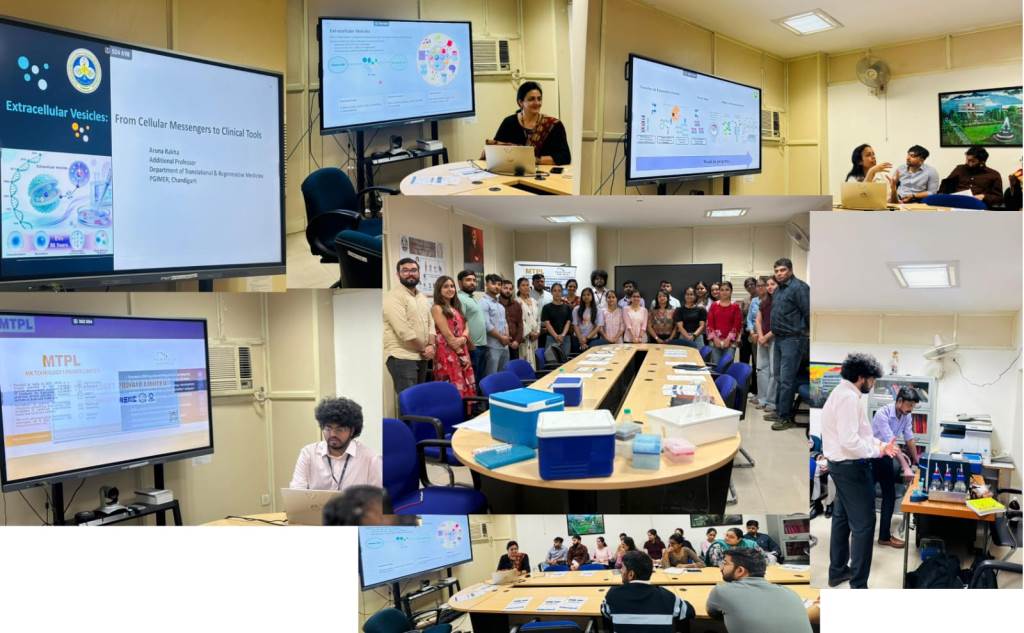
Chandigarh, May 14:- The Department of Translational & Regenerative Medicine, under the headship of Prof. Reena Das, organized a one-day seminar-cum-workshop on May 14, 2026, in collaboration with MTPL on the characterization of extracellular vesicles (EVs) from biological fluids and stem cell secretome. The event aimed to introduce faculty members and students to the growing significance of EVs in modern biomedical research.
The programme commenced with expert talks by Dr. Aruna Rakha from the Department of Translational & Regenerative Medicine and Dr. Priyanka Srivastava from the Advanced Paediatric Centre. The speakers explained the biological role of EVs and their emerging clinical relevance in a manner that was accessible to researchers, clinicians, and students alike.
Extracellular vesicles are tiny particles released by cells that carry essential biological information, including proteins and genetic material. Since EVs can be detected in easily accessible biological fluids such as blood, urine, and other samples, their study has the potential to support the development of less invasive methods for disease detection and monitoring.
Experts highlighted that, in the future, EV-based tests could aid in early diagnosis, help doctors better understand disease progression, and improve the monitoring of treatment responses without the need for repeated invasive procedures. EVs are currently being explored as biomarkers in several metabolic, neurological, cardiac, and immune-mediated diseases. Additionally, they have entered clinical trials as therapeutic interventions for conditions such as acute respiratory distress syndrome, dry eye disease, and wound healing.
A key highlight of the workshop was the hands-on training session on Nanoparticle Tracking Analysis (NTA) using the ZetaView TWIN platform. Mr. Chaitanya from MTPL explained the working principles and applications of NTA, demonstrating how this advanced technique measures and characterizes EVs based on their size, concentration, and fluorescence-tagged identifying antibodies.
The practical session provided faculty members and students with valuable exposure to cutting-edge technology used in EV research and helped bridge the gap between laboratory discoveries and their potential clinical applications for patient benefit.
PU Organizes SeminarcumWorkshop on Extracellular Vesicles and Stem Cell Secretome