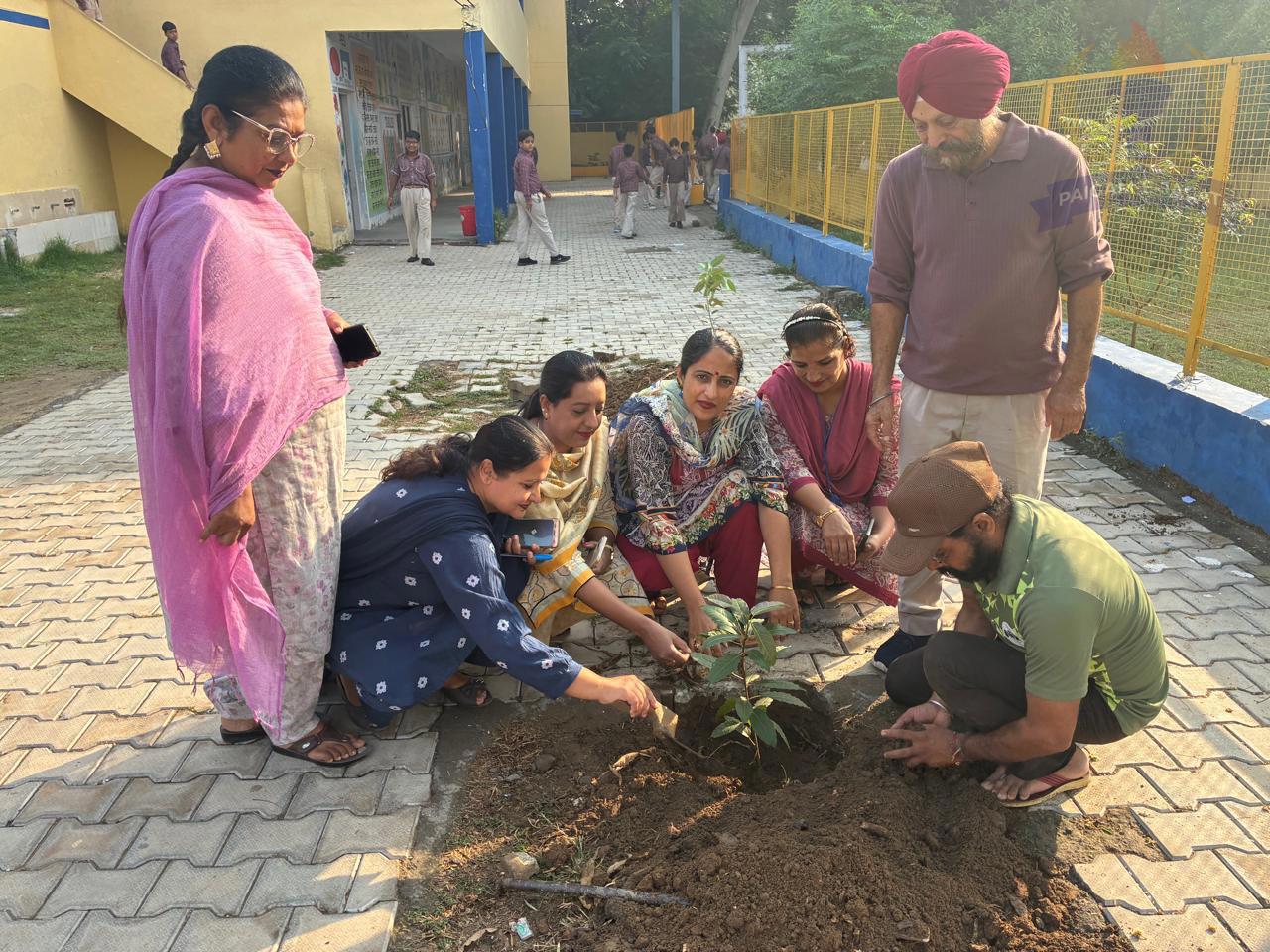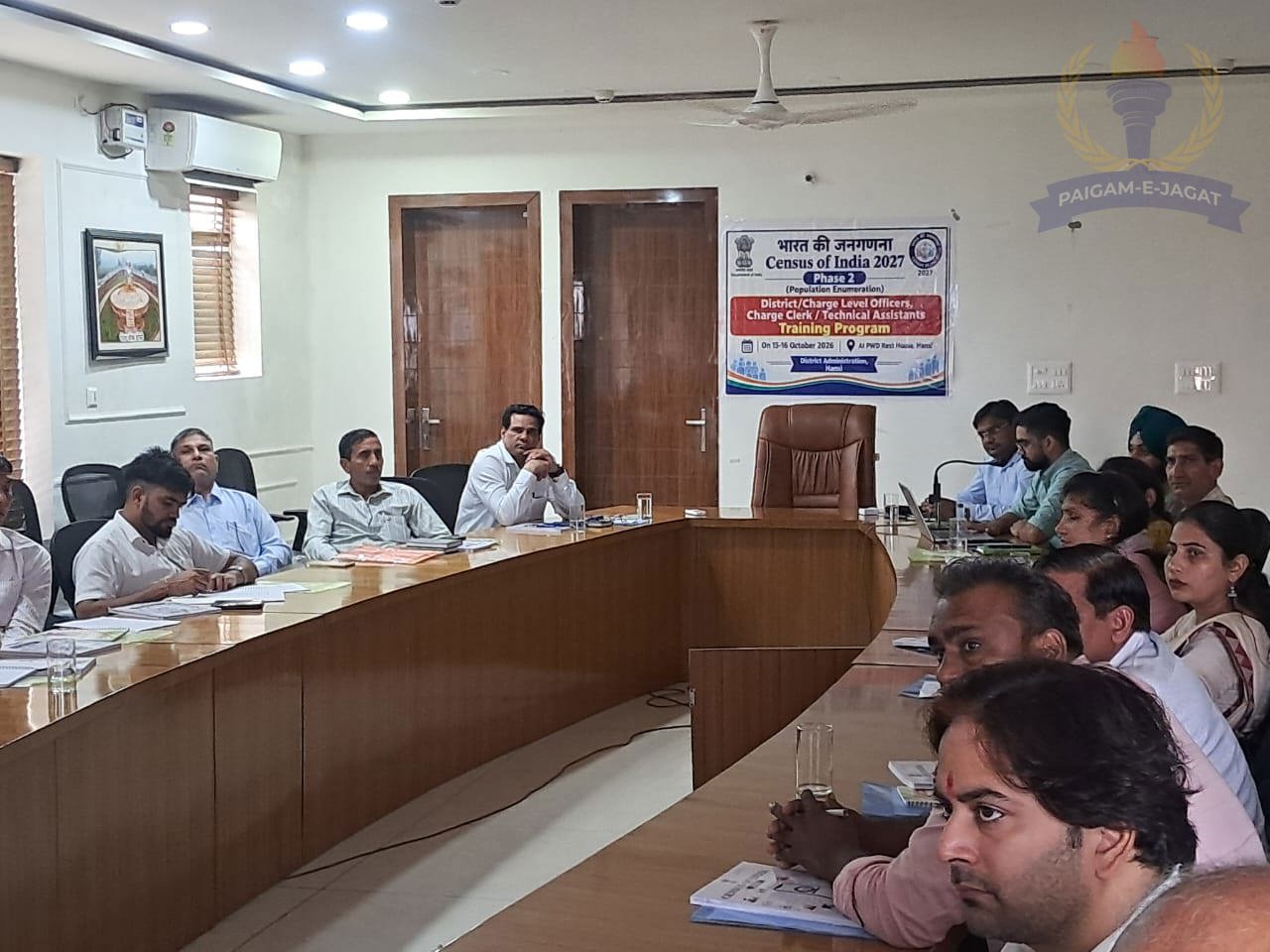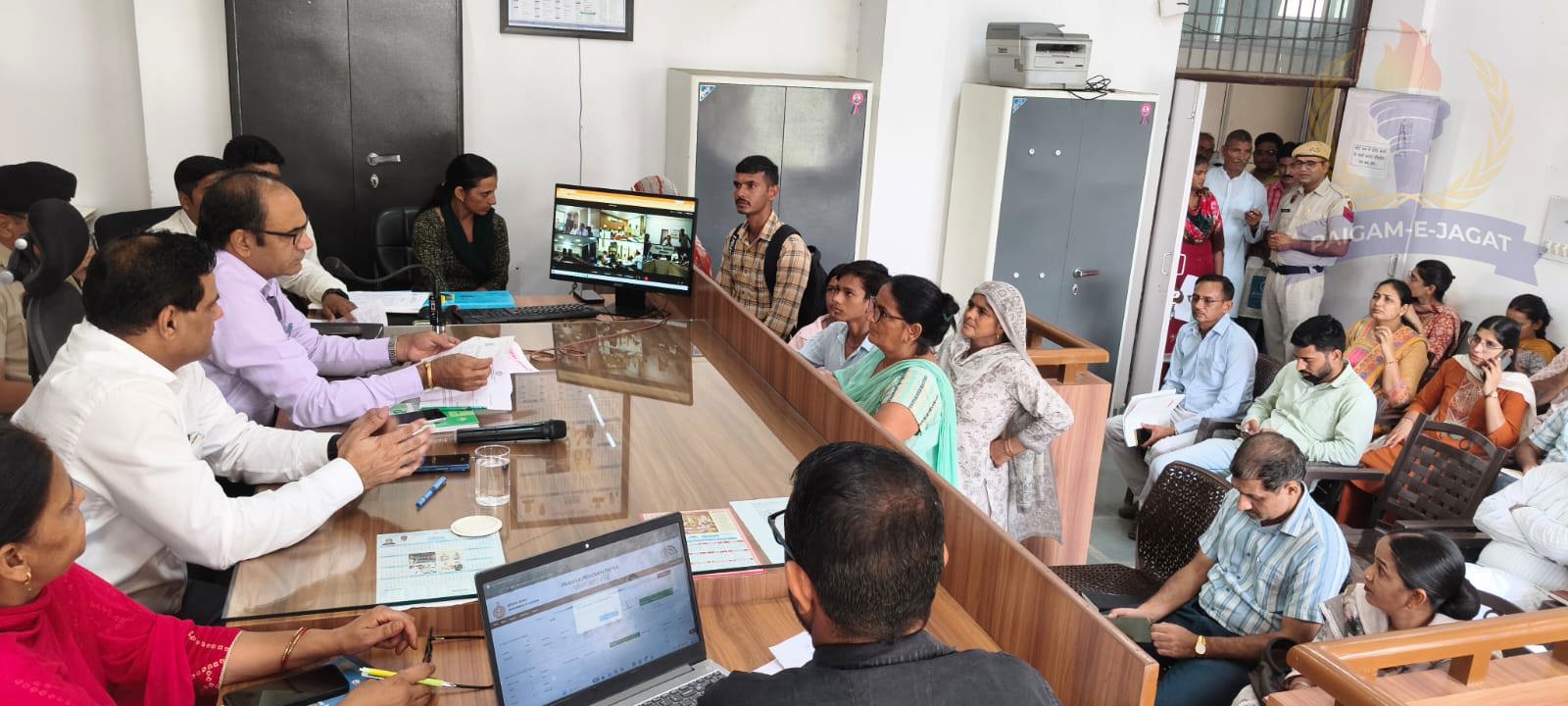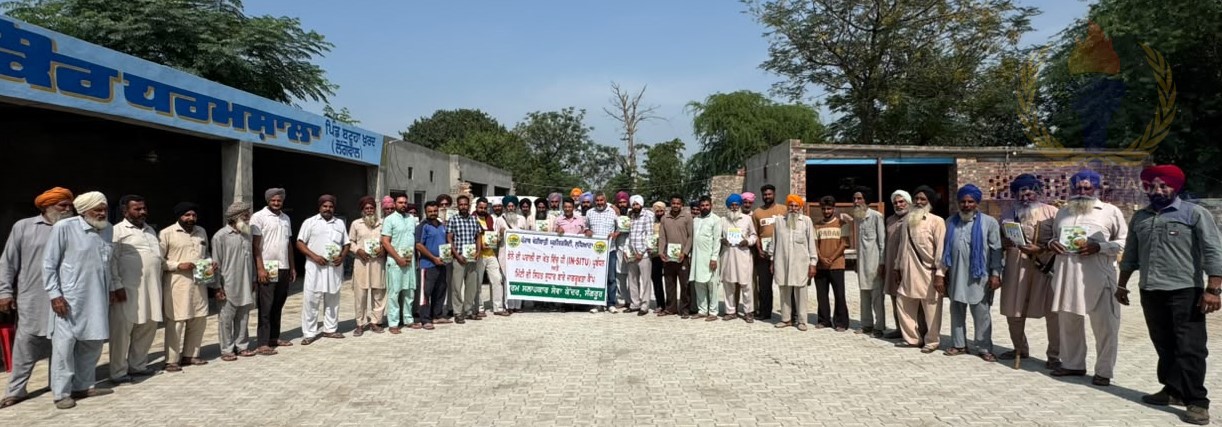
Longowal, October 15:- Under the guidance of the Director of Extension Education, Punjab Agricultural University (PAU), Ludhiana, the PAU-Farm Advisory Service Centre (FASC), Sangrur, organised a village-level farmers’ awareness camp at Longowal (Batuha Khurd) on in-situ crop residue management (CRM) and the balanced use of fertilisers.
Addressing the farmers, Dr. Ashok Kumar Garg, Senior Extension Scientist (Soil Science), urged them to completely refrain from burning paddy straw and adopt environmentally safe and sustainable straw management practices. He explained that managing straw in the field not only helps reduce air pollution but also enables the recycling of valuable nutrients, increases organic matter in the soil, improves soil health and maintains soil productivity over the long term.
Explaining the major nutrient losses caused by straw burning, Dr. Garg said that burning one tonne of paddy straw results in the loss of approximately 400 kg of organic carbon, 5.5 kg of nitrogen, 2.3 kg of phosphorus, 25 kg of potassium and 1.2 kg of sulphur. He said that instead of burning these valuable nutrients, farmers should retain the straw in the field through appropriate management practices and incorporate it back into the soil, thereby improving soil fertility and biological health.
Dr. Garg provided detailed information about various in-situ straw management techniques, including the Happy Seeder, Super Seeder, PAU Smart Seeder and surface seeding-cum-mulching. He explained that these technologies enable timely wheat sowing without burning the straw. Describing soil testing as the foundation of rational fertiliser management, he advised farmers to apply nutrients according to the actual requirements of the soil and crop. He also stressed the importance of integrated nutrient management (INM) and the judicious, balanced use of fertilisers for sustainable crop production.
Farmers were also informed about the recommended biofertiliser mixture for rabi crops, its benefits and the correct method of application. They were introduced to PAU-recommended varieties of wheat and other rabi crops suitable for Punjab's conditions. Special emphasis was placed on the newly recommended high-yielding wheat variety PBW 887, which matures in approximately 155 days and has an average yield of 24.60 quintals per acre. Information was also shared about PBW 872 and PBW 826, as well as the speciality varieties PBW Zinc 2, PBW 1 Chapati, PBW RS 1 and PBW 1 Biscuit.
Dr. Garg encouraged farmers to promote crop diversification by including pulses and oilseed crops in the rabi cropping cycle and to adopt balanced nutrient management practices. For household consumption and nutritional security, he specifically recommended cultivating gobhi sarson (GSC 7), chickpea (PBG 10) and pea (PB 90).
Farmers actively participated in the camp and raised questions on various agricultural issues, which Dr. Garg answered appropriately. Seeds of gobhi sarson, biofertiliser for wheat and agricultural literature prepared by PAU were distributed to the farmers to help them implement the university's recommendations. S. Jagraj Singh, Sarpanch of Batuha Khurd, and S. Nihal Singh, Sarpanch of Vadiani Pindi, provided active support in successfully organising the camp.