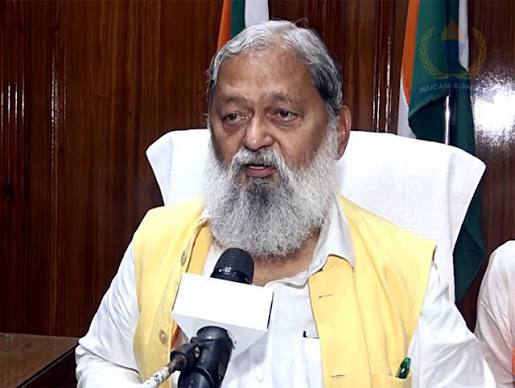
Chandigarh, October 30:- Haryana Energy, Transport and Labour Minister Anil Vij has revealed several important historical facts related to the Revolt of 1857 and the First War of Independence. He said that Indian soldiers and brave freedom fighters displayed extraordinary courage and bravery during the revolt and laid down their lives for the cause of freedom. He stated that during the action taken against soldiers of the 5th and 60th Native Infantry at Ambala Cantonment in September 1857, 135 Indian soldiers were killed at the parade ground in just 10 minutes. In addition, the British disbanded 74 military companies during the Revolt of 1857. Vij said that research undertaken in connection with the construction of the ‘First War of Independence Martyrs’ Memorial-1857’ had brought several government documents to light. These documents record extraordinary sacrifices and struggles of Indian soldiers and revolutionaries, including many untold stories that had not received their rightful place in the pages of history.
The Energy Minister said that the ‘First War of Independence Martyrs’ Memorial-1857’, being built in Ambala, is dedicated to those unsung revolutionaries and martyrs who sacrificed everything for India's freedom. In an emotional statement, he said, “I bow at the feet of everyone who took even a single step forward in the freedom struggle.” He said that the memorial would honour the sacrifices of all such bravehearts and enable future generations to learn about the true history of India's independence and the struggles of freedom fighters.
Vij said that Union Home Minister Amit Shah would inaugurate the ‘First War of Independence Martyrs’ Memorial-1857’ in Ambala on November 5. A large public meeting would also be organised at Gandhi Ground in Ambala Cantonment on the occasion, which is expected to be attended by a large number of people. He further stated that the Haryana Government had decided to arrange visits to the memorial at government expense for students studying in educational institutions across the state, so that the younger generation could learn first-hand about the glorious history of the Revolt of 1857, the sacrifices of brave soldiers and the struggle for the country's freedom.
The Revolt of 1857 Began in Ambala Cantonment Nine Hours Before Meerut: Vij
He said that it was important to share some significant facts about the historic ‘First War of Independence Martyrs’ Memorial-1857’. In particular, two questions needed to be answered: why was the memorial being built specifically in Ambala Cantonment, and why is the Revolt of 1857 called the First War of Independence? Vij said that the main basis for constructing the memorial in Ambala Cantonment was the research and findings presented by Dr. K.C. Yadav, former Head of the Department of History at Kurukshetra University, in his research and book. According to his research, the Revolt of 1857, which the British called a ‘Mutiny’, began in Ambala Cantonment nearly nine hours before it began in Meerut. He said that he had also conducted in-depth research on the subject and collected several important documents. According to him, on May 10, 1857, soldiers of the 5th and 60th Native Infantry in Ambala Cantonment came out of their barracks with weapons in the morning, nearly nine hours before the soldiers in Meerut. These facts indicate that Ambala Cantonment played a very significant role in the history of the Revolt of 1857.
National Archives Document Records the Deaths of 135 Soldiers in Ambala: Vij
The Energy Minister said that he had obtained an important historical document from the National Archives, a copy of which would also be made available. According to the document, during September 1857, soldiers of the 5th and 60th Native Infantry were summoned to the parade ground in Ambala Cantonment. During this time, a soldier allegedly shouted ‘Fly’, meaning to flee, after which European soldiers opened fire on them. Vij claimed that 135 soldiers were killed in just 10 minutes, 33 were taken prisoner and around 40 managed to escape. He said that details of this incident, recorded in the document, had not yet been widely brought before the public. According to him, this incident is an important and neglected chapter in the history of the freedom struggle of 1857. He said that such a major incident had remained unknown to the world until now.
Most Indian Regiments of the Bengal Army Were Disbanded After the Revolt of 1857: Vij
Vij said that another important reason for calling the Revolt of 1857 the First War of Independence was that, following the revolt, the British disbanded most of the Indian regiments of their Bengal Army. He said that historical documents were also available in this regard. Referring to a British document, he said that after the Revolt of 1857, 54 of the 74 regular Native Infantry regiments of the Bengal Army were disbanded. According to Vij, 15 regiments were disarmed, and only three of these regiments were considered loyal, while all 10 regular Light Cavalry regiments were disbanded. This meant that these regiments had taken up arms against the British, while a large number of Indian soldiers had revolted against British rule.
He said that the 5th and 60th Native Infantry and the 4th Cavalry stationed at Ambala Cantonment were also disbanded later. Vij claimed that the relevant government documents describe these military units as ‘Mutinous’, meaning rebellious. He also referred to the government gazetteer of 1923-24 and said that these documents help explain the historical significance of the revolt in Ambala Cantonment.
Asia’s Largest Martyrs’ Memorial Spread Over 22 Acres; Events of the 1857 Revolt Brought to Life Through Technology: Vij
Vij said that the memorial, spread over approximately 22 acres, is Asia’s largest martyrs’ memorial and the country's first memorial dedicated to the Revolt of 1857. He said that key events of the battles fought across different parts of the country, beginning in Ambala Cantonment, have been recreated and displayed inside the memorial. Modern technology and various visual media have been used to present this historic struggle effectively to the younger generation. A total of 22 galleries have been created in the memorial, showcasing different aspects of the Revolt of 1857, the struggles of revolutionaries and their sacrifices.
Unsung Revolutionaries of 1857 to Receive Honour; Names of Around 700 Martyrs to Be Inscribed in Golden Letters: Vij
The Energy Minister said that one of the major ironies in the country's history was that many revolutionaries and martyrs of the freedom struggle had not received the recognition they deserved. He said that even during his childhood, he had mainly read that the freedom struggle was fought by the Congress, whereas the Congress was established in 1885 by A.O. Hume, and an armed uprising had taken place across the country 28 years earlier, in 1857. Vij said that many bravehearts who took up arms against the British during the Revolt of 1857 were hanged, while several revolutionaries were tied to trees and shot. In Ambala, too, accounts have emerged of a location near Kali Paltan where revolutionaries were reportedly tied to trees and shot. He said that the sacrifices of these bravehearts had not received the recognition they deserved for a long time. To address this, a special gallery has been created in the memorial dedicated to the ‘Unsung Heroes’ who laid down their lives for the country's freedom.
He said that the galleries depict the Revolt of 1857 in Ambala Cantonment, Thanesar, Rohtak, Rewari, Meerut, Delhi, Jhansi and other places across the country. He stated that Rao Tula Ram of Haryana participated in the revolt. Similarly, the Queen of Jhansi fought in the First War of Independence, while Tatya Tope struggled for freedom. This national-level memorial has been built in Ambala Cantonment.
Vij said that a committee of eminent historians of the country had been constituted and extensive research was conducted with their assistance. During this process, the names of around 700 martyrs were collected, and these will be inscribed in golden letters at the memorial. The name of each revolutionary, along with the name of their father and village, is also being recorded. He said that if the names of additional martyrs emerge after the inauguration of the memorial through research or evidence from the public, they will also be included.
Special Gallery Created to Pay Tribute to Unsung Martyrs; Names of Visitors Paying Homage Will Also Be Recorded
Vij said that a special gallery had been created in the memorial to pay tribute to unsung revolutionaries. Around 40 people will be able to stand together inside it at a time and pay their respects to the martyrs. He said that this tribute process had been connected with special technology. When a person pays homage, a flame will be lit and will appear to rise towards the sky. The name of the person paying tribute will also be recorded, so that future generations can know that their ancestors, including their grandfathers and maternal grandfathers, had also honoured and paid tribute to these unsung martyrs. The Energy Minister said that the memorial was an effort to correct historical omissions that had deprived many who made sacrifices for the country of due recognition. He said that the main objective of the memorial was to secure the rightful place in history for the unsung heroes of the Revolt of 1857 and to pass on the stories of their sacrifices to future generations.
Energy Minister Anil Vij Explains the Historic Role of the Lotus and Chapati in the Revolt of 1857; Highlights the Significance of the Martyrs’ Memorial
Minister Anil Vij said that, to understand the history of the Revolt of 1857, it was important to know that May 10 fell on a Sunday. At that time, British officers used to visit churches on Sundays. The revolutionaries took advantage of this situation and planned decisive action against the British. Before this, incidents of setting fire to government bungalows and residences that the revolutionaries considered obstacles to their plans had begun as early as March 26. He said that complete details of the bungalows set on fire in Ambala Cantonment, including dates and addresses, were recorded in government records and gazettes, and the relevant documents were also available.
Vij said that a 63-metre-high lotus structure had been built at the martyrs’ memorial, equipped with two high-speed lifts. There are also plans to open a sky café, food court and software-related shops there. A helipad has also been constructed within the memorial complex to facilitate visits by special guests and VVIPs arriving from abroad. He said that, just as foreign guests are taken to other historical sites in the country, they would also be able to visit this martyrs’ memorial in Ambala.
Responding to questions about the lotus structure, Vij said that both the lotus and the chapati played important roles as messengers during the Revolt of 1857. Revolutionaries used to send a lotus flower and a chapati from one military unit to another to establish communication. The arrival of these symbols at a unit was seen as its agreement to join the revolt. He said that this entire process was carried out secretly so that the British would not get even the slightest hint of the revolutionaries’ plans.
Vij said that someone had once questioned why he had installed a lotus structure at the martyrs’ memorial when it was also the election symbol of his party. He replied that the person should first read history. Historical accounts mention that the lotus and chapati were used to convey messages among revolutionaries. Therefore, the lotus structure at the memorial is not merely symbolic architecture but an effort to represent a historical tradition associated with the Revolt of 1857.
Students of All Colleges in Haryana to Visit Martyrs’ Memorial at Government Expense: Vij
Energy Minister Anil Vij said that the Haryana Government had decided to arrange visits to the martyrs’ memorial for all students in the state, and orders in this regard had already been issued. Under this decision, students studying in colleges, polytechnic institutions, engineering colleges, medical colleges and other educational institutions will be taken to the memorial at government expense. He said that there was a plan to bring around 50 buses to the memorial every day. In addition, schoolchildren would also be taken to visit the memorial so that the younger generation could properly understand the history of the country's freedom struggle.
Vij said that the memorial had been constructed to pay tribute to all freedom fighters and revolutionaries who contributed to the country's independence. He said, “I bow at the feet of everyone who took even a single step forward in the freedom struggle. Our aim is to honour all those bravehearts who struggled for the country's independence and whose contributions did not receive due recognition.”
He said that the soldiers who sacrificed their lives and shed their blood during the Revolt of 1857 had lit the flame of freedom, which later became an inspiration for the country's independence movement. The purpose of the martyrs’ memorial is to preserve this historical heritage and pass on the true history of the freedom struggle and the stories of sacrifice to future generations.