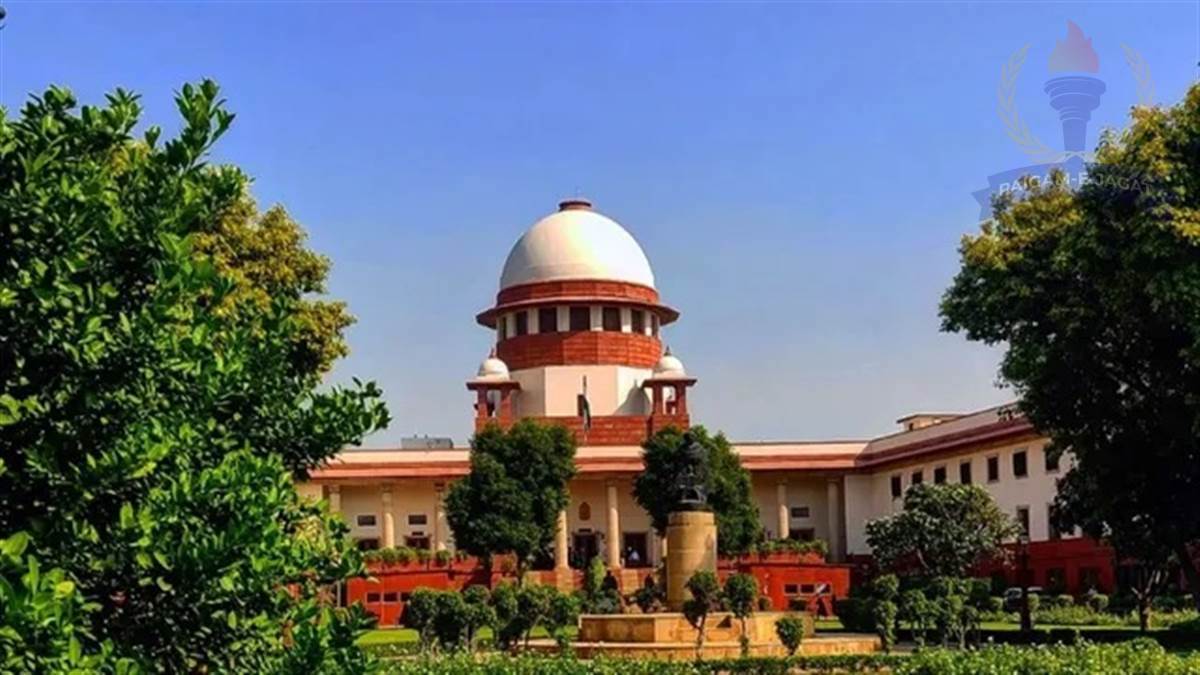
New Delhi:- The Supreme Court has observed that laws disqualifying individuals from contesting elections on the ground that they have more than two children are no longer relevant. The court noted that India's total fertility rate, which stood at 3 in 2003, has now declined to 1.9. A fertility rate of 2.1 is considered the replacement level.
A fertility rate below this level means that one generation will not be fully replaced by the next. The court observed that declining fertility could lead to an increase in the elderly population and a reduction in the number of people of working age. Ignoring these changes could have serious consequences. A bench comprising Justice P.S. Narasimha and Justice Alok Aradhe granted relief to Mangala Bhimrao, a former sarpanch in Maharashtra, who had been disqualified following the birth of her third child. The bench referred the matter to a larger bench, including the question of reconsidering a 2003 judgment that had upheld the two-child norm.
The bench observed that laws barring people with more than two children from contesting elections effectively exclude an entire section of citizens from political representation. Such a restriction has no meaningful connection with an individual's ability to hold public office. According to the court, these laws force individuals to choose between having children and participating in the democratic process. The court said this violates the right to make reproductive decisions, a freedom protected under Article 21 of the Constitution.