
We can decide what is superstition in religion Supreme Court

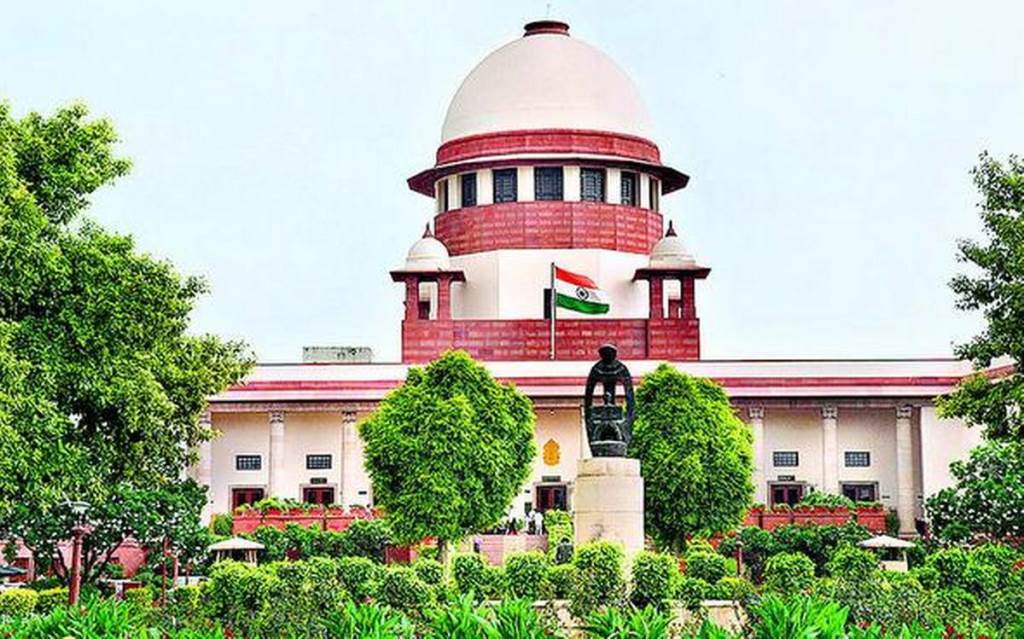
New Delhi: The Supreme Court on Wednesday observed that it has the power and jurisdiction to decide what is a superstitious practice in a religion. The observation came in response to the Centre's argument that a secular court cannot decide the issue as judges are experts in the field of law, not religion.
A nine-judge Constitution bench headed by Chief Justice of India Surya Kant is hearing petitions related to discrimination against women at religious places, including Kerala's Sabarimala temple and the scope and limits of religious freedom enjoyed by various religions.
Initially, Solicitor General Tushar Mehta, appearing for the Centre, questioned how the court decides what is a superstitious practice.
"Even if it is accepted that a superstitious practice exists, it is not the function of the court to decide whether it is a superstition. Under Article 25(2)(b) of the Constitution, it is the function of the legislature to intervene and make a reform law," he said.
Mehta told the bench, "The legislature can say that a particular practice is a superstition and needs to be reformed. There are several such laws in place to prevent black magic and other such practices." The bench also included Justices B.V. Nagaratna, M.M. Sundaresh, Ehsanuddin Amanullah, Arvind Kumar, Augustine George Masih, Prasanna B. Varale, R. Mahadevan and Joymalya Bagchi.
Replying to Mehta's argument, Justice Amanullah said that this statement is very simplistic, as the court has the power and jurisdiction to hold that something is a superstition or not.
"What happens after this is for the legislature to deal with. But, in a court, you cannot say that whatever decision the legislature takes is the final word. That cannot happen."
Mehta said that a secular court cannot decide that a religious practice is just superstition, because the court cannot have such scholarly competence. "You are an expert in the field of law, not religion," he said.
Justice Bagchi asked Mehta, "Your argument is that it is the legislature's job to make laws to stop it. Suppose an approach is made to the court under Article 32 of the Constitution that a religious practice of witchcraft exists, and the legislature is silent. Can't the court use the 'doctrine of unoccupied field' to direct that such a practice be stopped, keeping in mind health, morality and public order?" The Solicitor General replied that judicial review is possible because it falls within the ambit of 'health, morality and public order', and not because it is superstition.
Justice Nagaratna opined that in determining what is an essential religious practice, the court should look at it from the perspective of the philosophy of that particular religion.
Justice Nagaratna said, "You cannot impose the views of another religion and say that it is not an essential religious practice. The court's approach is to impose the philosophy of that religion while remaining subject to health, morality and public order."