
Training and Drills Essential for Protection from Disasters

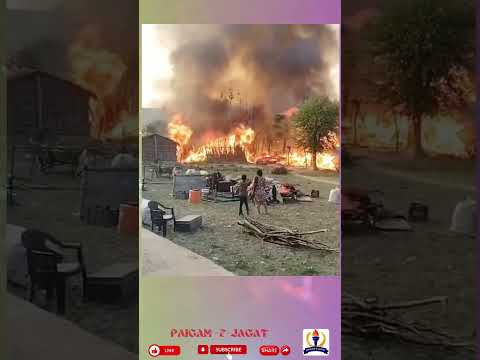
Patiala- Training, exercises, and mock drills conducted before disasters and wars will prove helpful in saving lives and properties in the future. In the world and in India, natural disasters caused by air, water, earth, fire—such as floods, earthquakes, tsunamis, cloudbursts, volcanic eruptions, storms, forest fires, etc.—and on the other hand, human-induced disasters like wars, transportation accidents, riots, fires in vehicles and buildings, gas leaks, electrical short circuits, and destruction of humanity through petroleum products are occurring.
To save precious lives and properties during these disasters and to raise awareness among people, the United Nations General Assembly observes the month of October every year to reduce the damage caused by disasters, encouraging people to protect themselves, their country, society, homes, families, neighborhoods, colonies, commercial establishments, and humanity, and to promote awareness and conduct training/exercises for safety, protection, and assistance.
This year, the United Nations has given the theme that disaster relief funds should be used resiliently to reduce the damage caused by disasters and to make arrangements to prevent the losses before disasters strike, rather than distributing them for the sustenance of victims and their relatives. The United Nations General Assembly believes that if $100,000 or more is distributed to victims after disasters, in the future, those dollars will not be used by victims for disaster management.
However, if instead of $100,000, $1,000 or $10,000 is spent on disaster management—i.e., for preventing disasters and training people in disaster management, civil defense, first aid, CPR, recovery position, ventilator-assisted breathing, fire extinguishing training, exercises, and mock drills—lives and properties can be easily saved from the devastating effects of disasters. Living people support their families themselves, whereas government aid ends after some time.
It is also essential that people construct their buildings, homes, commercial establishments, and public infrastructure according to the rules, laws, principles, and standards of humanity’s safety, protection, and dignity, so that buildings suffer minimal damage during disasters. When buildings, commercial establishments, fields, and roads remain safe, the loss of life and property is also reduced. 70% of deaths during disasters occur because people get trapped in homes, buildings, debris, or vehicles. During earthquakes, fires, floods, tsunamis, and cloudbursts, buildings constructed with improper methods are the ones that get destroyed.
In states like Punjab, Himachal Pradesh, and others, floods, tsunamis, earthquakes, fires, gas leaks, and electrical short circuits cause significant loss of life and property every year. However, if disaster management funds are used to strengthen riverbanks and canals, clean silt, mud, and weeds from rivers, canals, and dams before and during monsoons, and people are made aware and compelled to keep sewerage systems clean, the water in dams, rivers, canals, and sewerage systems can flow freely. Due to clogged sewerage systems, cities and hilly areas have faced heavy loss of life and property due to floods multiple times. By adhering to rules, laws, principles, and duties, the risk of floods can be reduced.
Therefore, it is necessary that in the future, governments, through people, social service organizations, and relevant departments, complete preparations for disaster management before natural or human-induced disasters occur. Instead of distributing relief materials, efforts should be made to save people and properties, for which training, exercises, and mock drills prove highly beneficial. Negligence, carelessness, and lack of understanding in homes, commercial establishments, large buildings, hotels, and eateries lead to fires, gas leaks, and electrical short circuits, causing loss of life and property.
To stay safe during future natural and human-induced disasters, domestic and commercial establishments, transportation-related disasters, or accidents, it is essential for all of us to undergo training in disaster management, civil defense, first aid, and fire safety. In Himachal Pradesh, Punjab, and other states, floods have caused 200-300 deaths, but transportation accidents result in 500-600 deaths daily, over 2,000 people become disabled, and more than 500 drivers are jailed, causing lifelong suffering to the families of victims.
Every year in India, transportation-related human disasters cause over 250,000 deaths, 7-8 lakh people become disabled, and 4-5 lakh drivers go to jail, resulting in mental, social, and economic losses for over 2 crore family members. Last year, 7 lakh people, children, and youth died due to accidents. Over 1,80,000 deaths were caused by electric shocks, gas leaks, smoke, and drowning.
However, these victims were not provided disaster management funds by the government. Such deaths can be prevented through training, exercises, and awareness. Over 80% of deaths occur due to sudden events, disasters, fires, gas leaks, electrical short circuits, accidents, heart attacks, cardiac arrests, fainting, shock, low sugar or blood pressure, and poisoning.
Current circumstances strongly warn that in the future, due to global warming, increased vehicles, negligence, carelessness, haste, recklessness, arrogance, revengeful sentiments, greed, and stress among children, youth, and people, sudden deaths will increase. Wars are ongoing in many countries, and some nations are provoking wars by threatening enemy countries because they possess devastating chemical, nuclear, and atomic weapons and missiles. Instead of using wealth for the health, well-being, safety, protection, and assistance of their citizens, these countries spend it on purchasing destructive weapons.
Therefore, it is crucial that at every district and tehsil level, the public, NSS volunteers, NCC cadets, Nehru Yuva Kendra volunteers, Scouts and Guides, first aid and Red Cross volunteers, religious and political leaders come together to form teams for disaster management, civil defense, first aid, and fire safety to prevent incidents in natural, domestic, commercial establishments, buildings, hotels, eateries, hospitals, and educational institutions, and to manage and prevent disasters. Training should be provided two to three times a year, and exercises and mock drills should be conducted twice a year. This can reduce the number of deaths due to disasters and accidents.
Training, exercises, and mock drills should be conducted for students, employees, and citizens to boost their confidence and courage, enabling them to make efforts to protect, save, and assist every victim. Governments should also ensure that educational institutions, commercial establishments, factories, and markets provide training in disaster management, civil defense, first aid, and fire safety to students, teachers, employees, workers, owners, and through them, to parents and local communities, periodically conducting exercises and mock drills. This will prepare them to rescue, transport, provide first aid, perform CPR, extinguish fires, and use cylinders correctly during emergencies, significantly reducing the loss of lives and properties.
The age for learning, understanding, and practicing is childhood and youth. By learning, understanding, and practicing during childhood and youth, the habits, emotions, and thoughts of children and youth can become humanitarian. The hearts, minds, emotions, thoughts, and habits of children and youth should be instilled with enthusiasm, zeal, courage, confidence, and determination for self-protection, the safety of others, and helping victims.
Students, teachers, police, factory workers, NSS volunteers, NCC cadets, Nehru Yuva Kendra volunteers, Red Cross volunteers, Scouts and Guides, and citizens who assist victims should be honored as helpful angels every month.
Governments spend crores and billions of rupees annually through educational institutions and relevant departments to organize camps at district, state, and national levels to make NSS, NCC, and Nehru Yuva volunteers, and village volunteers, helpful friends of the nation and society. These camps keep youth for 7-8 days, but disaster management, civil defense, first aid, and fire safety training and exercises are not conducted. Only 30-40 minute lectures are given.
Instead, entertainment, cultural programs, dancing, jumping, tours, climbing and descending mountains for village and city students, weapon handling, firing bullets, rallies, painting, and music programs for NCC cadets are conducted, and the camp time is concluded. Government officials issue instructions through letters to educational institutions for students to prepare for facilities, cultural, and entertainment programs. Winners of entertainment and cultural programs are awarded, while students and youth saving precious lives are not even encouraged.
However, students receive nothing for self-protection, assistance, and the safety, service, and care of the nation and society, causing them to become mere spectators like the general public during disasters, domestic, transportation, and institutional incidents. Yet, students and youth have immense strength, courage, and confidence, but without training and exercises, they are unable to protect themselves or assist victims.
This is why no student, NSS volunteer, or NCC cadet comes forward to assist victims or the administration during disasters, accidents, and incidents. Camps focus more on entertainment, facilities for children and youth, preferences, comforts, fashion, and fun. However, considering today’s circumstances and increasing emergency incidents, students should be trained in disaster management, civil defense, first aid, and fire safety on a priority basis through exercises and mock drills to prepare them as helpful angels for victims.
During festivals, students are encouraged to apply henna, make rangolis, and engage in fashion, but they are not made aware of reducing pollution, extinguishing fires, providing first aid to the injured, CPR, recovery position, ventilator-assisted breathing, or preventing diseases. Thousands of rupees are wasted by students and institutions on entertainment, singing, and playing DJs.
Today, in homes, neighborhoods, colonies, institutions, shops, commercial establishments, offices, factories, hotels, eateries, and markets, officials, employees, managers, and workers do not work according to rules, laws, principles, and duties for disaster management, civil defense, first aid, and fire safety. This is because they were not provided information, training, exercises, and mock drills during childhood and youth.
After the First World War, civil defense activities were started worldwide. This was because 80% of those who died during wars were ordinary citizens, employees, children, the elderly, and women, who were not trained or given exercises for self-protection and assisting victims.
Shri Guru Gobind Singh Ji initiated preliminary assistance activities during wars for the safety, protection, and assistance of injured soldiers and enemy soldiers, blessing Bhai Ghanhaiya Ji and his companions to provide water and bandages to injured soldiers. Through their efforts, thousands of soldiers’ lives were saved. In 1863, from the land of Switzerland, Nobel Prize recipient Shri Jean Henry Dunant initiated first aid activities to save injured soldiers and civilians during wars and disasters, leading to the establishment of the International Red Cross Society, Red Crescent Societies in Muslim countries, and the Indian Red Cross Society in India in 1920.
However, today in India, the Red Cross Society itself needs CPR because, at the district level, the Red Cross has not conducted first aid, CPR, and care for the injured training and competitions in educational institutions since 2012.
After the Second World War, the United Nations, in 1950, repeatedly requested governments of various countries to extend disaster management, civil defense, and first aid activities to young students in addition to soldiers and civilians.
In every country, disaster management and civil defense funds are kept secure, which should be used to train youth through training, exercises, and mock drills to prepare them as helpful angels for victims, as well as for the purchase and maintenance of disaster management, civil defense, first aid, and fire safety equipment.
Under the Village Disaster Management Scheme, governments are not providing training to village citizens to make them proficient in disaster management, civil defense, first aid, and fire safety activities.
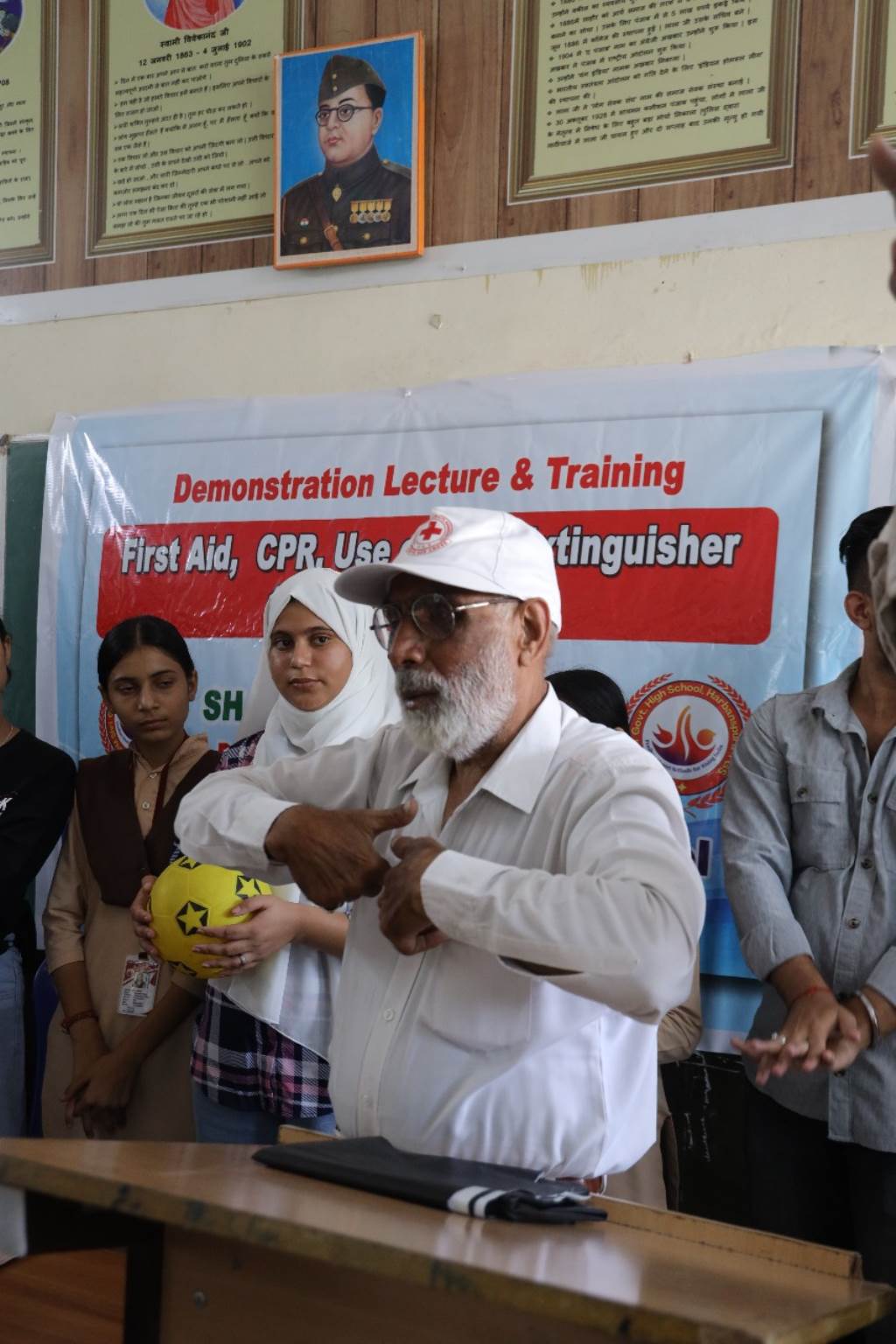
In Patiala, Kaka Ram Verma, who retired as a training supervisor from the Red Cross Society in 2012, continues to train students, teachers, police, factory workers, NSS volunteers, and NCC cadets in disaster management, civil defense, first aid, and fire safety at the age of 72. He also organizes competitions for students on these subjects and personally awards them prizes and certificates, honoring and encouraging them to assist victims.
During natural and human-induced disasters, wars, and pandemics, villagers face greater loss of life and property because they are not provided training and exercises for self-protection, and medical teams, ambulances, fire brigades, and disaster management facilities and assistance reach them much later, whereas these facilities are available within 20-30 minutes in cities.
If we want to protect the nation, society, homes, families, states, and the country from the devastation caused by natural or human-induced disasters and wars in the future, we must prepare students, youth, employees, and citizens for disaster management, civil defense, first aid, and fire safety. Otherwise, only deaths and destruction may be visible in the future.