
National Lok Adalat Organized 26087 Cases Settled

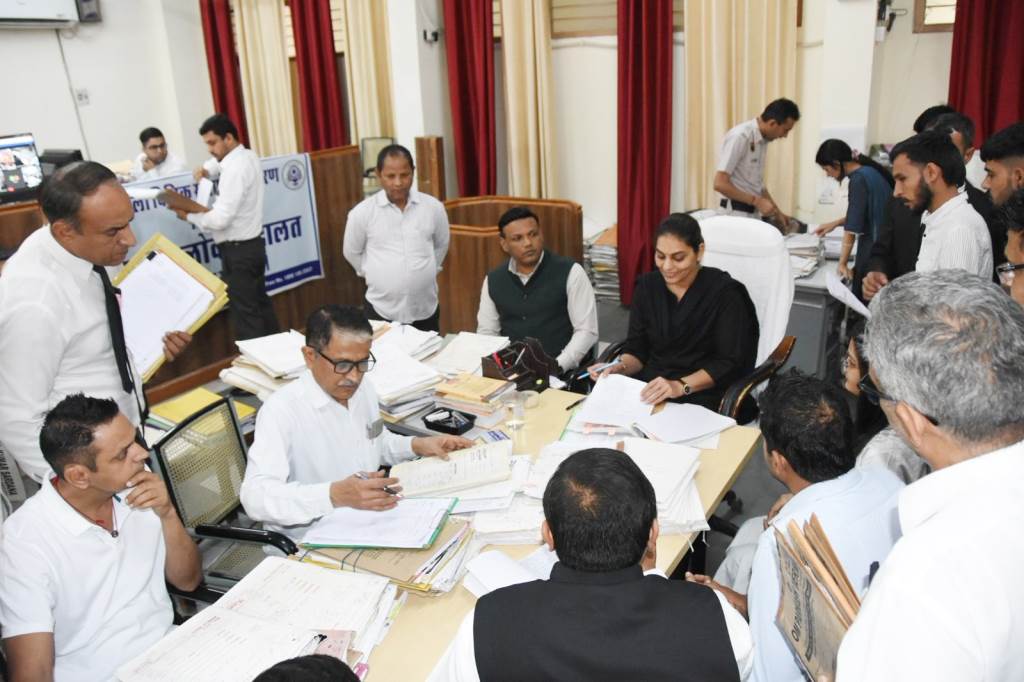
Hisar, March 14: Another significant step towards making the judicial system simpler and more accessible was taken during the National Lok Adalat held on Saturday within the court premises across the district headquarters in Hisar, as well as in Hansi, Narnaund, and Barwala. Organized under the directives of the Haryana State Legal Services Authority, Panchkula, and under the guidance of Judge Alka Malik—Chairperson of the District Legal Services Authority, Hisar—this Lok Adalat successfully settled a total of 26,087 cases.
Sharing this information, Ashok Kumar, Secretary of the District Legal Services Authority and Chief Judicial Magistrate (CJM), stated that out of a total of 26,946 cases listed in the National Lok Adalat held in Hisar, 26,087 cases were successfully resolved. He further detailed that, within the Lok Adalat, recoveries amounting to ?2,13,91,189 were realized in 681 out of 730 bank recovery cases. Out of 309 summary/traffic challan cases, 175 were adjudicated. In the Family Court, 95 out of 158 cases were resolved. Furthermore, in the Motor Accident Claims Tribunal (MACT), claims totaling ?3,20,08,500 were sanctioned in 29 out of 45 cases. Additionally, cases related to criminal matters, revenue disputes, civil litigation, cheque bouncing, and various challans were also included in the proceedings. CJM Ashok Kumar noted that various benches were constituted across Hisar, Hansi, Narnaund, and Barwala for the National Lok Adalat, where different categories of cases were heard.
Throughout the Lok Adalat proceedings, advocates, panel lawyers, and the concerned litigants demonstrated active participation, and cases were resolved through mutual consent. Advocates representing both parties, along with panel lawyers, remained present throughout the duration of the event. CJM Ashok Kumar stated that Lok Adalats serve not only as an effective mechanism for resolving pending cases but also foster social harmony and mutual understanding. In these courts, disputing parties settle their cases in a cordial atmosphere, thereby eliminating the need for appeals or revisions and ensuring the speedy delivery of justice. Furthermore, the litigants are also reimbursed for the court fees they have paid.