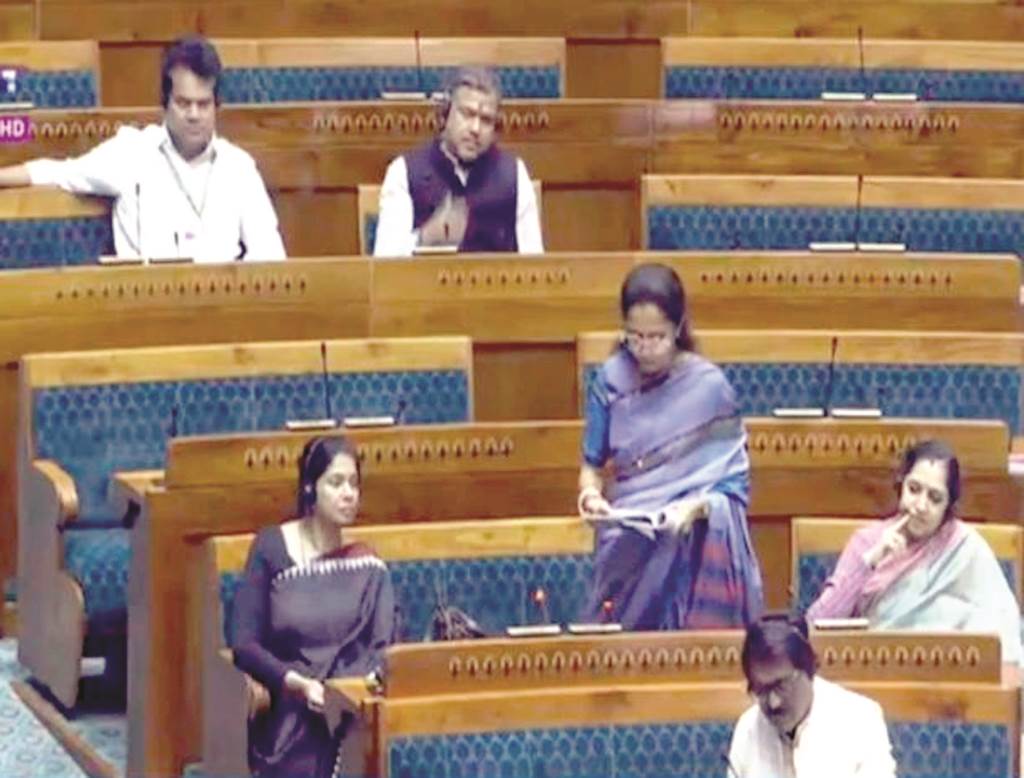
Bill introduced to ensure Right to Disconnect after office hours

New Delhi: Lok Sabha member Supriya Sule has introduced a private member’s bill in the lower house to promote work-life balance for workers and employees in India. ‘The Right to Disconnect Bill, 2025’ seeks to impose sanctions of 1 per cent of the gross salary of their employees on organisations (companies or societies) for any non-compliance with the provisions of the bill.
The bill, introduced in the Lok Sabha on Friday, gives every employee the right to ‘disconnect’ from work-related electronic communications. “It aims to promote a better quality of life and a healthy work-life balance by reducing ‘burnout caused by today’s digital culture,’” he wrote on X.
He argued in the private member’s bill that while digital and communications technology offers benefits in terms of work flexibility, it also carries a significant risk of blurring the boundaries between professional and personal life. The statement of purposes and reasons for the bill reads, “Studies have found that if an employee is expected to be available at all times, they exhibit greater work risks such as sleep deprivation, increased stress and emotional exhaustion.”
This constant urge to respond to calls and emails (called ‘telepressure’), through constant checking of emails throughout the day and even on weekends and holidays, has been reported to be destroying the work-life balance of employees. It states, ‘‘According to a study, constant monitoring of work-related messages and emails can put a heavy burden on the brains of employees, leading to a condition called ‘info-obesity.’’
The bill argues that there is a need to respect the privacy of employees while recognising their ‘right to disconnect’ and not to respond to their employer’s calls, emails etc. during non-working hours.
The bill further states, ‘‘There is a need to recognise the rights of employees, while also taking into account the competitive needs of companies and their diverse work cultures. Flexibility in the right to disconnect rules and leaving it to individual companies to negotiate terms of service with their employees is the need of the hour.’
Digital transformation has a direct impact on the terms of employment contracts, such as working hours and place.
They therefore argued in the bill that if an employee agrees to work during off-hours, then overtime pay at a rate equivalent to his wage rate is also necessary to check the increase in unpaid overtime work brought about by digital transformation.
The bill also makes provision for providing counselling services to raise awareness among employees and citizens about the appropriate use of digital and communication tools for professional and personal use. The bill makes provision for digital detox centres to free an employee from digital distractions and enable him to truly connect with the people around him.
The bill concludes that ‘the bill thus champions the rights and welfare of employees, obliges individual organisations to negotiate with their employees on the terms of service outside of working hours and upholds the employee’s right to disconnect. The bill seeks to recognise the ‘right to disconnect’ as a way of reducing stress and easing the tension between employees’ personal and professional lives.’
They introduced a total of three forward-looking private members’ bills in Parliament:
The Paternity and Paternal Benefits Bill, 2025: This introduces paid maternity leave to ensure that fathers have a legal right to participate in the early development of their child. It breaks the traditional model, supports the well-being of new mothers and promotes the role of flexible parents.
The Code on Social Security (Amendment) Bill, 2025: It recognizes platform-based gig workers as a separate category, ensures minimum wages, regulated hours, social security, fair conditions, and equitable contracts to ensure a fairer, more sustainable environment and economy for them. Several other members of the Lok Sabha also introduced their private members' bills in the House.