77 percent reduction in stubble burning incidents in Haryana

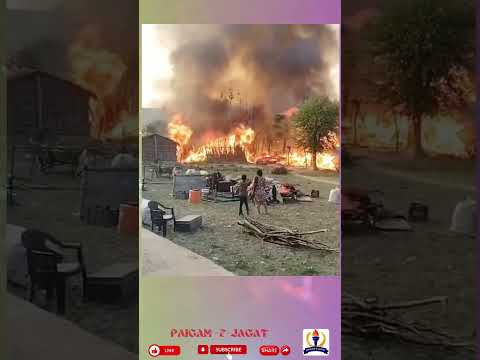
Chandigarh, November 7 - Haryana will eradicate the problem of stubble burning from the roots in the next two years. Till November 6, 2025, 206 incidents of stubble burning have been recorded in the state, while the number was 888 in the same period last year. Thus, a remarkable reduction of 77 percent has been recorded in the state.
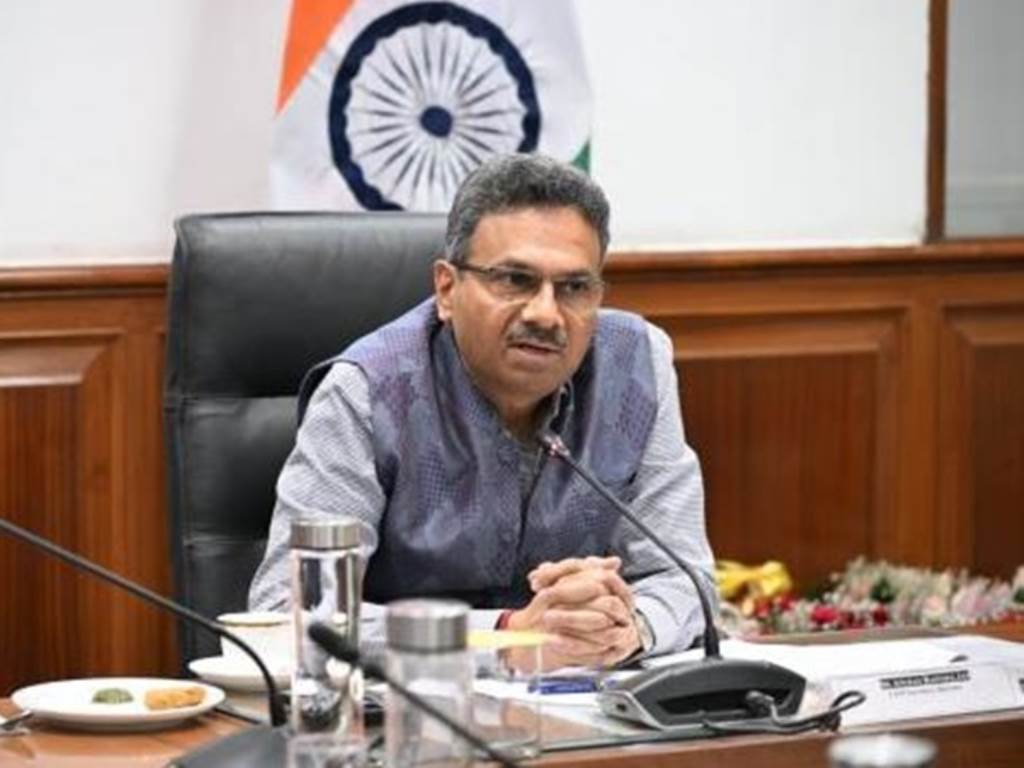
This information was given by Chief Secretary Mr. Anurag Rastogi today after a high-level meeting with the Air Quality Management Commission. The meeting was chaired by the Chairman of the Commission Mr. Rajesh Verma.
Mr. Verma appreciated the collective efforts of the officials of the Haryana Government and the farmers for this. He especially praised Karnal and Kurukshetra districts for reducing the incidents of stubble burning. He said that the next ten days are very important, so the district administration should keep a close eye so that there is no incident of stubble burning.
After the meeting, the Chief Secretary said that Haryana has adopted a three-pronged strategy for crop residue management, which includes in-situ, ex-situ and use of stubble as animal fodder. Out of the total paddy area of ??39.31 lakh acres in the state, 44.40 lakh tonnes of residue is being used in-situ, 19.10 lakh tonnes ex-situ, and 22 lakh tonnes as fodder.
So far, 19,670 acres of area has been diversified from paddy. Apart from this, direct seeding of rice technique has been adopted in 1,74,064 acres of area, which has resulted in saving water and reducing stubble production.
The state government has significantly increased the incentives to promote eco-friendly agriculture. Assistance of Rs. 1200 per acre is being given for in situ and ex situ management, Rs. 8000 per acre for crop diversification, and Rs. 4500 per acre for DSR.
A total of Rs. 471 crore has been provided under these schemes. Bio-decomposer powder is being made available free of cost to the farmers, which is being implemented by Chaudhary Charan Singh Haryana Agricultural University, Hisar in an area of ??2 lakh acres.
More than 770 new machines have been sanctioned in the current financial year 2025-26 at a cost of Rs. 94 crore. A total investment of Rs 250.75 crore has been made on this scheme this year, of which the Central Government's contribution is Rs 150.45 crore and the State's contribution is Rs 100.30 crore.
The State currently has 31 pelletisation/briquetting plants with a capacity of 8.17 lakh tonnes, 11 biomass power plants with a capacity of 111.9 MW, one 2G ethanol plant, 2 CBG plants and 5 thermal power plants, which are collectively using 16.54 lakh tonnes of paddy straw. Brick kilns in non-NCR districts have been directed to use 20 per cent straw-based pellets by 2025 and 50 per cent by 2028.
10,028 nodal officers have been deployed in the state and the incidents of stubble burning are currently being detected through satellite surveillance of Hersek. In each verified incident, an FIR is being registered and environmental compensation is also being imposed.
So far, a fine of Rs. 4.10 lakh has been imposed in 87 cases, out of which Rs. 3.20 lakh has been recovered. In addition, red entries have been made in the records of 87 farmers. Between January and October, 2025, challans have been issued against 325989 vehicles in the NCR region for not having a valid Pollution Under Control Certificate.
Immediate action has been taken on 169 incidents of burning of waste registered this year. Dumpsites in Gurugram and Faridabad are being monitored from 86 CCTV cameras so that any incident, even fire, can be brought under control immediately. The meeting also discussed in detail the measures to prevent pollution from vehicles and dust in the NCR.