
The discussion of public safety generally remains limited to police, law, CCTV, street lighting and emergency services. All these elements are certainly essential, but there is also another invisible aspect to the safety of any society - the morality of the society, mutual respect and a sense of responsibility towards one another.
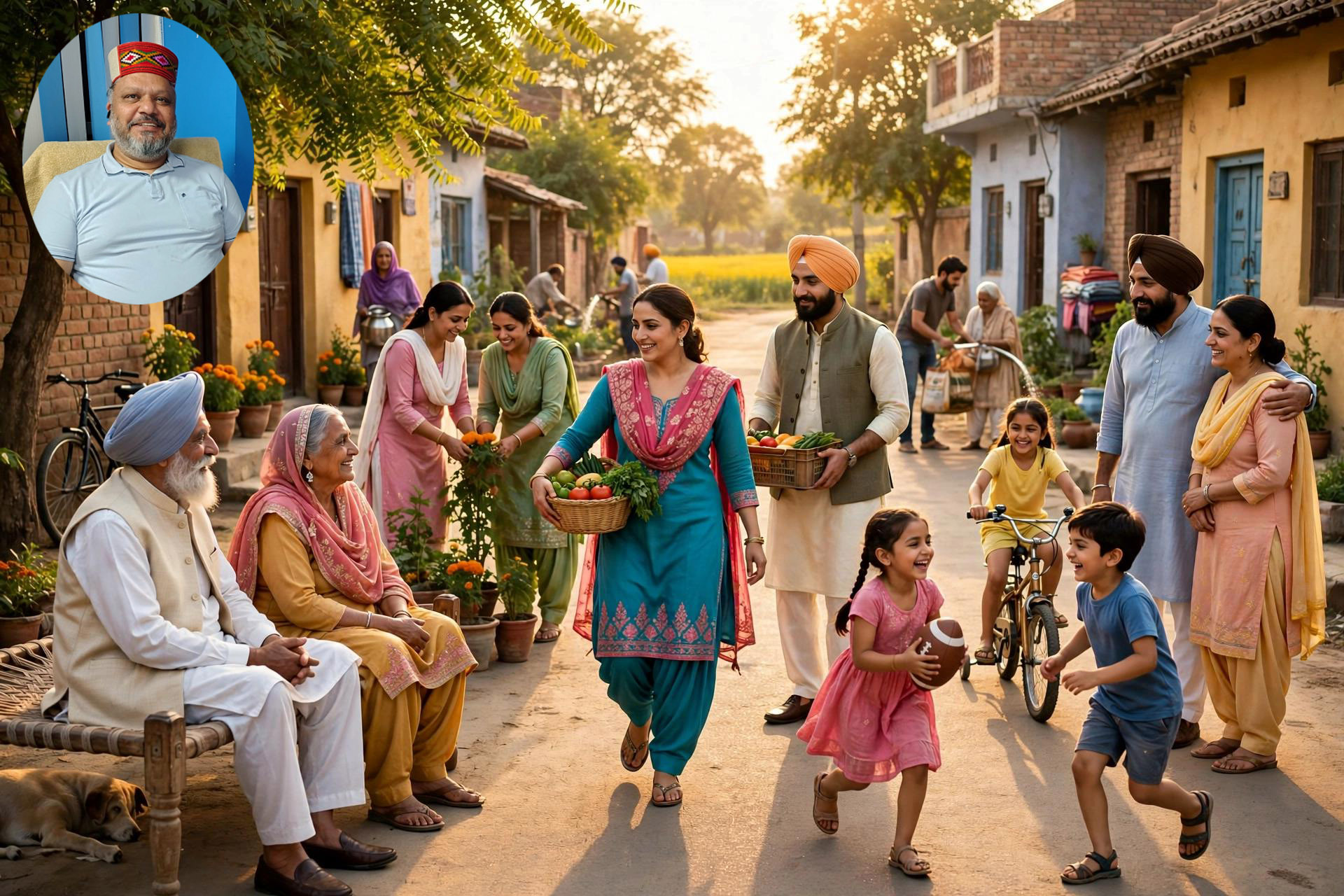
In Indian society there have been many traditions whose purpose was not to enforce law, but to set boundaries for social conduct. There was also a time when in the social structure of villages, the thinking of looking at every woman of one's own village with the relationship of a mother or a sister was common. This relationship was not of blood, but of social dignity. When children saw their elders behaving in this way, the same thinking reached the next generation. In this way, some unwritten boundaries were formed in society, breaking which was considered wrong not only legally, but also socially.
Crime has existed in every society. But it can certainly be understood that when family, neighbourhood and society have a moral influence on the behaviour of an individual, then apart from the law, another social restraint also remains present. The fear of a wrong act is not only of the police or the court, but also the fear of losing respect in one's own family and society. In government comparative statistics, India's crime rate per lakh population has been recorded as lower than many developed countries.
Behind this, instead of considering only the legal system as the reason, the role of our social and moral values can also be considered. Previous generations instilled values like respect, restraint, family responsibility and respecting others in children, which may have influenced social behaviour. Yet this cannot be made a reason for complacency. Even a single case of crime does not affect only one individual, but affects an entire family. Therefore there can be no scope for any laxity regarding safety.
Along with this, it is also necessary to evolve moral values along with the changing structure of society. The values of respect, restraint and shared responsibility received from older generations are still important today, but their interpretation should be according to the needs of modern society. Equal respect for women, understanding of personal boundaries for people, safety of children and responsibility in digital behaviour should also be part of today's morality. Society will keep changing, but the basic principle of considering the honour and safety of another human being as one's own responsibility should not change. Urbanization, nuclear families, increasing individualism, digital life and constantly changing social priorities have also changed people's relations with each other.
Earlier, where a neighbour's problem was sometimes considered a shared problem, now the boundaries of private life have become stronger. The role of infrastructure is also important in security. But the modern structure of security cannot become a substitute for social responsibility. A CCTV camera can be installed in a street, but a camera cannot create mutual trust among people. A street light can be installed on the road, but it cannot create the human desire to help a person in trouble. The police can arrive promptly, but to create such thinking in society that not remaining silent after seeing wrong behaviour is also a responsibility, is a long-term social process.
Prevention of drugs is an important part of public safety. Connecting youth with sports, education, skill development, employment and healthy activities can become long-term prevention. Family, school and social institutions can play an important role in this. Along with this, rapid coordination between police, ambulance, fire service and hospitals at the time of accidents, fire or medical emergency is also an essential part of safety. Security, health, transport, education and employment are interconnected, therefore better coordination between them can become the foundation of a more secure society. Strengthening the modern security system is necessary, but it is equally important to preserve that invisible social structure which has for generations kept people connected to each other through safety, dignity and respect.
- Davinder Kumar