
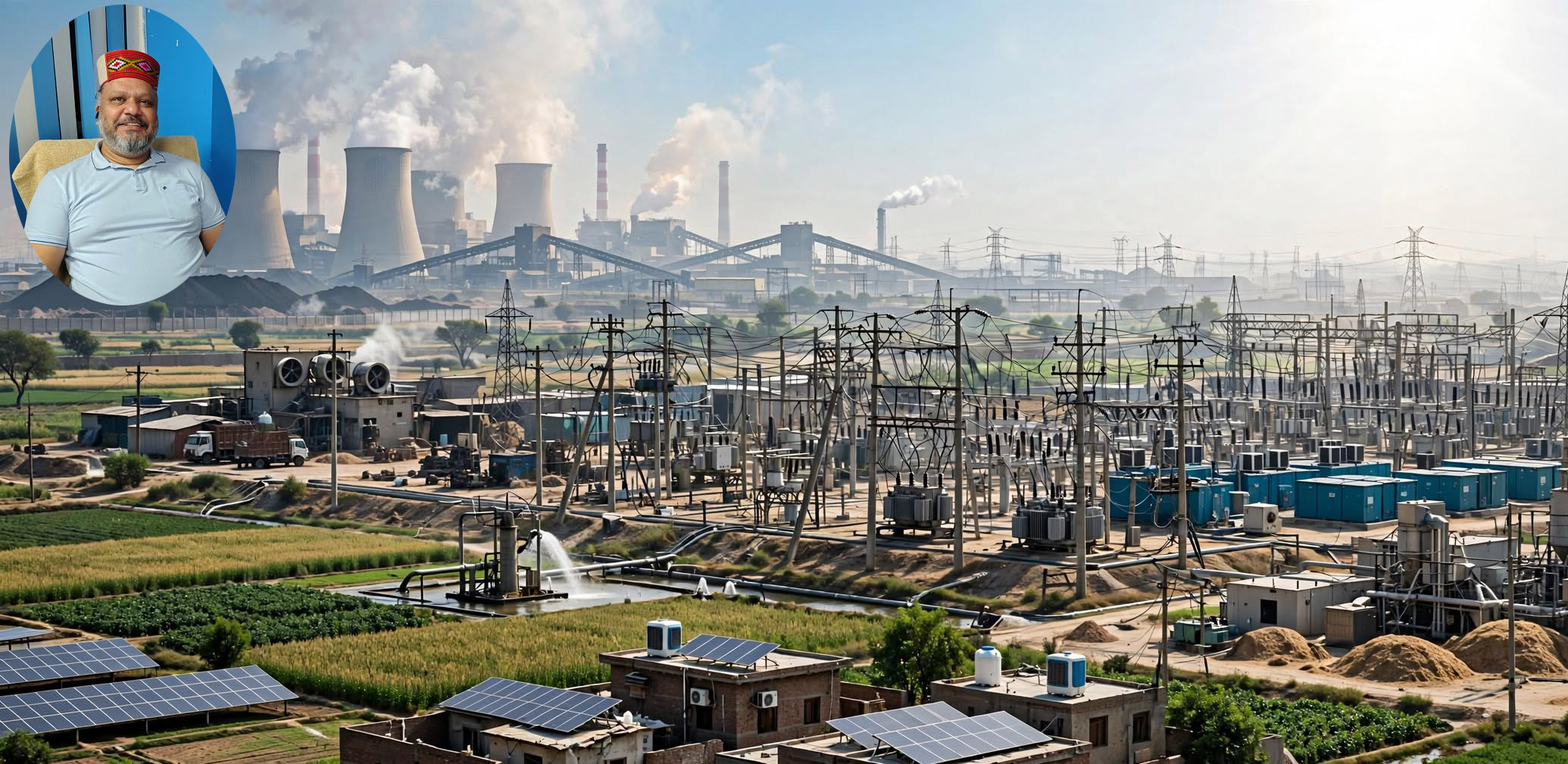
The situation arising over electricity demand and supply in Punjab has once again brought the discussion about the state's energy system to the centre. At present, due to increased electricity demand, non-availability of some power generation units and discussions related to coal supply, power cut situation has emerged in many areas. Industry, agriculture, trade and common domestic consumers are feeling its impact. But looking at this situation only linking it to coal shortage perhaps does not give the full picture.
The electricity problem does not come to the fore only when there is interruption in coal supply. Every year during summers also electricity demand increases rapidly. During severe heat waves, with increased use of air conditioners, coolers, fans and other electrical appliances, there is sudden increase in demand. During the same period, situations of load shedding and frequent power outages are also seen at many places. Along with power generation, the capacity of the distribution network also becomes important. Transformers, feeders, cables and other distribution equipment work under high load for a long time. When temperature is very high and at the same time electricity consumption also increases, then the effect of technical fault in any one part can reach large area. Therefore, in future energy planning along with only building new power houses or buying more electricity, strengthening distribution network, increasing capacity of old equipment and advance preparation for extreme conditions of heat will also have to be given importance.
The discussion happening at this time over coal supply also draws attention towards a big question. If a large part of electricity generation depends on one fuel and its linked supply chain, then impact of interruption coming at any level can be direct on electricity generation. Therefore, the meaning of energy security is not only keeping sufficient stock of coal, but also availability of different sources and arrangements.
In Punjab, electricity demand is likely to increase in future rather than decrease. Use of tubewells in agriculture, urbanization, industrial activities, new businesses and increasing electrical appliances in homes are further increasing this demand. Changes coming in weather are also changing it. If summers become longer and more severe then number of days with highest electricity demand can also increase. Therefore, in future planning, it is necessary to keep transmission and distribution network also in centre along with generation. Where electricity demand is increasing, there capacity of sub-stations, transformers, feeders and lines also needs to be increased in same proportion. For abnormal situations like heat waves, additional capacity and arrangement of immediate repair can also become part of energy security. Along with this, solar energy, biomass and other new sources can be important for Punjab. But need of storage is also linked with these sources. When solar production decreases or demand increases suddenly then for continuous availability of electricity, battery storage or other backup arrangements may be required. With this, energy system can become more flexible instead of remaining dependent on single source.
Electricity saving is also an important part of this whole equation. Reducing consumption during peak hours in summers, increasing use of energy-efficient appliances and improving energy management in industries and commercial establishments can reduce pressure on demand. At large scale these small steps can also make important difference for electricity system. Instead of linking current electricity crisis only with coal supply, it will have to be seen in capacity of whole energy structure. Making generation, coal supply, sustainable energy sources, storage, transmission and distribution network part of one plan can be the way to handle future increasing demand. Ultimately, question is not only what is immediate solution of current problem, but also how much electricity system will be ready for increasing demand in next summer and coming years.
- Davinder Kumar