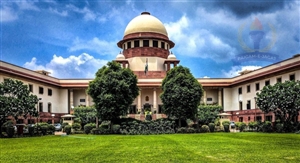
New Delhi:- The Supreme Court has made strong observations, stating that despite spending crores of rupees on cleaning the Yamuna River, pollution in the river has increased rather than decreased. The court also directed the Central Pollution Control Board (CPCB) to monitor water quality at all entry and exit points where the Yamuna and its major drains pass through different states, Union Territories and districts.
In an order dated November 4, a bench comprising Justice Manoj Misra and Justice Manmohan observed that industrial pollutants and untreated sewage must be stopped at the source, and merely constructing more sewage treatment plants is not sufficient to clean the river.
Hearing a petition related to the cleaning of the river, the bench said, "This court is of the opinion that whatever is wrong with the civic administration of towns, cities and villages situated along the riverbanks is reflected in the poor health of the river and the 520 drains discharging wastewater into the Yamuna. This is why pollution in the Yamuna has only increased despite huge expenditure on cleaning the river."
The apex court said that industrial pollution and untreated sewage should be reduced at the source, if they cannot be completely stopped. The court observed, "Where this is not possible, sewage should first be tapped and then treated. However, in the absence of a robust sewage system and due to the interconnection of stormwater drains and sewage drains, tapping will remain a challenge. This court is also of the opinion that it will be difficult, if not impossible, for local authorities to tap sewage in most of the illegal and unauthorised colonies built on encroached land, as they have not been developed according to a grid layout and there is very little space available to lay sewage systems."
The apex court said that unless illegal and unauthorised colonies and slum clusters built along the drains and riverbanks are removed along with the rehabilitation of their residents, their sewage will continue to pollute the river.
The court directed that if water quality deteriorates while passing through any particular state, Union Territory or district, the concerned authorities would be held accountable and fined. Directing the CPCB to suggest a formula for calculating the compensation, the bench said, "If water quality deteriorates on any parameter while flowing through or exiting any state, Union Territory or any of its districts, the concerned state, Union Territory or district will be held accountable and penalised. The said compensation or penalty shall be deposited with the Registry of this court."
The apex court also directed the CPCB to investigate any incident of pollution in the Yamuna, including fish deaths, white foam floating on the surface, eutrophication or algal blooms, as well as increases in Biochemical Oxygen Demand (BOD), Chemical Oxygen Demand (COD) or Total Suspended Solids (TSS) levels, and submit a detailed report. The next hearing in the matter has been scheduled for January 13.