
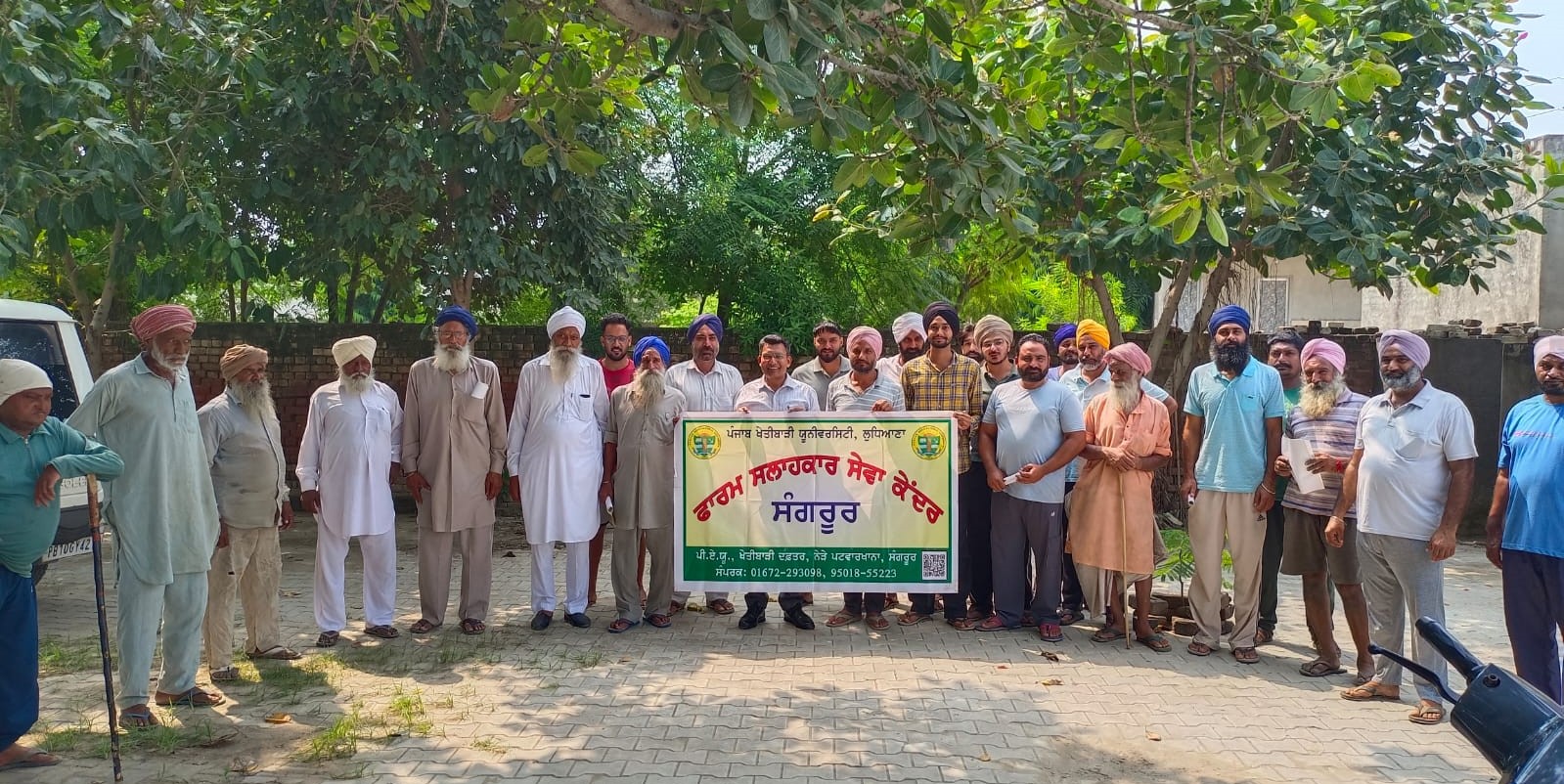
Bhawanigarh/Sangrur, September 24:- Under the aegis of the Director of Extension Education, Punjab Agricultural University (PAU), Ludhiana, the PAU-Farm Advisory Service Centre (FASC), Sangrur, organized a village-level farmer awareness camp on in-situ crop residue management (CRM) and balanced use of fertilizers at village Turi (near Bhawanigarh). Addressing the farmers, Dr. Ashok Kumar Garg, Senior Extension Scientist (Soil Science), urged them to completely shun paddy straw burning and adopt environmentally sustainable methods of crop residue management. He highlighted that in-situ CRM helps conserve soil nutrients and organic matter, improve soil health, reduce air pollution and maintain long-term soil productivity.
Dr. Garg highlighted the substantial nutrient losses associated with residue burning. He stated that burning one ton of paddy straw results in the loss of approximately 400 kg of organic carbon, 5.5 kg nitrogen, 2.3 kg phosphorus, 25 kg potassium and 1.2 kg sulphur. Therefore, instead of burning, farmers should manage the residue in the field through appropriate mechanical and agronomic practices to conserve nutrients and improve soil biological health.
Dr. Garg explained various straw management technologies, including the Happy Seeder, Super Seeder, PAU Smart Seeder and Surface Seeding-cum-Mulching, for timely wheat sowing without burning crop residues. He also briefed farmers about the management of sterility in paddy through a 1.5% foliar spray of potassium nitrate (13:0:45) at the booting stage in late-sown basmati varieties and advised them to monitor insect pests and diseases in paddy and basmati and follow PAU recommendations for their management. He emphasized the importance of soil testing before fertilizer application to determine the actual nutrient requirements of the soil and crop. He advised farmers to use fertilizers judiciously and adopt integrated nutrient management (INM) for sustainable crop production.
The farmers were also apprised of the use and benefits of recommended bio-fertilizers in rabi crops, along with PAU-recommended varieties of wheat and other rabi crops suitable for Punjab conditions. He stressed that the use of quality seed of recommended varieties, coupled with balanced nutrient management, is essential for achieving higher productivity and better farm returns.
Dr. Garg further encouraged farmers to establish and maintain kitchen gardens at their homes for the production of fresh, nutritious and safe vegetables, thereby contributing to family nutrition and food security. He also apprised the farmers about the PAU Kisan Melas and encouraged them to participate in these events to gain access to the latest agricultural technologies, recommended crop varieties, farm machinery, publications and expert advice from PAU scientists. The camp concluded with a field visit to the paddy fields of Surinder Singh, where crop and residue management practices were discussed with the farmers.