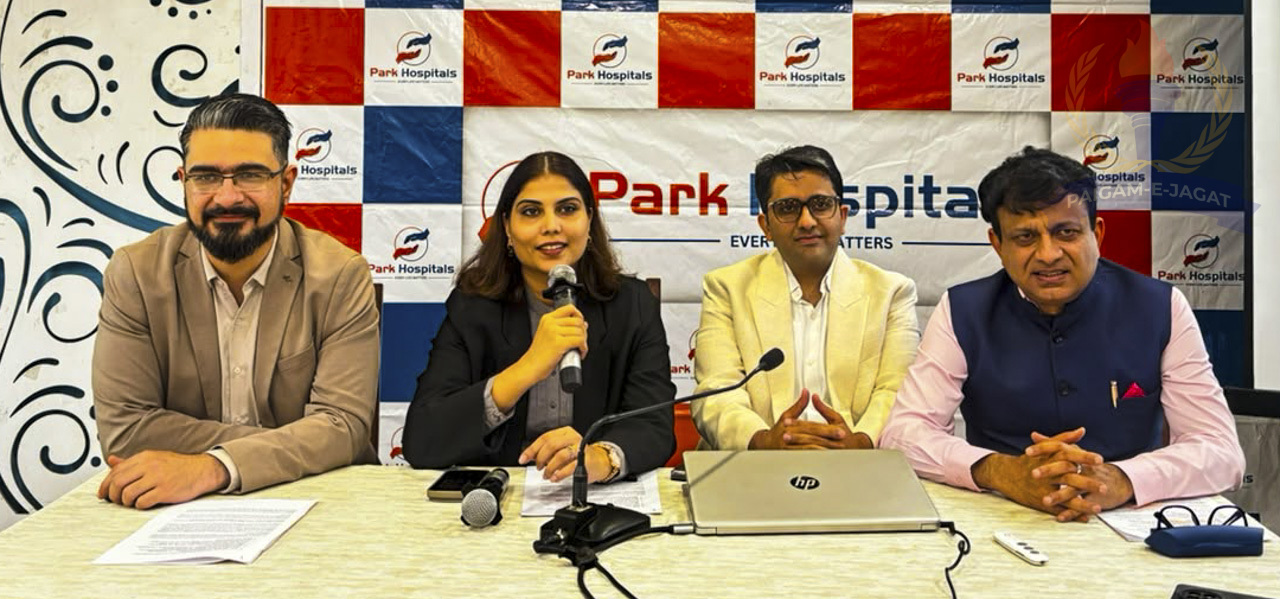
Chandigarh:- Expressing concern over the rising number of brain stroke cases in India, specialists from Park Hospital, Mohali, stressed the need to raise public awareness about this serious disease, recognise its symptoms in time and seek immediate medical assistance. During a press conference held here on Tuesday, the experts said that timely treatment can reduce the risk of severe disability and death caused by stroke.
The team of experts at the press conference included Dr. Sandeep Sharma, Group Director – Interventional Radiology; Dr. Gaurav Dhawan, Senior Consultant – Radiology; Dr. Sandeep Kaur, Consultant – Neurology; and Dr. Anil Sofat, Consultant – Neurosurgery.
On the occasion, Dr. Sandeep Sharma said, “Brain stroke is emerging as a major public health challenge worldwide. An estimated 1.5 to 2 million new stroke cases occur in India every year. However, the actual number may be higher because many patients are unable to access healthcare services in time. Thousands of people suffer strokes in the country every day, but only a small proportion receive appropriate treatment in time.”
Dr. Sandeep Kaur said that a lack of awareness about stroke, its risk factors and preventive measures is among the major reasons for the rising number of cases in India. She emphasised that it is essential to educate people about recognising stroke symptoms and the importance of seeking immediate medical assistance. This can help reduce the risk of severe disability and death.
Highlighting the seriousness of stroke, Dr. Gaurav Dhawan said, “Brain stroke is a major cause of death and disability and continues to pose a serious public health challenge. Despite its severe consequences, the condition often goes unrecognised in time. Therefore, raising public awareness and ensuring timely treatment are extremely important.”
Explaining modern stroke treatment techniques, Dr. Anil Sofat said that mechanical thrombectomy available at Park Hospital, Mohali, is an advanced, minimally invasive procedure. It may enable selected patients with ischaemic stroke to receive treatment even up to 24 hours after the onset of symptoms.
The experts explained that sudden loss of balance, difficulty seeing, drooping of one side of the face, weakness in one arm and slurred speech may be key symptoms of stroke. Anyone experiencing any of these symptoms should seek emergency medical assistance without delay.
Tips to Prevent Stroke:
Keep blood pressure under control
Maintain a healthy weight
Exercise regularly
Eat a balanced diet
Limit alcohol consumption
Keep diabetes under control
Get atrial fibrillation treated
Quit smoking
Stay aware of stroke symptoms
Follow medical advice