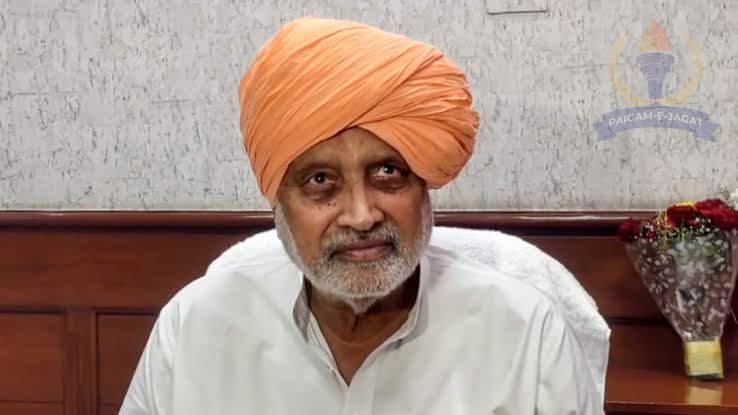
Chandigarh, November 4:- People and farmers are soon expected to get relief from the foul smell spreading around sewage treatment plants (STPs). To reduce the odour from treated wastewater in Haryana, activated carbon-based systems will be installed at 24 STPs. An estimated Rs 3,865.806 lakh will be spent on this initiative. Public Health Engineering and Public Works Minister Ranbir Gangwa has directed officials to take the problem of foul smell around STPs seriously, take effective steps to improve treated water quality and resolve farmers' complaints on priority.
Minister Ranbir Gangwa was chairing a review meeting of Public Health Engineering Department officials at the Haryana Civil Secretariat. Major projects costing Rs 25 crore and above were reviewed circle-wise during the meeting. Additional Secretary of the department, Mrs Renu Sogan, Engineer-in-Chief Devender Dahiya and other senior officials were present in person, while Superintending Engineers (SEs), Executive Engineers (XENs) and Sub-Divisional Officers (SDOs) from across the state joined through video conferencing.
Minister Gangwa said that complaints from farmers and local residents regarding foul smell around STPs and the quality of treated wastewater continue to surface. The department must ensure that water quality improves after treatment and that its use does not cause inconvenience to people living in nearby areas. He directed officials to take up work related to the activated carbon-based system seriously and act promptly on farmers' complaints.
A total of 25 STPs have been identified across the state for this work. Their combined treatment capacity is 230.5 MLD, while approximately 171.13 MLD of sewage reaches these plants every day. Activated carbon systems have been proposed at 24 of these STPs, at an estimated cost of Rs 3,865.806 lakh.
Activated Carbon Systems to Be Installed in These Areas
Under the department's plan, activated carbon systems are proposed to be installed at STPs located at Chhachhrauli, Manakpur in Pinjore and Maujgarh Road in Barara under the Ambala Circle. In the Hisar Circle, the STPs at Rishi Nagar, Rajgarh Road, Kamri Road and Satrod in Hisar; Lalpura Road and Bhiwani Road in Hansi; and Hansi-Jind Road in Narnaund have been included. The Jind Circle will cover STPs on Hansi Road, Old Hansi Road and Narwana Road, near the CHC in Julana, and at village Rampura in Safidon.
Similarly, under the Sirsa Circle, the STPs at Kharati Khera Road in Fatehabad, Bhattu Road in Fatehabad and Kulan Road in Bhuna have been included. In the Bhiwani Circle, the system is proposed at STPs on Dadri Road and Dhana Road in Bhiwani, Tosham Road in Siwani and near the cremation ground in Loharu. At these locations, the focus will be on reducing the odour of treated wastewater through activated carbon-based systems and encouraging its reuse.
Officials Asked to Increase Field Inspections to Ensure Clean Drinking Water
The meeting also included a circle-wise review of major Public Health Engineering Department projects costing more than Rs 25 crore. Their progress, budget utilisation and the quality of construction work were assessed. Minister Ranbir Gangwa directed officials to accelerate development works while ensuring that quality is not compromised at any level. He said providing clean and safe drinking water to people is the department's foremost responsibility. Water is the basis of life and also holds special significance in Indian tradition. Therefore, senior departmental officials should not remain confined to their offices but should regularly visit the field to inspect drinking water supply arrangements, water quality and ongoing development works. Any shortcomings or complaints must be addressed immediately.
Minister Ranbir Gangwa Says Farmers Must Not Face Any Inconvenience; Special Attention to Be Paid to Water Quality
Minister Ranbir Gangwa said ensuring the quality of treated wastewater is essential to increasing its reuse for irrigation and other purposes. Farmers should not face any inconvenience while using this water. Whether the issue concerns foul smell around an STP or complaints about the quality of treated water, officials must visit the site, assess the situation and ensure a time-bound resolution. The government's endeavour is to ensure better treatment of sewage water and its safe and beneficial reuse.