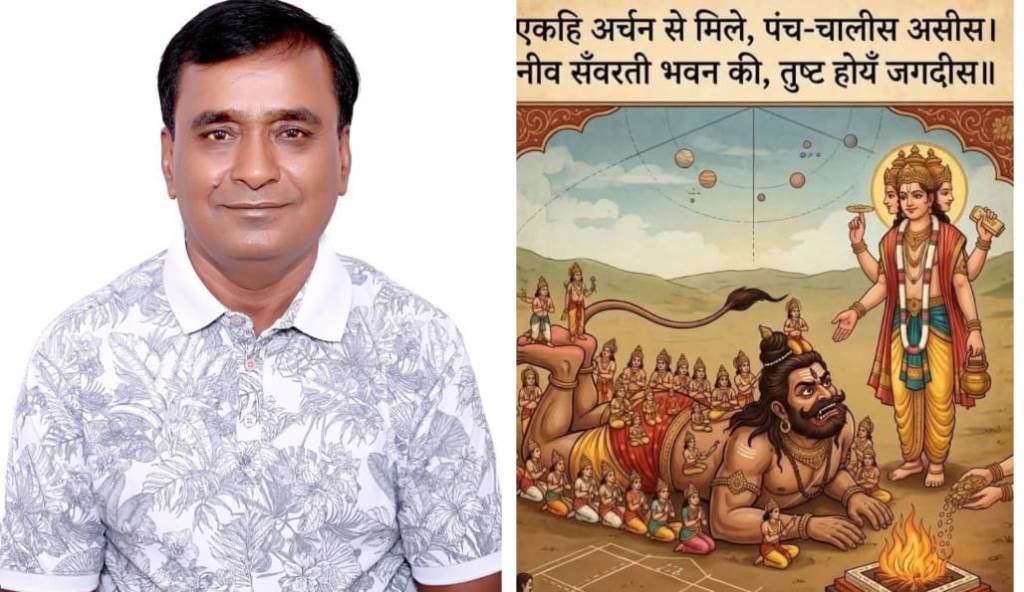
Hoshiarpur: The true essence of Vastu lies in creating an arrangement that is in harmony with nature. In the buildings we inhabit, various elements—such as the foundation, the auspicious timing (Muhurat) of construction, the architectural layout, structural units, doorways, the central core (Brahma Sthan), specific nodal points (Marma Sthan), diagonal axes, structural beams, directional alignments, the Five Elements (Panch Tattva), colors, slopes, interior décor, and exterior landscaping—each hold their own distinct significance. Furthermore, the thirty-two exterior deities and thirteen interior deities associated with the structure also play a vital role.
This perspective is held by the internationally renowned Vastu expert and author, Dr. Bhupendra Vastu Shastri. In addition to all the aforementioned aspects, Vastu prescribes a specific ritual protocol involving the offerings made during *Havan* (sacred fire rituals) and *Yajnas* (sacrificial ceremonies). According to a boon granted by Lord Brahma, the offerings made during a Vastu Yajna not only ensure the blessings of the *Vastu Purusha* (the presiding deity of the structure) but also appease all forty-five deities residing within the building; consequently, their collective blessings usher prosperity and well-being into one's life.
Moreover, this practice ensures the attainment of peace, tranquility, and the permanent residence of Goddess Lakshmi within the home. This truth is aptly encapsulated in the following adage:
“Ek hi archan se mile panch-chaalis asees!
Neev savarti bhavan ki, tusht hoye Jagdish.”
From the Foundation to the Colors Vastu Exerts Its Influence on a Building Dr Bhupendra Vastu Expert