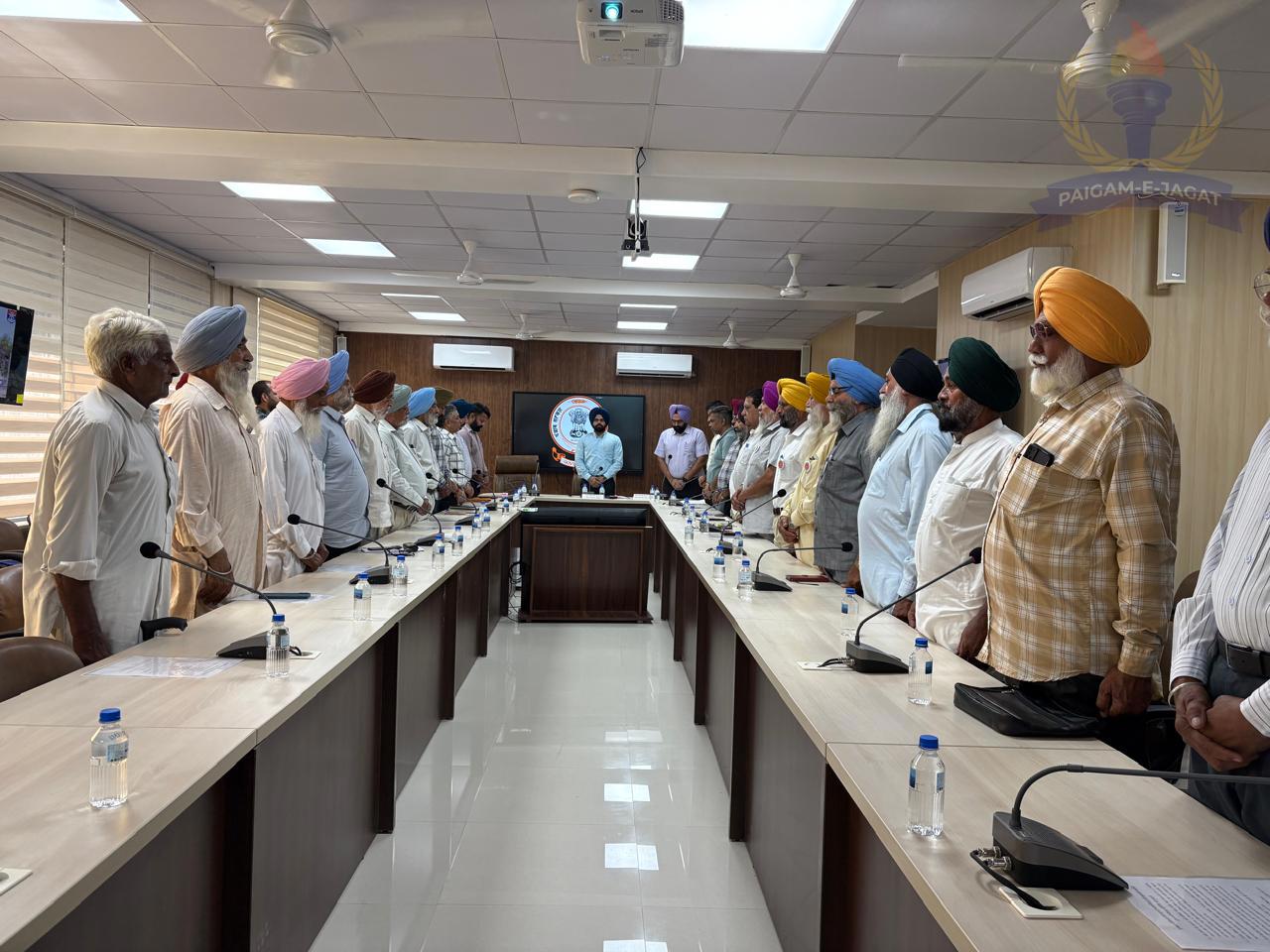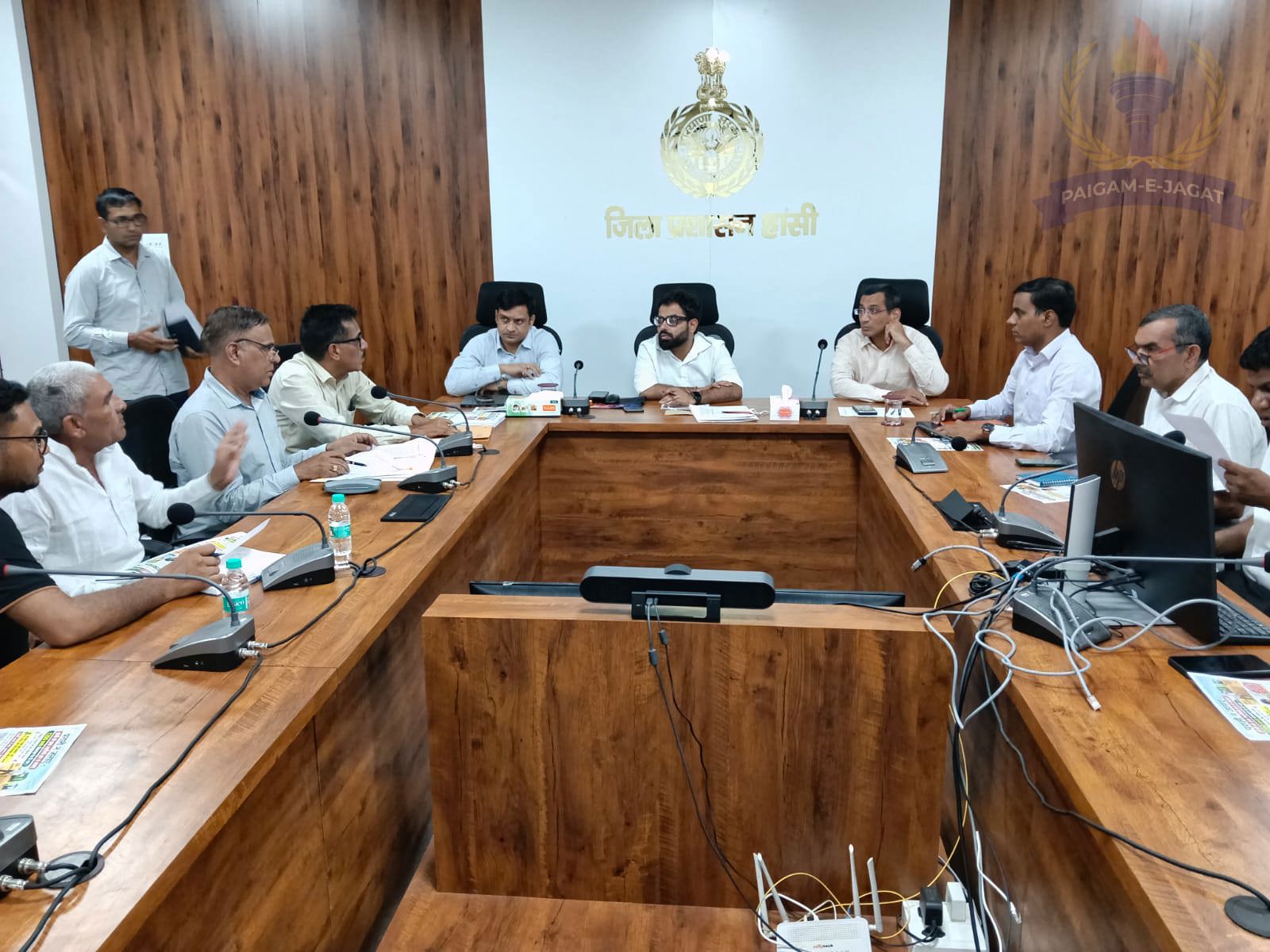
Hansi (Dinkar Gavdi):- A meeting was held in the VC conference hall of the District Secretariat under the chairmanship of Additional Deputy Commissioner and District Municipal Commissioner Lakshit Sareen to effectively prevent incidents of paddy stubble burning and raise farmers’ awareness about crop residue management. The meeting was attended by SDM Rajesh Khoth, Narnaund SDM Vikas Yadav, DDPO Sandeep Bhardwaj, SDO Dr. Ravinder, Block Development and Panchayat Officer Ashok Mehra, Raj Singh, and sarpanches and village secretaries from various villages. Officials and panchayat representatives were instructed to educate farmers against burning stubble and ensure proper management of crop residues.
Additional Deputy Commissioner Lakshit Sareen said that stubble burning not only increases air pollution but also adversely affects the fertility of agricultural land. It destroys beneficial microorganisms present in the soil, reduces soil fertility and affects crop productivity. Smoke from stubble burning can also adversely affect the health of people living nearby. Therefore, farmers should avoid burning stubble to protect the environment and maintain soil quality, and should manage crop residues using available agricultural machinery and scientific methods.
He said that an incentive of ₹1,200 per acre had been arranged for eligible farmers who do not burn stubble. He directed the concerned officials and panchayat representatives to ensure that information about the scheme reaches as many farmers as possible so that they are encouraged to adopt proper stubble management instead of burning it. He particularly emphasised conducting awareness activities in villages and informing farmers about the available alternatives for stubble management.
The meeting was informed that action could be taken under the prescribed rules to prevent stubble-burning incidents. In addition, action could also be taken in the relevant agricultural records as per the rules. Officials clarified that farmers should manage stubble properly instead of burning it to avoid punitive action. Any action would be taken in accordance with the applicable provisions and rules.
Various methods of stubble management were also discussed at the meeting. It was explained that farmers could adopt ex-situ management to use stubble outside their fields. Under this method, stubble can be collected using a bundler or baler machine and compressed into bales. These bales can then be transported to suitable locations for various uses. Farmers were advised to store stubble safely at designated places instead of collecting it along roadsides and to ensure its proper utilisation. Stubble can also be used in cow shelters, composting units and other useful applications.
Under in-situ management, stubble is incorporated into the soil within the field itself. For this purpose, wheat can be sown among the stubble with the help of agricultural machines such as a Super Seeder. Crop residues can also be managed properly using combine harvesters equipped with a Straw Management System. Incorporating stubble into the soil helps increase organic matter and maintain soil quality.
The Additional Deputy Commissioner directed Block Development and Panchayat Officers, sarpanches and village secretaries to interact with farmers in their respective areas and explain the benefits of stubble management. Farmers should be informed about Agriculture Department schemes, available agricultural machinery and alternative uses of crop residues. He said panchayat representatives had an important role in stubble management and should actively cooperate in raising awareness among farmers and preventing stubble-burning incidents in villages.
He appealed to farmers to protect soil fertility, reduce pollution and contribute to ensuring a clean environment for future generations by avoiding stubble burning. Farmers can contact helpline number 1800-180-1663 for information and assistance related to stubble management.