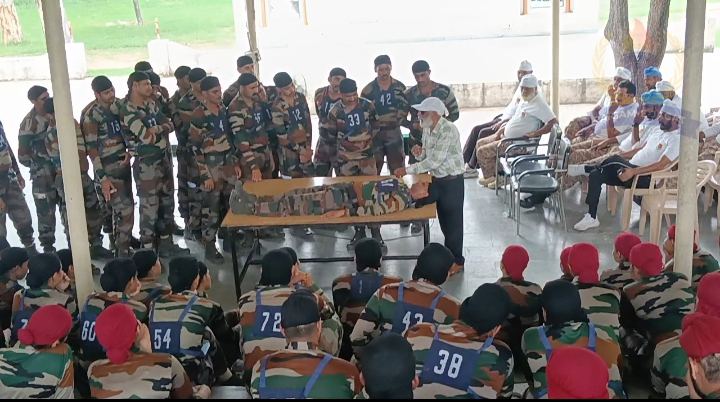
Patiala (Kaka Ram Verma):- In accordance with the directions of the Ministry of Home Affairs and the Ministry of Defence, Government of India, Civil Defence and blackout mock drills were conducted in the districts of Punjab in April and again on November 27 under the leadership of the respective Deputy Commissioners-cum-Controllers of Civil Defence, with the aim of making the maximum number of students and young people Civil Defence volunteers. However, the participation of the public, students, teachers, NCC cadets and NSS volunteers during these mock drills was observed to be negligible.
Sharing this information, Mr Kaka Ram Verma, Disaster Management, Civil Defence and First Aid Trainer and retired Training Supervisor of the Red Cross, said that the objective of mock drills is to prepare Civil Defence warriors who can save precious lives and property during natural, weather-related and human-made disasters, wars, heart attacks, cardiac arrests, unconsciousness and shock in the country, society, homes, families, hospitals, hotels, factories and public places.
Mr Verma explained that the mock drills conducted were based on the wars of 1962, 1965 and 1971. However, the nature of warfare has changed, and instead of aircraft, guided missiles, which can drop bombs and explosives on designated targets within minutes, and drones are now being used to carry out attacks.
He said that students, teachers, police personnel, factory workers, NCC cadets and NSS volunteers must be provided with training, practical exercises and mock drills to protect themselves and rescue victims during wars, disasters and domestic accidents. They should be trained in rescue operations, first aid, CPR, the recovery position, and the safe handling of fire, gases, electricity, petroleum products, chemicals and nuclear materials. Such training is essential to save precious lives and property during emergencies and prepare people to become helping angels for those in distress.
He further stated that during wars and disasters, workers of the Red Cross Society, health services, security agencies and fire brigades play an important role in helping victims. Therefore, such training and practical exercises should not be conducted on just two days a year. Instead, every institution and organisation should organise them twice a year so that life-saving angels can be prepared in every home, neighbourhood and institution.